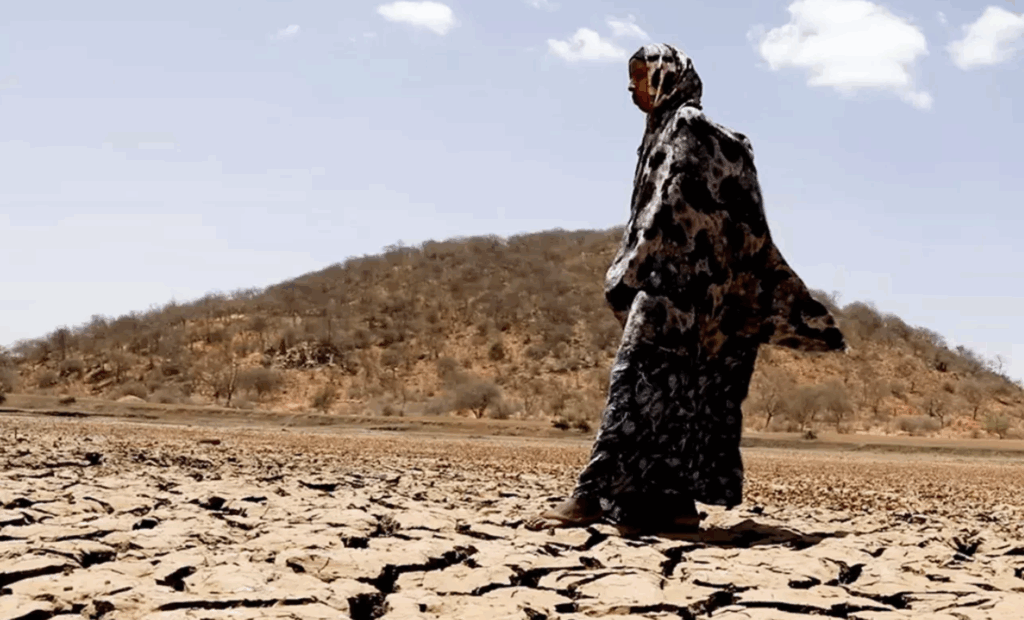

Kenya is currently grappling with the severe tail end of a persistent La Niña event. This climatic phenomenon has drastically suppressed expected rainfall across the nation. The resulting intensification of drought conditions is now posing a critical threat to millions of lives.
As of early January 2026, the “mature” La Niña remains active, with sea surface temperature indices around −0.9 °C. Climate models, however, offer a glimmer of hope for a transition. There is a high likelihood (55% to 68% chance) that the event will dissipate into ENSO-neutral conditions between January and March 2026. The negative Indian Ocean Dipole (IOD), which previously worsened the dryness, has already returned to a neutral state.
The Kenya Meteorological Department (KMD) and ICPAC have issued stern warnings for the first quarter of the year. Most of Kenya is expected to remain generally sunny, hot, and dry through the end of March. Occasional, localized rainfall is only anticipated in the Highlands West of the Rift Valley, the Lake Victoria Basin, and parts of Nairobi and the Coastal strip.
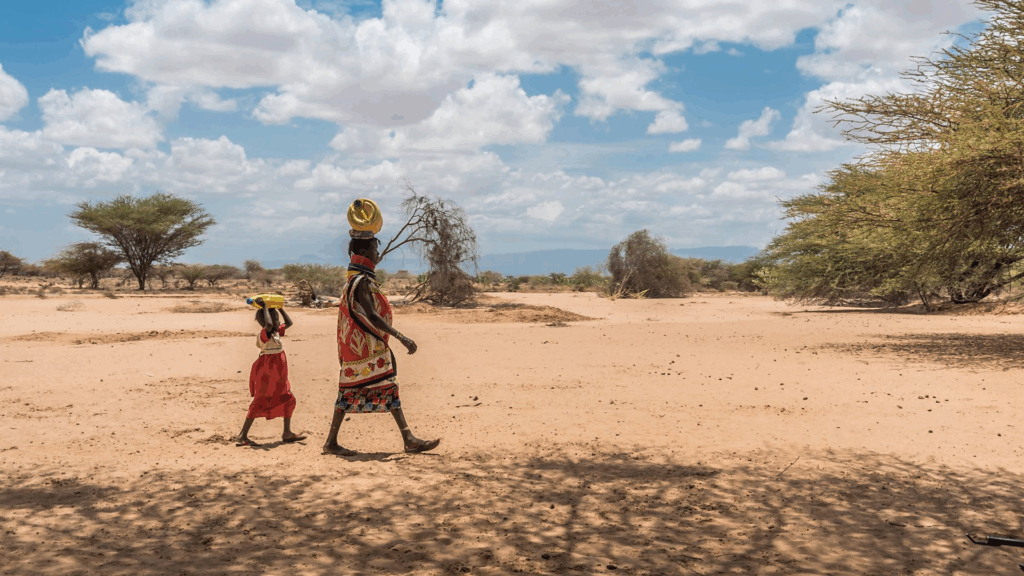
The situation is most dire in the Eastern and Northern regions, including Mandera, Wajir, Turkana, and Tana River. These Arid and Semi-Arid Lands (ASAL) face rapidly worsening drought conditions. Trekking distances to find water sources have already increased significantly for local communities.
The failed short rains have triggered a humanitarian crisis. An estimated 2.1 to 2.5 million people in the ASALs are projected to face acute food insecurity (IPC Phase 3+). This level of crisis is expected to persist through the early part of 2026.
The availability of pasture and water is declining sharply across the affected areas. This scarcity is expected to cause a severe deterioration in the body conditions and productivity of vital livestock. These animals represent the primary source of wealth and sustenance for pastoralist communities.
The crisis is not confined to rural areas; urban centers are also feeling the strain. Cities like Nairobi may soon face severe water rationing measures. Furthermore, the dry spell is causing potential electricity shortfalls due to reduced water inflows into crucial hydropower facilities.
The outlook for the critical March-May (MAM) long rains remains highly uncertain. While models suggest neutral ENSO conditions, any below-average rainfall would be catastrophic for recovery efforts. Long-range projections also hint at a potential shift toward El Niño conditions in the second half of 2026, which could bring heavy rains and flooding by October.