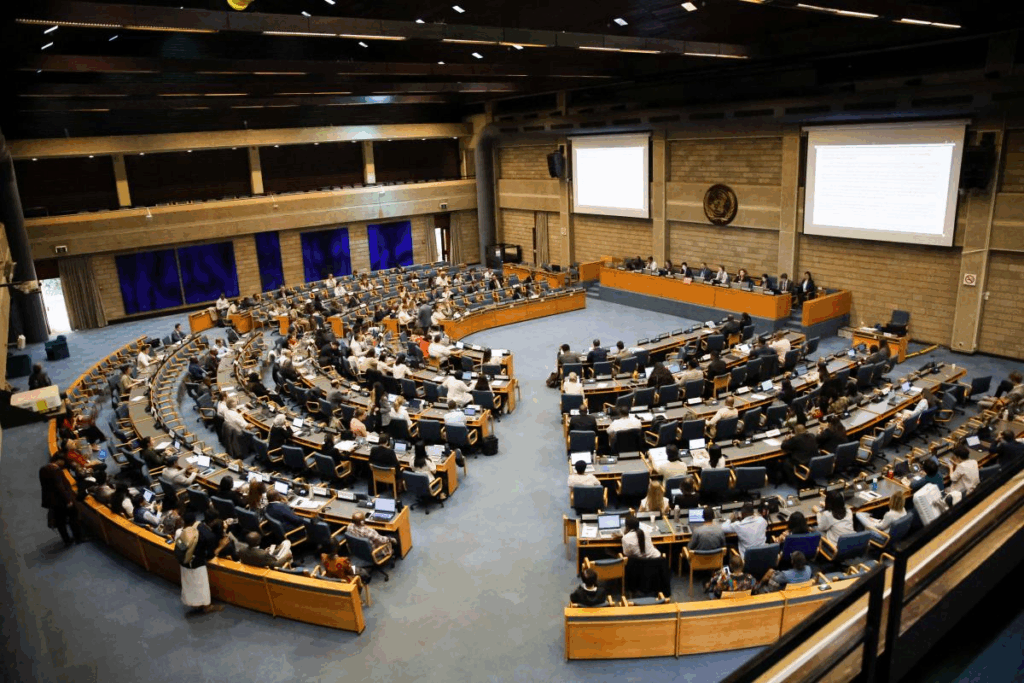

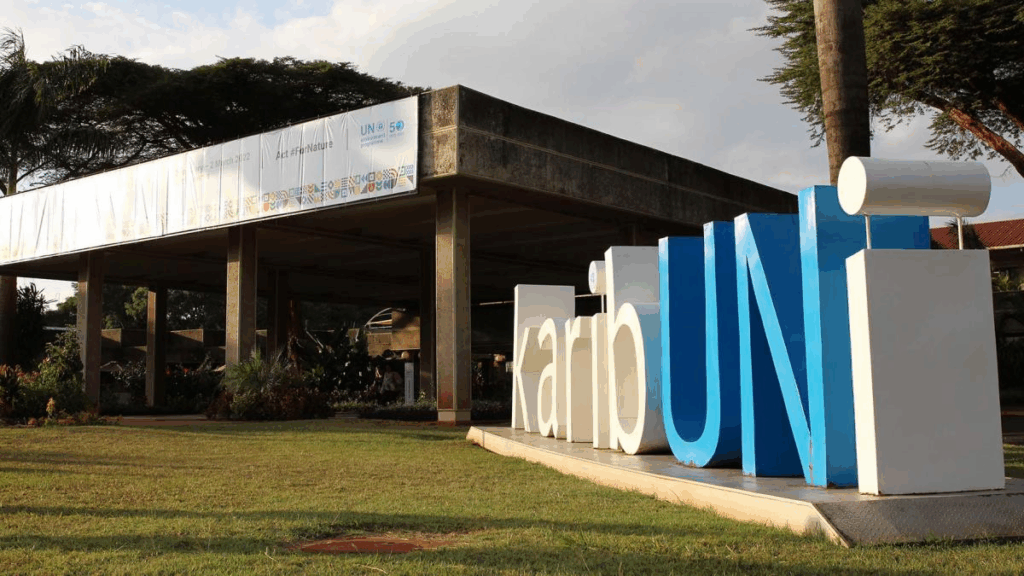
In a few days, governments will gather in Nairobi for the United Nations Environment Assembly (UNEA-7). This assembly is the planet’s highest multilateral decision-making body on environmental matters.
UNEA is the crucial forum where global responses to the triple planetary crisis take shape. Nearly 193 countries will negotiate and adopt resolutions on climate change, biodiversity loss, and pollution.
Decisions made here guide the essential work of the UN Environment Programme (UNEP). They also significantly influence environmental policies adopted by nations around the world.
Over the past weeks, UNEP member states have been drafting key resolutions. These proposals outline specific actions and commitments for the Assembly to adopt by consensus.
However, as UNEA-7 begins, a sense of optimism is notably absent. The world remains fundamentally divided into sovereign states.
These nations are often unwilling to surrender their freedom of action for the greater global good. This geopolitical reality creates a major obstacle for effective global cooperation.
It is a profound irony that the principle of national sovereignty was confirmed in the UN Charter. This happened just as existential global threats, like the atomic age, were emerging.
Humanity now faces an unprecedented triple planetary crisis. This includes the interconnected issues of climate change, pollution, and biodiversity loss.
These existential threats demand urgent, coordinated multilateral action on a global scale. The sheer magnitude of the crisis requires a unified international front.
The United Nations provides a vital platform for this global cooperation. Yet, multilateralism itself is currently experiencing a deep crisis.
This is compounded by growing geopolitical divisions between major powers. Weakening international cooperation and economic inequality further fuel the instability.
The rise of nationalism also contributes to this crisis of trust. As a result, confidence in global governance institutions is steadily declining.
Recent negotiations clearly reveal the fragility of global consensus. The slow pace of progress at UNFCCC Conferences of the Parties is a clear example of this struggle.
The continuing failure to reach consensus during the UNEP Global Plastics Treaty talks also reflects this urgency gap. These outcomes fail to match the critical action required to protect the planet.
The negotiation process itself is inherently complex and often difficult. Countries send large delegations with strict instructions to advance their domestic political and economic interests.
These interests often relate to climate action, biodiversity conservation, and chemicals and waste management. They are the core issues at stake in the talks.
Negotiators arrive with clear “red lines” and positions from their political coalitions. The goal is to achieve consensus, but critical, non-negotiable issues are always at stake.
The turmoil surrounding the Global Plastics Treaty negotiations highlights these deep-seated challenges. Points of disagreement continue to outnumber points of convergence among nations.
The state of reaching a legally binding agreement on plastics remains highly uncertain. This raises serious concerns about how critical multilateral negotiations are being managed by the very bodies meant to be impartial.

The process is further complicated by the sheer number of stakeholders involved. This includes governments, NGOs, industry groups, and Indigenous peoples.
Each group brings its own agenda, making the path to a unified resolution incredibly challenging. The need for consensus often waters down the ambition of the final texts.
Historically, the world needed a new form of global governance to meet environmental challenges. This would have required setting aside national sovereignty and self-interest for the common good.
However, this path was rejected early on in the history of environmental diplomacy. A key agreement at the 1972 Stockholm conference asserted absolute national sovereignty over resources.
This decision effectively blocked the formation of a true “Global Environmental Government.” This historical choice continues to shape the limitations of current environmental diplomacy.
The result is a system where national self-interest often trumps planetary necessity. This structural flaw makes it difficult to enforce global environmental standards.
UNEA-7 holds extremely high stakes for global environmental policy. It is not expected to be a single “decisive moment” that instantly solves all global problems.
Instead, it serves as a crucial forum for continuous international engagement. The goal is to forge consensus and build momentum for implementing existing commitments.
Notable achievements have certainly been made over the years. However, compared to the magnitude of the crisis, the progress often seems less impressive.
The challenge is to overcome the geopolitical hurdles and power imbalances that plague the system. UNEA-7 must find a way to translate global ambition into effective, coordinated action on the ground.
The world is watching to see if the Assembly can rise to the challenge. Success means moving beyond rhetoric to deliver tangible results for a sustainable future.