

A new global report has found that forests and trees are among agriculture’s greatest allies.
The report, jointly published by the Food and Agriculture Organization of the United Nations (FAO), the Stockholm Environment Institute (SEI), The Nature Conservancy (TNC) and Conservation International (CI), synthesizes the latest science showing how forests regulate climate, water, soils, biodiversity and a wide range of ecosystem functions that directly support agricultural productivity.
As climate change accelerates and extreme weather becomes more frequent, farmers worldwide, particularly smallholders in vulnerable regions, face mounting pressure.
According to the report, strengthening the links between forests and agriculture offers a viable pathway toward more productive, sustainable and climate-resilient food systems.
One of the report’s central findings is that forests help moderate local and regional temperatures. Through shading, evapotranspiration and canopy-driven cooling, trees reduce heat stress for crops and farm workers alike, while stabilizing microclimates.
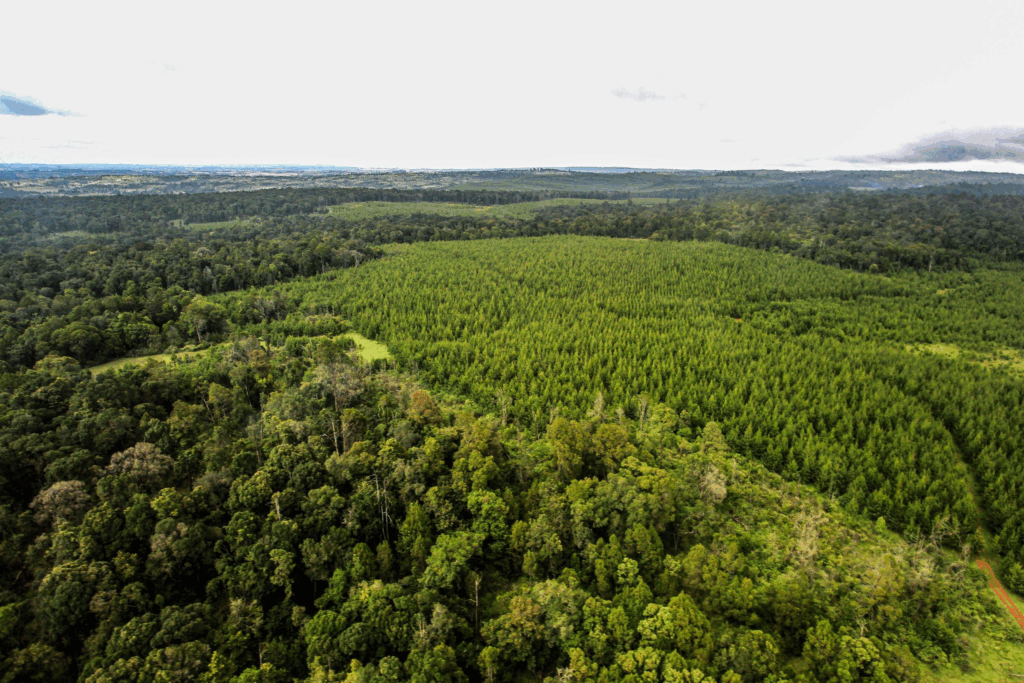
Forests are also essential to rainfall and water regulation. Tree cover enhances water retention, replenishes groundwater and keeps water flowing even during dry spells or droughts. In rain-fed farming systems, this regulation can mean the difference between a failed harvest and a successful season.
The report further highlights that intact or restored forest landscapes can influence rainfall patterns over entire regions, meaning forest conservation is not just a local issue but a cornerstone of climate and water security for agricultural zones.
Beyond climate and water, forests supply a suite of “hidden” ecosystem services vital to farming. Tree roots and leaf litter improve soil structure, increase water infiltration, reduce erosion and help maintain soil fertility, all of which foster healthier soils and stronger yields over time.
Forests also nurture biodiversity, including pollinators such as bees, butterflies and birds, as well as natural predators that help control pests. By maintaining habitat diversity, forests reduce farmers’ dependence on chemical pesticides and support more balanced ecosystems.
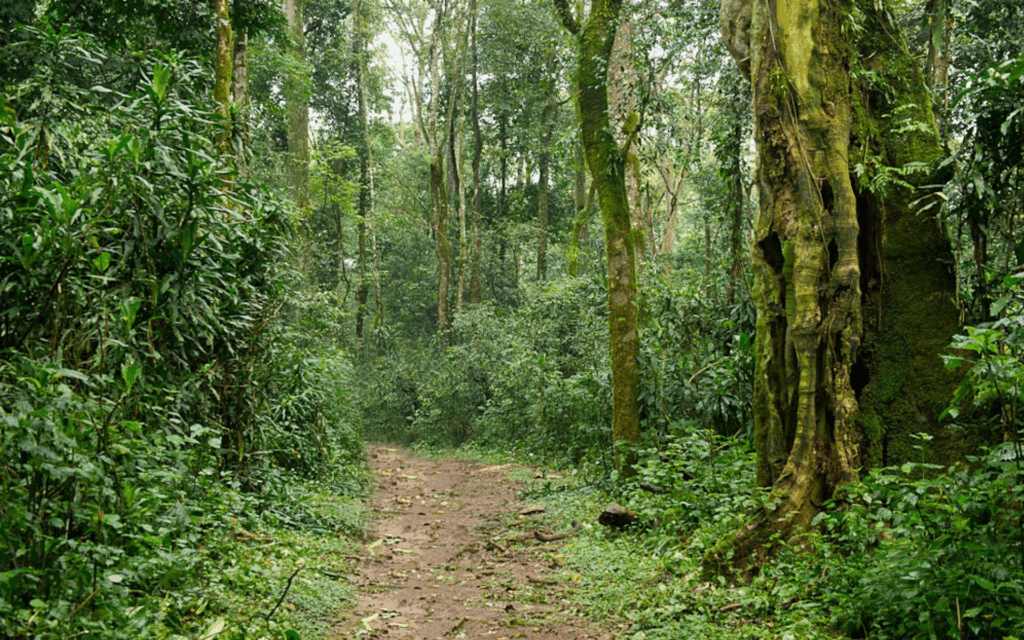
These benefits translate into real value for smallholder farmers in terms of better yields, more resilient livelihoods and healthier landscapes.
The report cites a separate review showing that integrating trees into farms through agroforestry or mixed systems, often maintains or even increases crop yields compared to monocultures, while providing additional income streams and buffering farmers from climate and market shocks.
Crucially, the report calls for integrated landscape approaches that treat agriculture and forests as complementary rather than competing land uses.
It emphasizes that restoring even half of the world’s lost tropical forests could lower land surface temperatures by about one degree Celsius, helping to revive the climatic and hydrological regulatory functions essential for farming and water security.
One of its strongest critiques is that many global and national policies continue to treat agriculture, forestry, water management, biodiversity and public health as separate sectors. This fragmented governance, the report warns, undermines opportunities for holistic, sustainable solutions.
To unlock the full potential of forest–agriculture synergies, the authors urge governments and development partners to invest in forest conservation, restoration, sustainable forestry and agroforestry backed by supportive policies and incentives.