
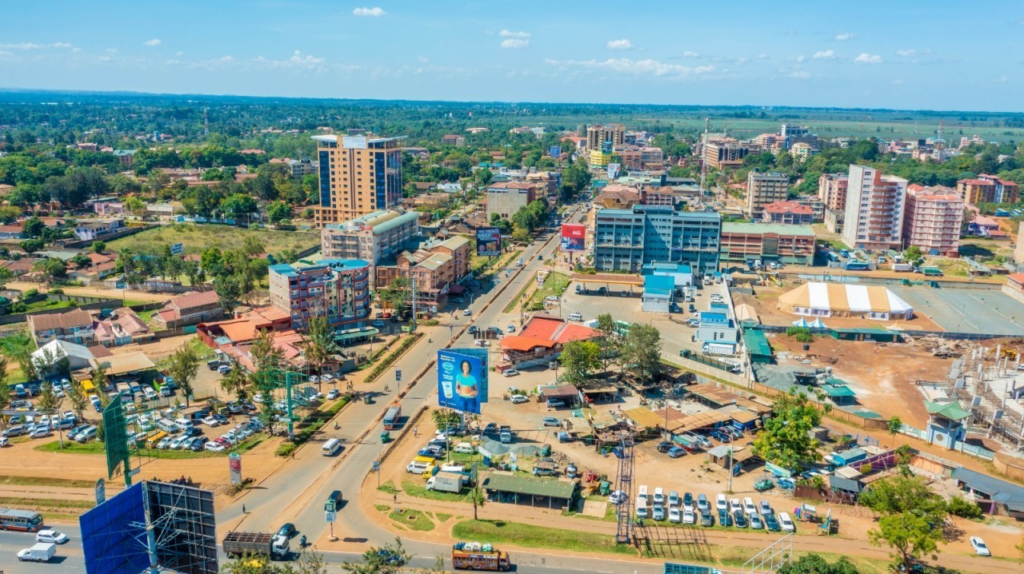

Kenya’s fast-growing urban areas, including Kiambu and Nakuru, will play a decisive role in determining whether the country meets its climate mitigation goals.
This is according to a new report by the Organisation for Economic Co-operation and Development (OECD) and UN-Habitat that examines how intermediary cities can avoid carbon-intensive growth.
The report, Climate Mitigation in Intermediary Cities, finds that while national climate strategies often focus on major cities, it is smaller and mid-sized towns and cities such as Kiambu and Nakuru that will absorb most of Kenya’s urban population growth over the coming decades.
Without changes in how these cities plan transport, housing and infrastructure, the report warns that rising emissions and congestion could undermine Kenya’s long-term climate commitments.
According to the OECD report, more than 80 per cent of transport spending in the two cities is directed toward road construction, reinforcing car-oriented development patterns. This approach, the report notes, risks locking cities into high-emission systems that are costly and difficult to reverse once fully established.
The OECD notes that Kiambu development has largely occurred without integrated land-use and transport planning, resulting in longer commutes, congestion and growing emissions. “Despite walking being a dominant mode of travel for many residents of Kiambu County, public investment continues to prioritise road infrastructure designed mainly for cars rather than people.”

Nakuru, which is one of Kenya’s fastest-growing cities, faces similar challenges. The city has experienced rapid outward expansion, placing pressure on its water, energy, and waste systems. Transport in Nakuru remains dominated by informal minibuses, yet planning and budget allocations continue to favour road expansion, contributing to congestion and declining air quality, the report says.
The OECD and UN-Habitat recommend that Kenya strengthen coordination between national and county governments, integrate informal transport systems into official planning frameworks, and align land-use decisions with climate objectives.
The report also calls for a shift in urban planning priorities toward accessibility and public space, rather than vehicle speed and road capacity.
“Intermediary cities still have a window of opportunity to avoid carbon lock-in,” the report states, adding that early action in places like Kiambu and Nakuru could deliver climate benefits while improving access to jobs, services and public spaces for residents.
As Kenya’s urban population continues to grow, the report concludes that climate action will increasingly be shaped not only by national policy, but by day-to-day planning decisions made in its rapidly expanding towns and cities.