
By The UN
By the time the rains failed again in her childhood village in North Kinangop, Nyandarua County, Maryanne Gichanga already understood what a bad harvest meant.
It meant fewer meals, unpaid school fees and watching her hardworking smallholder parents and neighbours stare helplessly at cracked soil and wilting crops, unsure what they had done wrong.
“In our home, farming was everything,” she recalls. “When the harvest failed, it directly affected our quality of life. Sometimes it meant we couldn’t go to school.”
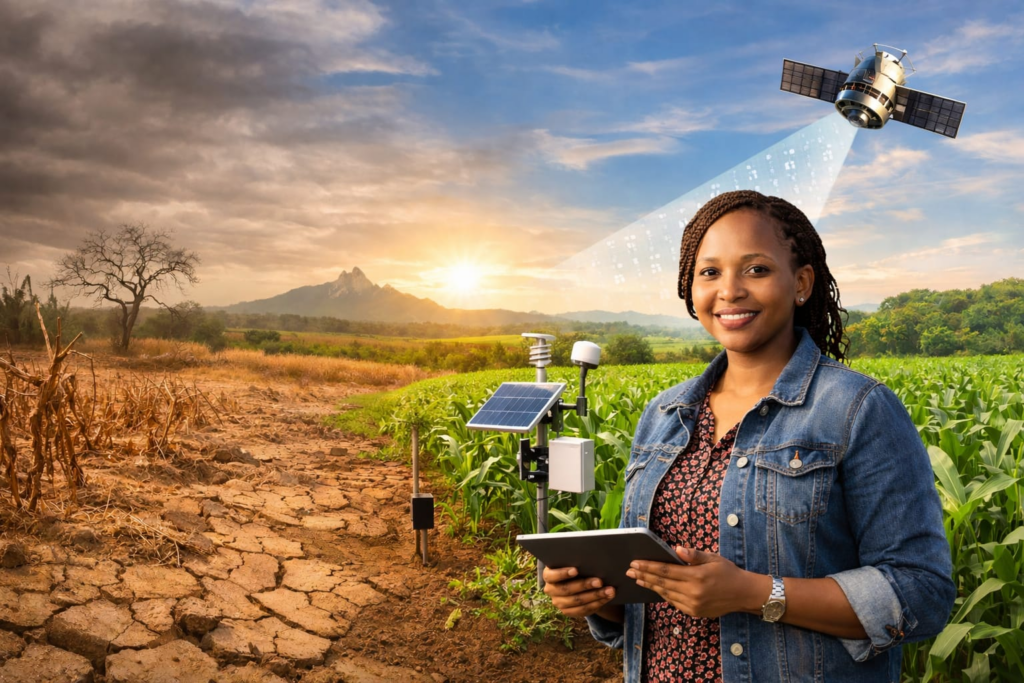
Today, as Kenya reels from intensifying droughts and erratic weather driven by climate change, Gichanga is turning that childhood pain into innovation and hope. Through solar-powered sensors and artificial intelligence-driven satellite data, she is helping farmers make smarter decisions about their soil, crops, and weather, offering a lifeline to livelihoods under growing threat.
Agriculture employs nearly 75 per cent of Kenya’s population and underpins food security across East Africa. But that foundation is cracking. Droughts are becoming more frequent and severe. Rainfall patterns are unpredictable. Productive land is shrinking. Across the region, farmers are planting blindly, gambling their savings on seeds and fertiliser in an increasingly hostile climate.
For Gichanga, the crisis is not abstract. “I witnessed many harvests growing up,” she says. “But when climate change started happening, we didn’t understand what was going on. We were doing everything right, but the weather had changed.”
The injustice of that reality stayed with her. Years later, it pushed her to start a technology-driven agribusiness, AgriTech Analytics Ltd, designed to help smallholder farmers adapt to a climate they can no longer rely on.
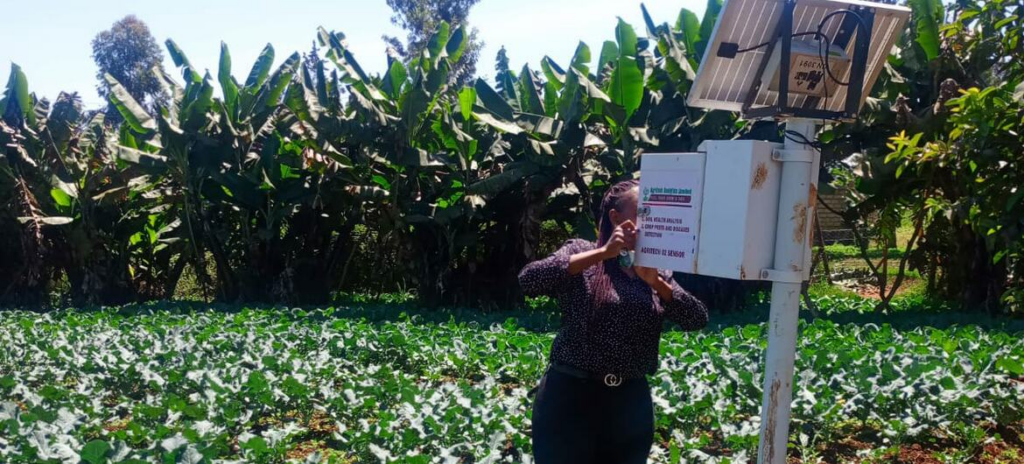
“I always wanted to offer solutions to my parents and other farming families. That’s what inspired me to build this company and bring together like-minded people to support smallholder farmers.”
Speaking to the United Nations ahead of the International Day of Clean Energy, marked annually on January 26, Gichanga explained how her company uses solar-powered sensors placed in farms to monitor soil moisture and crop health. That data is combined with AI-powered satellite imagery to generate localised weather forecasts and farming insights.
The goal is simple: remove guesswork from farming. Instead of planting based on tradition or hope, farmers receive real-time information on when to plant, how much water their crops need, and what their soil can support.
For farmers operating on razor-thin margins, the difference can mean survival.
“Farmers are now able to make decisions based on data, not assumptions,” she says. “That alone changes everything.”
Breaking barriers in a male-dominated field
But building a tech startup in agriculture came with challenges that had little to do with climate or coding.
“In Africa, communities are quite patriarchal,” Gichanga says. “Getting into this male-dominated field is hard. People would rather work with a man. They feel men understand what you do better than you do.”
In many rural areas, she says, female leadership is still viewed with suspicion, even when the solution works. “Even women offering solutions is not something they easily accept.”
Her strategy was persistence and proof. “What really helped me was training and demonstrations. You have to show people what you do and that you know what you’re doing,” she says. “You cannot give up. You collaborate with people you meet, and eventually it works out.”
A breakthrough came when her startup received backing from Greenovations Africa, a United Nations-supported initiative that nurtures women entrepreneurs in the climate and clean energy sectors.
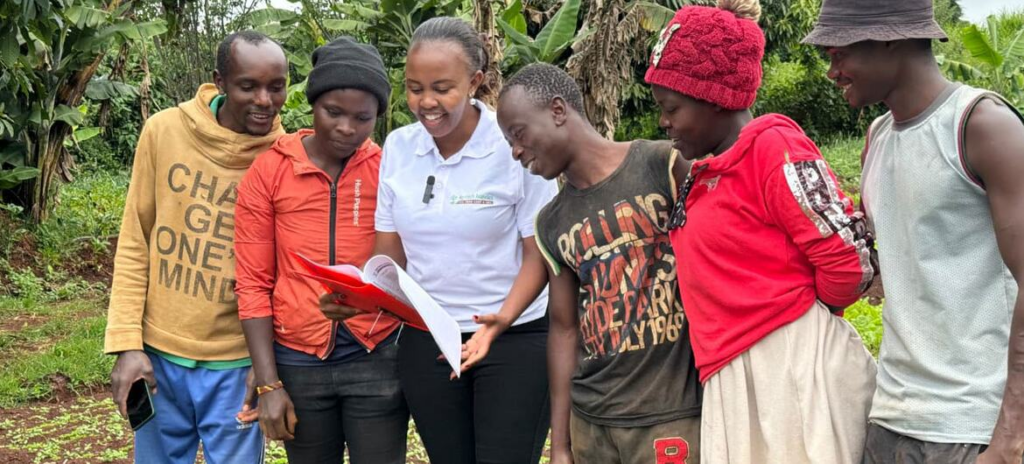
“They believed in small companies and offered training and seed capital to help them grow. That support was an essential part of the process,” says the procurement graduate from Jomo Kenyatta University of Agriculture and Technology (JKUAT).
Changing lives, one farm at a Time
Today, the impact is visible in the fields. Farmers who once planted blindly now schedule planting around forecasted rains. Crop yields are rising, and incomes are stabilising.
Some farmers who could not afford seeds a few seasons ago are now negotiating better prices for their harvests.
“My highest point is when I see lives changed directly,” Gichanga says. “When you empower farmers, their lives change.”
She tells the story of a farmer who once struggled to buy seeds but now controls when and where to sell his produce. “When you see someone move from desperation to dignity, it makes you want to work even harder,” she says.
Despite the long hours, funding struggles, and cultural resistance, Gichanga says quitting has never truly been an option.
“It’s important to remember why you started,” she says. “Knowing my parents are no longer struggling, and thinking about the millions of children whose futures depend on farming incomes, it keeps me focused,” she pauses.
“So many people depend on you. When you look at how far you’ve come, giving up is not an option.”
A Message to the Next Generation
To young women and girls dreaming of innovating in agriculture, climate action, or clean energy, her message is blunt and hopeful: “Go for it,” she says. “You will learn along the way. Some people will support you financially or technically. There is no right time to start. You will never be prepared enough. You just have to do it.”
As Kenya’s climate crisis deepens, stories like Gichanga’s offer a counter-narrative to despair: that local innovation, driven by lived experience and powered by clean energy, can help rewrite the future of farming.
For families whose survival depends on the soil, that future cannot come soon enough.
The article has been republished from the UN: https://news.un.org/en/story/2026/01/1166823