
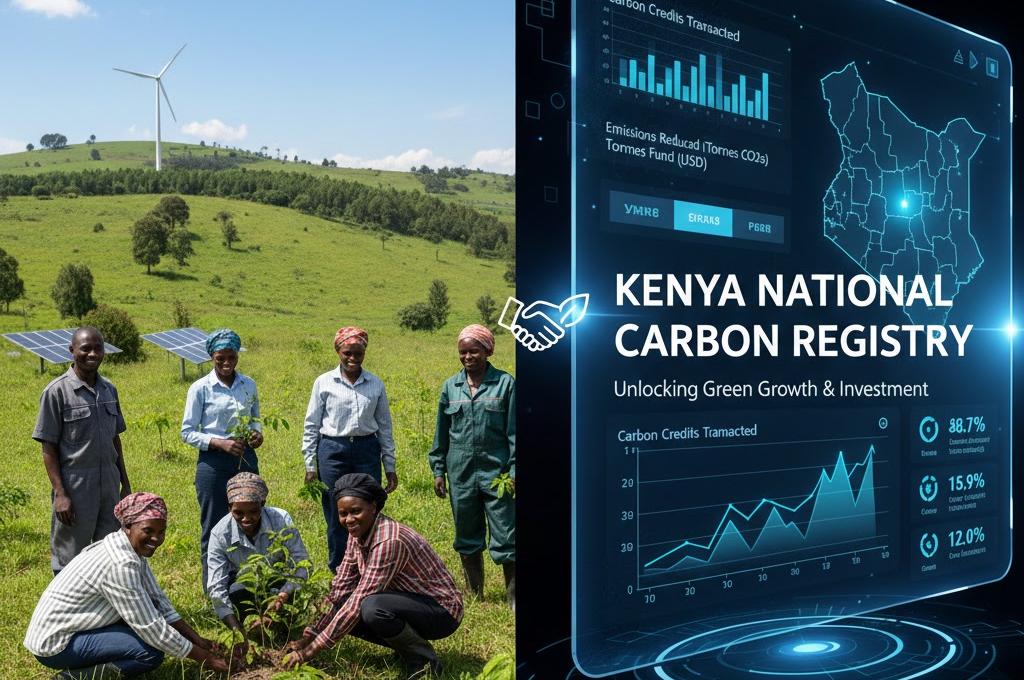

Kenya has taken a major step in its fight against climate change with the launch of the Kenya National Carbon Registry (KNCR).
KNCR is a digital system designed to track the country’s carbon emissions and manage carbon credit projects and is expected to help Kenya track its progress in cutting emissions and strengthening climate resilience, while attracting funding to meet its climate goals.
Environment Principal Secretary Festus Ng’eno has described the registry as a turning point in how Kenya accounts for pollution and participates in global climate markets.
The carbon registry works like a national ledger that records projects that reduce greenhouse gas emissions, such as tree planting, renewable energy installations, or clean cooking initiatives. It also verifies how much carbon pollution these projects prevent or remove from the atmosphere.
Once verified, these reductions can be converted into carbon credits, which companies or countries can buy to offset their own emissions.
Government officials say the registry will be rolled out in phases, beginning with onboarding project developers and training stakeholders on how to use the platform.

If implemented effectively, the KNCR could position Kenya as a regional leader in carbon markets, unlocking climate finance at a time when developing countries are demanding greater support to adapt to a warming world.
For local communities, this could translate into more tree-planting projects that pay farmers and community groups, investment in clean energy such as solar mini-grids in rural areas, support for sustainable agriculture practices and new green jobs for youth.
Climate finance experts say the registry gives Kenya credibility in carbon trading by providing evidence that emission reductions are real, a major criterion for investors.
Although Kenya contributes only a tiny fraction of global greenhouse gas emissions, it is highly vulnerable to climate shocks such as prolonged droughts, erratic rainfall, and floods.
While the registry has been widely welcomed, civil society groups caution that carbon markets must benefit local communities and not just corporations.
Past carbon offset projects in parts of Africa have raised concerns about land rights, community consent, and equitable revenue sharing.
Experts say strong oversight will be critical to ensure communities are consulted before projects begin, benefits are shared fairly and environmental standards are upheld.