
By Asha Bekidusa
A five-minute climb from the tidal flats of Jomvu Creek in Mombasa County, the scent of salt and mangrove mud lingers in the morning air. Inside a modest hall overlooking the creek, laughter rises above the hum of conversation. The gathering resembles a typical women’s chama. But here, discussions are less about loans and more about tides, crab feed, mangrove seedlings and cage repairs.
These women, aged between 35 and 60, are members of Jomvu Women in Fisheries and Culture, a community-based organisation reshaping both livelihoods and the fragile ecosystem that sustains them. At the heart of their work lies an unlikely yet increasingly significant venture: mud crab farming directly linked to mangrove conservation.
Four years ago, most of them earned a precarious living as mama karanga, frying fish over charcoal stoves near landing beaches. Others sold fresh fish or stayed home caring for children and grandchildren. But dwindling fish stocks in the creek, rising temperatures and the health hazards of daily exposure to smoke made survival uncertain.
“When fish became scarce, so did our income,” says Charity Baya, the group’s chairperson. “We realised we needed something sustainable, one that would also protect the environment we depend on.”
In 2021, an opportunity arrived through a blue-economy grant under the Kenya Marine Fisheries and Socio-Economic Development (KEMFSED) project. With training in small-business management and sustainable fisheries, the women drafted a proposal to venture into mud crab fattening, an approach that adds value to wild crabs without overharvesting.
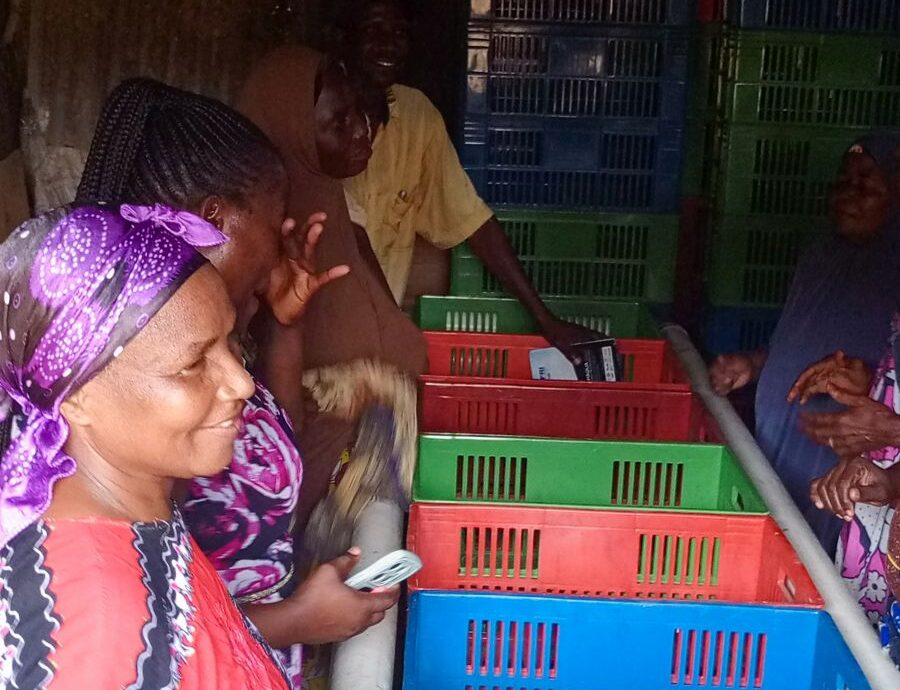
Nearly half of the original 30 members withdrew, unsure whether women juggling households could manage an unfamiliar aquaculture enterprise. But fourteen women, joined by three supportive “male champions,” pressed on. Their persistence paid off after they secured KES 2.7 million to establish a crab-fattening operation and construct a mangrove boardwalk through the creek.
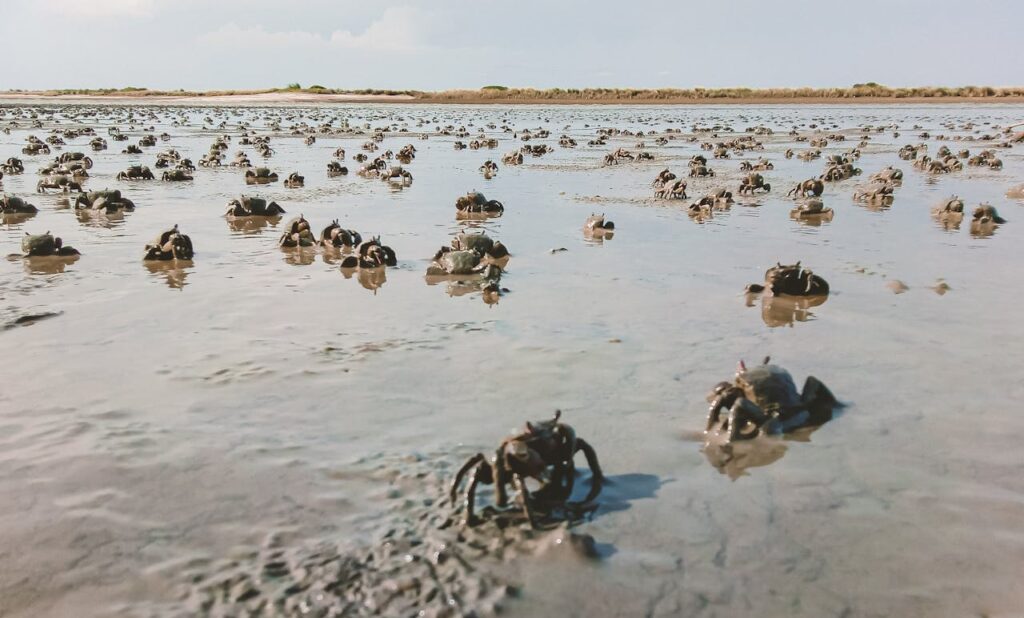
The group farms mud crabs (Scylla serrata), a prized species known locally as mangrove crab. The crustaceans thrive in brackish tidal creeks and fetch high market prices due to their sweet, firm flesh.
Rather than intensively farming from hatchlings, the women collect juvenile wild crabs and fatten them in repurposed plastic crates anchored in the mangrove-lined creek.
Each cage holds two crabs. The group manages about 30 cages tethered carefully against the pull of the tides. The crabs feed on small fish, shrimp and marine snails harvested sustainably from nearby waters. Feeding happens when high tide submerges the cages, following a disciplined schedule learned through trial and training.
Within six to eight weeks, a 300-gram crab grows to nearly a kilogram. The harvest sells to local distributors and aquaculture partners at around KES 900 per kilo. In a good month, the women collectively earn roughly KES 40,000, a modest income, but transformative compared to their former hand-to-mouth existence.
For Mwanasiti Mwaka Chirima, once a fish fryer for three decades, the shift has also been about health. “I coughed all day from smoke,” she says. “The doctor warned me. Now I work in the open air.”
Yet beyond income, the group’s true investment is ecological, as from the outset, crab farming was tied to mangrove restoration. Over four years, the women have planted nearly one million mangrove seedlings along the creek’s muddy banks. Mangroves are ecological powerhouses through their intricate root systems that trap sediment, stabilise shorelines, filter pollutants, and provide nurseries for juvenile fish and crustaceans.
“If the mangroves disappear, everything disappears,” Baya says. “The crabs, the fish and our future.”
The relationship between mangroves and mud crabs is symbiotic. Crabs burrow into the mud, aerating soil and aiding seedling establishment. Mangroves, in turn, provide food, shade and shelter for crabs. By restoring the forest, the women strengthen the very habitat their enterprise depends on.
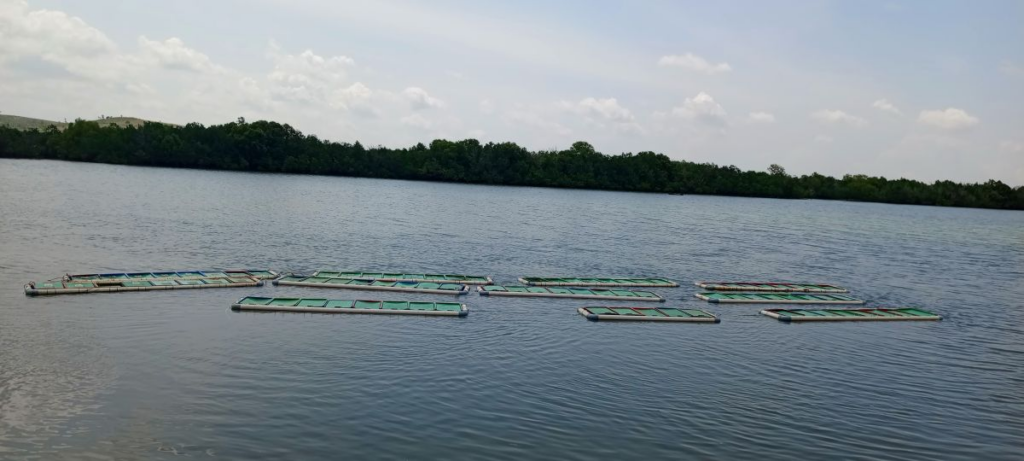
There have been setbacks. Three weeks after launching, powerful tides tore loose their anchored cages, sweeping them nearly two kilometers away. The crates were recovered empty.
Theft has occasionally forced them to keep night watch. And the plastic crates, originally designed for transporting bread, degrade quickly in salty water, raising concerns about long-term waste.
But adaptive learning has become part of their conservation ethic. They reinforced anchoring systems, improved monitoring routines and continue exploring better cage materials. Their daily interactions with tides, salinity, and mangrove growth have sharpened their ecological awareness.
“We check water clarity, we observe when tides are strongest,” says Doris Mwachai, another member. “We have learned to read the creek.”
Climate change adds urgency. Rising sea levels, shifting tidal patterns and warming waters threaten mangrove ecosystems along Kenya’s coast. Overharvesting wild crabs before maturity compounds pressure on already stressed habitats. Crab fattening offers a middle ground, reducing waste and allowing crabs to reach optimal market size before sale.
David Mirera, principal research scientist at the Kenya Marine and Fisheries Research Institute (KMFRI), says such initiatives reflect a shift toward sustainable coastal livelihoods.
“Before, fishers kept crabs for days and many died before sale,” he notes. “Caging them in their natural habitat reduces post-harvest losses and maintains ecological balance.”
KMFRI is supporting hatchery development to reduce reliance on wild juveniles, a move that could further protect natural crab populations.
Busolo Bonface, a mariculture and environmental conservation adviser, says the Jomvu project remains small-scale and environmentally light. “Nutrient load is minimal, and the presence of marine snails indicates good water quality,” he explains. However, he cautions that expansion would require clear environmental guidelines to prevent pollution and plastic waste.
Parallel to crab farming, the women are constructing a 180-meter wooden boardwalk through the mangrove forest. Once complete, it will serve both as access to crab cages and as an eco-tourism corridor. Visitors, including students, researchers, and tourists, will learn about mangrove ecology, sustainable fisherie,s and women’s leadership in conservation.
“We want people to see how women are protecting this creek,” Baya says.
Across Kenya’s coast, women have long formed the backbone of fisheries value chains, drying, frying and selling fish, yet are rarely recognized as environmental stewards or entrepreneurs. Networks like Coastal Women in Fisheries Entrepreneurship now connect thousands of women to training and credit, amplifying initiatives like Jomvu’s.
As the tide rises each afternoon, the barefoot women wade in to check their stock. Each crab that fattens, each seedling that takes root, represents more than income. It is proof that restoring ecosystems and sustaining livelihoods can advance together.
“If the mangroves die, the crabs go,” Baya says quietly. “And if the crabs go, so do we.”
In Jomvu Creek, conservation has become both shield and strategy, a testament to how community stewardship can nurture resilience along Kenya’s vulnerable coast.
This article has been republished from Mongabay: https://news.mongabay.com/2026/02/in-kenyas-jomvu-creek-women-help-restore-a-vanishing-coast-through-crab-farming/