
By Mwangi Ndirangu
Kenya’s push to position itself as a continental leader in carbon markets has received a major boost from a Sh107 billion green fertiliser project in Naivasha, which plans to generate and sell carbon credits in international compliance markets.
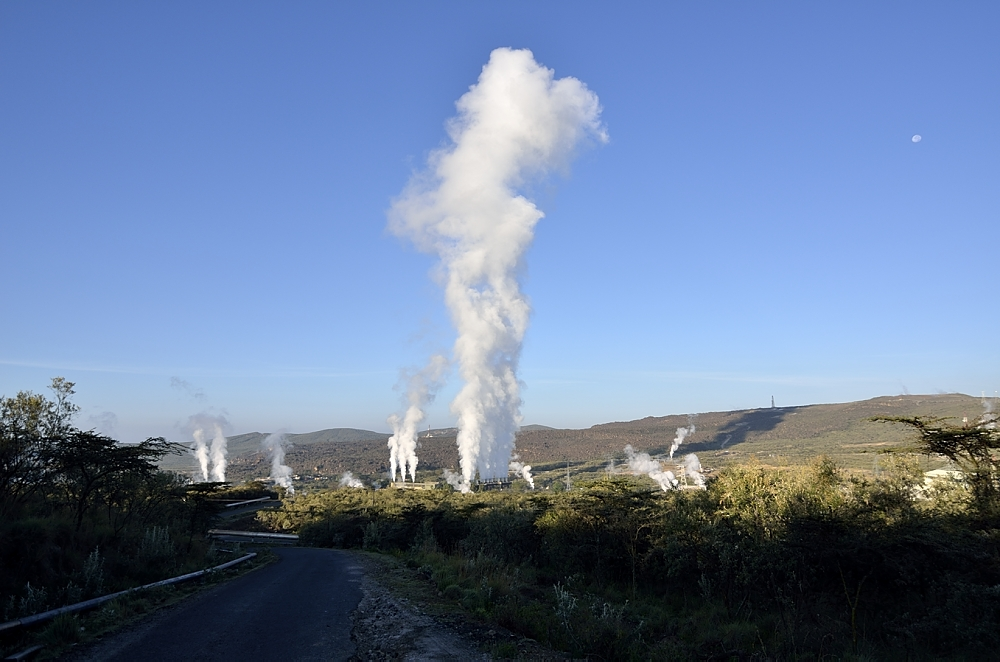
The proposed project, backed by Kenya Electricity Generating Company PLC (KenGen) in Naivasha, will produce green ammonia using geothermal power, avoiding the heavy carbon emissions associated with conventional fertiliser manufacturing that relies on fossil fuels.
But beyond fertiliser production, the project’s most strategic asset may be its carbon credits tradable units representing verified reductions in greenhouse gas emissions.
Carbon credits are generated when a project demonstrably reduces or removes carbon dioxide (CO₂) emissions compared to a baseline scenario. Each credit represents one tonne of CO₂ equivalent avoided or removed from the atmosphere. These credits can then be sold to governments or companies seeking to meet climate obligations.
According to project filings, the KenGen-backed factory is expected to avoid about 600,000 tonnes of CO₂ equivalent annually. That scale of reduction places it among the largest industrial decarbonisation initiatives in the region.
The credits will be traded under Article 6.2 of the Paris climate framework, governed by the United Nations Framework Convention on Climate Change (UNFCCC).
UNFCCC Article 6.2 allows countries to trade emission reductions directly through bilateral agreements, creating what are known as Internationally Transferred Mitigation Outcomes (ITMOs).

Unlike voluntary carbon markets, where companies buy credits largely for corporate climate pledges, Article 6.2 credits can be used by countries to meet their legally binding climate targets under the Paris Agreement. That distinction makes them potentially more valuable and more tightly regulated.
Kenya has committed to cutting greenhouse gas emissions by 32 percent below business-as-usual levels by 2030. While the country’s emissions are relatively low compared to industrialised nations, its vulnerability to climate change is high.
Industrial projects powered by renewable energy offer Kenya a dual opportunity of supporting domestic economic growth while earning foreign exchange through carbon trading.
By using geothermal energy to power ammonia production, the Naivasha project sidesteps the carbon-intensive Haber-Bosch process typically fueled by natural gas. Geothermal energy, which Kenya has in abundance in the Rift Valley, produces minimal emissions compared to fossil fuels.
The fertiliser plant will source about 165 megawatts of geothermal electricity over 30 years, locking in a low-carbon production model. That long-term clean energy arrangement is central to the credibility of its carbon credits.
The KenGen-backed fertiliser project’s decision to target compliance markets under Article 6.2 signals a strategic shift toward more formalised, government-aligned carbon trading mechanisms. Compliance markets generally require rigorous measurement, reporting, and verification (MRV) standards, reducing the risk of disputed or low-quality credits.
For Kenya, this could help restore confidence in its carbon market framework while attracting institutional investors.
Globally, heavy industry, including fertiliser production, accounts for a significant share of greenhouse gas emissions. Decarbonising such sectors is therefore critical to limiting global warming to 1.5°C above pre-industrial levels.
Green ammonia projects are increasingly seen as part of that transition. When powered by renewable energy, ammonia production can become nearly carbon-neutral. In some global markets, green ammonia is also being explored as a shipping fuel and hydrogen carrier.
By integrating geothermal power with industrial manufacturing, Kenya is positioning itself at the intersection of climate finance and green industrialisation.
The project’s carbon crediting period is expected to run for an initial 10 years, with potential renewals extending up to 30 years. Over that period, revenues from credit sales could provide a steady income stream alongside fertiliser production profits.
For farmers, local fertiliser production could reduce reliance on imports and cushion price volatility driven by global energy markets. For the climate, replacing fossil-fuel-based fertiliser with green ammonia lowers lifecycle emissions in agriculture.