
Human health is increasingly under threat as global warming reshapes disease patterns, intensifies heat stress, and exposes millions to new risks, according to the State of the Global Climate 2025 report by the World Meteorological Organization (WMO).
“On a day-to-day basis, our weather has become more extreme,” WMO Secretary-General Celeste Saulo said when releasing the report on March 23. “In 2025, heatwaves, wildfires, drought, tropical cyclones, storms and flooding caused thousands of deaths, impacted millions of people and caused billions in economic losses.”
According to the report, rising temperatures, erratic rainfall and more frequent extreme weather events are altering when and where diseases spread, how severe they become and which populations are most vulnerable.
Extreme heat has emerged as one of the deadliest threats. The WMO notes that heatwaves are already driving higher mortality, straining health systems and disrupting livelihoods, while also worsening mental health pressures.
Heat is further amplifying the spread of infectious diseases and undermining ecosystems that communities depend on. Among the most alarming trends is the rapid global expansion of dengue fever.
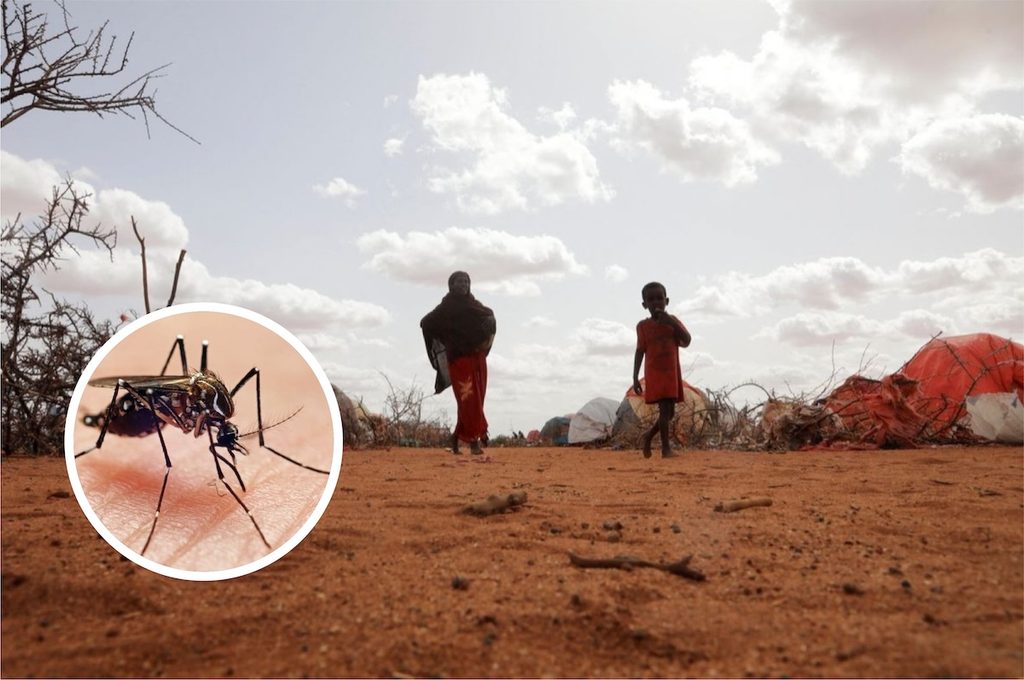
The report highlights dengue as the world’s fastest-growing mosquito-borne viral disease, now putting roughly half of the global population at risk, with up to 400 million infections recorded annually, according to the World Health Organization (WHO).
Scientists say rising temperatures are accelerating mosquito breeding cycles, increasing biting rates and shortening virus incubation periods, making transmission faster and more widespread.
Changing rainfall patterns are also creating new breeding grounds, pushing the disease into previously unaffected regions and extending transmission seasons in endemic areas.
At the same time, heat stress is taking a heavy toll on workers. More than one-third of the global workforce, an estimated 1.2 billion people, now faces heat-related risks each year, particularly in sectors such as agriculture and construction. The report links rising temperatures to increased fatigue, injuries, dehydration and long-term health complications, alongside declining productivity and income losses.
The WMO and WHO are calling for urgent action, urging governments and employers to introduce heat-sensitive workplace policies, adjust working hours, and ensure access to shade, cooling and safe drinking water. They also emphasize the need to integrate weather and climate data into occupational safety planning.
According to the report, climate-informed disease surveillance and early warning systems are critical tools to shift from reactive crisis response to proactive prevention, allowing authorities to anticipate outbreaks, target interventions and strengthen health system readiness.
The report also underscores the broader human toll of climate-driven extremes. Intensifying droughts, floods and storms are disrupting food production, driving up hunger and forcing displacement across vulnerable regions.
These cascading impacts are particularly severe in low- and middle-income countries, where communities have contributed least to global emissions but face the greatest risks.
The report warns that Earth’s climate system is being pushed “beyond its limits,” with every key indicator flashing red as human activities increasingly disrupt the planet’s natural energy equilibrium.
“The State of the Global Climate is in a state of emergency,” said UN Secretary-General António Guterres in response to the findings. “Planet Earth is being pushed beyond its limits. Every key climate indicator is flashing red.”
The report, which for the first time includes the Earth’s energy imbalance as a core climate indicator, confirms that 2015 to 2025 were the 11 hottest years on record. The other indicators are atmospheric carbon dioxide, global mean near-surface temperature, ocean heat content, global mean sea level, ocean, glacier mass balance and sea-ice extent.
According to the WMO report, the Earth’s energy balance, which measures the rate at which energy enters and leaves the Earth system, has become increasingly destabilized. Atmospheric concentrations of heat-trapping greenhouse gases (carbon dioxide, methane, and nitrous oxide), the report says, have risen to their highest levels in at least 800,000 years, upsetting that equilibrium.
“Human activities are increasingly disrupting the natural equilibrium, and we will live with these consequences for hundreds and thousands of years,” said Saulo. “The warming atmosphere has translated directly into more extreme weather events.”
Data from monitoring stations show that concentrations of carbon dioxide, methane, and nitrous oxide continued to increase in 2025, with the annual increase in carbon dioxide concentration in 2024 being the largest since modern measurements began in 1957, driven by continued fossil fuel emissions and reduced effectiveness of land and ocean carbon sinks.
“Humanity has just endured the eleven hottest years on record,” UN Secretary General Antonio Guterres said. “When history repeats itself eleven times, it is no longer a coincidence. It is a call to act.”
He added: “In this age of war, climate stress is also exposing another truth: our addiction to fossil fuels is destabilizing both the climate and global security. Today’s report should come with a warning label: climate chaos is accelerating, and delay is deadly.”