
African cities are experiencing some of the fastest urbanisation rates globally, with the United Nations estimating that the continent’s urban population will grow from about 43 per cent of the total population in 2020 to nearly 60 per cent by 2050.
Against this backdrop, the air is becoming increasingly hazardous. From congested highways to smoky cooking fuels and industrial emissions, pollution is emerging as one of the continent’s most overlooked public health crises.
Globally, pollution is responsible for an estimated nine million deaths every year, according to research published in The Lancet Planetary Health. It shows pollution-related deaths increasing steadily, driven by industrial processes, urbanisation and fossil fuel emissions.
In this study, several African countries feature prominently among those hardest hit, including Chad, the Central African Republic, Niger, Somalia, South Africa, Lesotho and Burkina Faso.
For cities expanding at breakneck speed, the statistics raise a difficult question of whether African urban centres can grow without choking on their own pollution.
“Pollution remains one of the major challenges continuing to affect cities across the continent,” said Etienne Krug, Director of the Department of Social Determinants of Health at the World Health Organisation WHO.
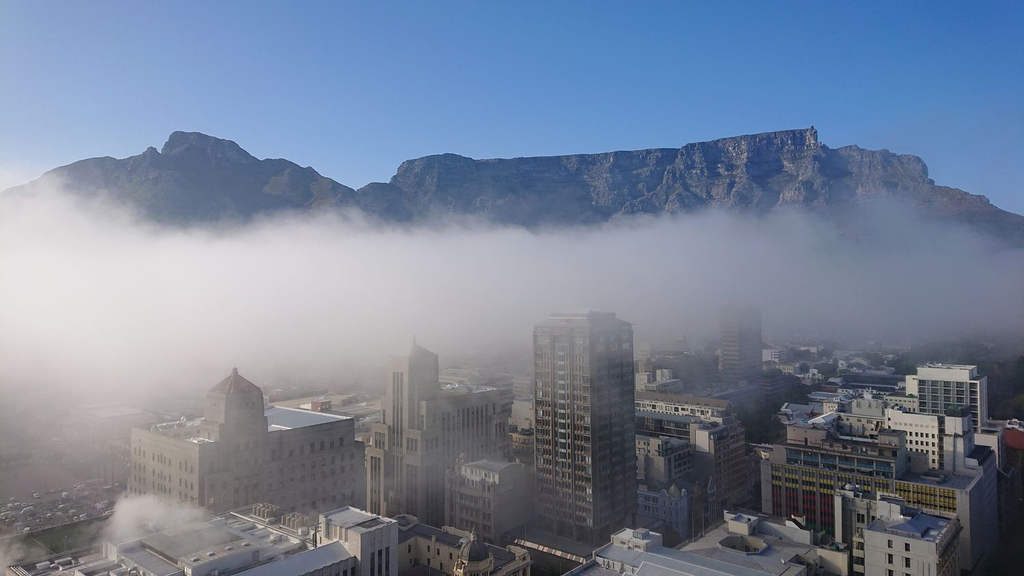
Cape Town, South Africa’s second-largest city, offers an important case study which highlights both progress and gaps in tackling urban air pollution.
South Africa’s air quality management has undergone a major overhaul over the past two decades. For nearly 40 years, the country relied on the Atmospheric Pollution Prevention Act of 1965, legislation largely focused on controlling emissions at industrial sites rather than protecting communities exposed to polluted air.
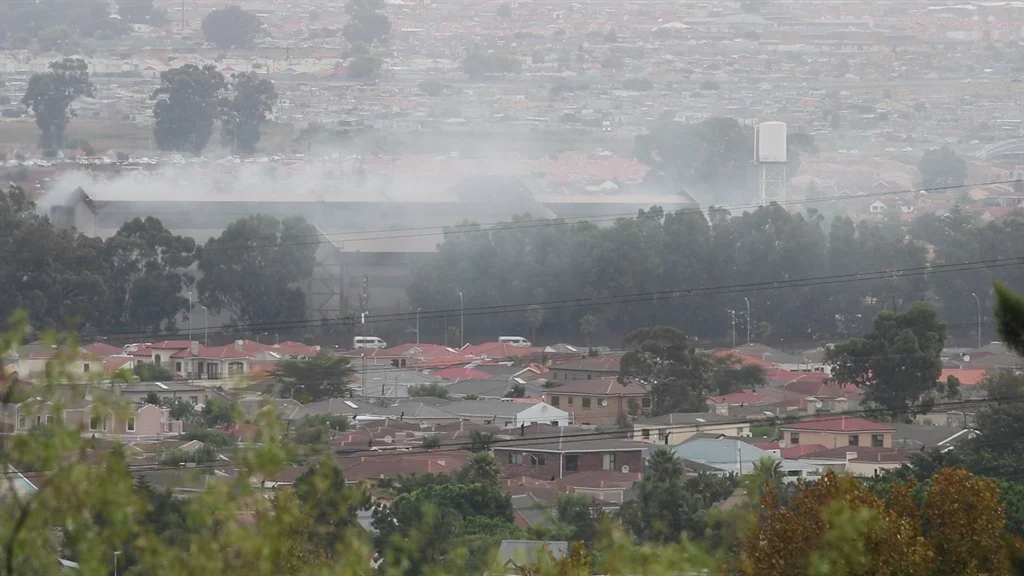
That changed in 2004 when the government introduced the National Environmental Management Air Quality Act, shifting the country toward a more comprehensive environmental management approach. Under the law, national authorities set standards while provincial and municipal governments are responsible for implementing and enforcing them.
“Currently, cities such as Cape Town are empowered to develop their own by-laws, issue pollution licences to industries and create air quality management plans. Also, the legislation now requires authorities to have air quality management plans, regulate emissions and develop by-laws to manage pollution locally,” explains Ian Gildenhuys, Head of Specialised Environmental Health Air Quality, City Health, City of Cape Town.
Cape Town developed its first air quality management plan in 2005, guided by scientific research that mapped pollution sources across the city.
“The city operates a network of fixed monitoring stations that track pollutants such as sulphur dioxide, nitrogen oxides, ozone and particulate matter, tiny particles known as PM10 and PM2.5 that can penetrate deep into the lungs.”
Data from these stations is fed into the South African Air Quality Information System, a digital platform that allows residents to monitor pollution levels in real time through a mobile application.
“The system uses a simple colour-coded index to indicate whether air quality is good, moderate or hazardous.”
But monitoring infrastructure is expensive. “Establishing a full air quality monitoring station costs more than three million South African Rand (about $160,000), with annual maintenance costs adding further financial strain,” explains Gildenhuys.
This means that many municipalities in South Africa, like the rest of the continent, don’t have the proper capacity to undertake such kind of monitoring.
Also, while regulatory improvements continue, cities still face persistent challenges, beyond the high cost of establishing full air-quality monitoring stations, with transport identified as a major source of pollution.
Recent research in Cape Town shows that vehicle emissions remain a major contributor to particulate pollution, with a 2024 source-apportionment study identifying traffic as one of the dominant PM2.5 sources, alongside other combustion-related sources, while a 2024 Western Cape State of Environment report also highlights transport emissions as a key driver of air pollution in the region.
According to Gildenhuys, the challenge is partly technological. “South Africa’s vehicle fleet largely operates under older Euro 2 emission standards, far behind the Euro 6 standards used in Europe.”
On the other hand, cleaner fuel standards, known as Clean Fuels 2, are expected to be introduced in 2027 after years of delays linked to the high cost of upgrading oil refineries.
“Without cleaner fuels, importing newer, low-emission vehicles remains difficult,” explains Gildenhuys.
Electric vehicles are widely seen as a solution to urban air pollution. “Electric vehicles present environmental benefits with reduced emissions and noise pollution in urban areas,” says Andrew Amadi, an energy professional and chemical engineer.
But electric vehicle adoption in Africa remains slow, with the continent having only about 30,000 EVs in total and less than 1% of new car sales, far below the global average of over 20%.
“In South Africa, the uptake of electric vehicles has not been as strong as we would have hoped. High import taxes, limited charging infrastructure and concerns about electricity reliability have slowed the transition,” adds Gildenhuys, saying that these challenges also have had a ripple effect on the cost of these vehicles.
But experts also argue that electric vehicles alone cannot solve Africa’s pollution crisis.
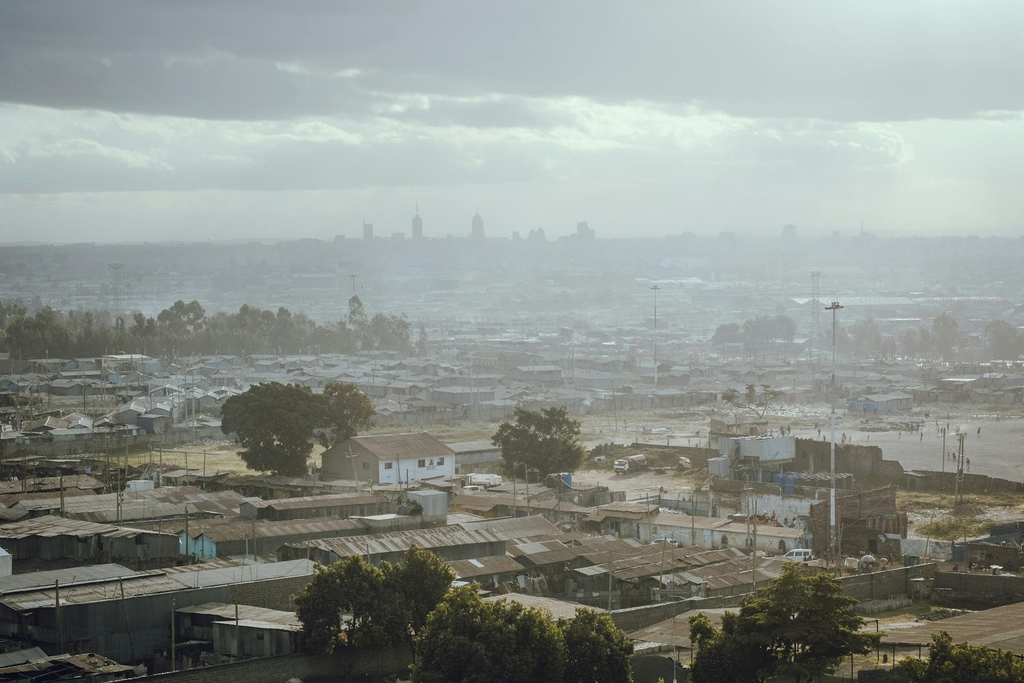
While traffic dominates urban air pollution, another major source often remains hidden inside homes. Across the continent, millions of households still rely on biomass fuels for daily cooking and heating.
According to the African Energy Commission (AFREC, 2023), millions of households across Africa still rely on biomass fuels for daily cooking and heating, with around 85% of household energy use coming from biomass, mainly due to a lack of access to clean cooking technologies.
In this context, public health experts warn that indoor smoke remains one of the most dangerous and underestimated pollution risks in developing countries.
“Burning biomass fuels such as wood and charcoal for cooking releases a range of harmful pollutants, including carbon monoxide, nitrogen oxides and volatile organic compounds,” explains Sammy Simiyu, a public health specialist in Nairobi.
Against this backdrop, experts argue that more is needed on the continent to tackle air pollution.
“For rapidly growing cities, air pollution must be tackled across multiple sectors. Air pollution is a transversal issue. Many sectors influence it, including transport, industry, land-use planning and energy, which require coordinated action,” explains Gildenhuys.