
By Christopher Clark
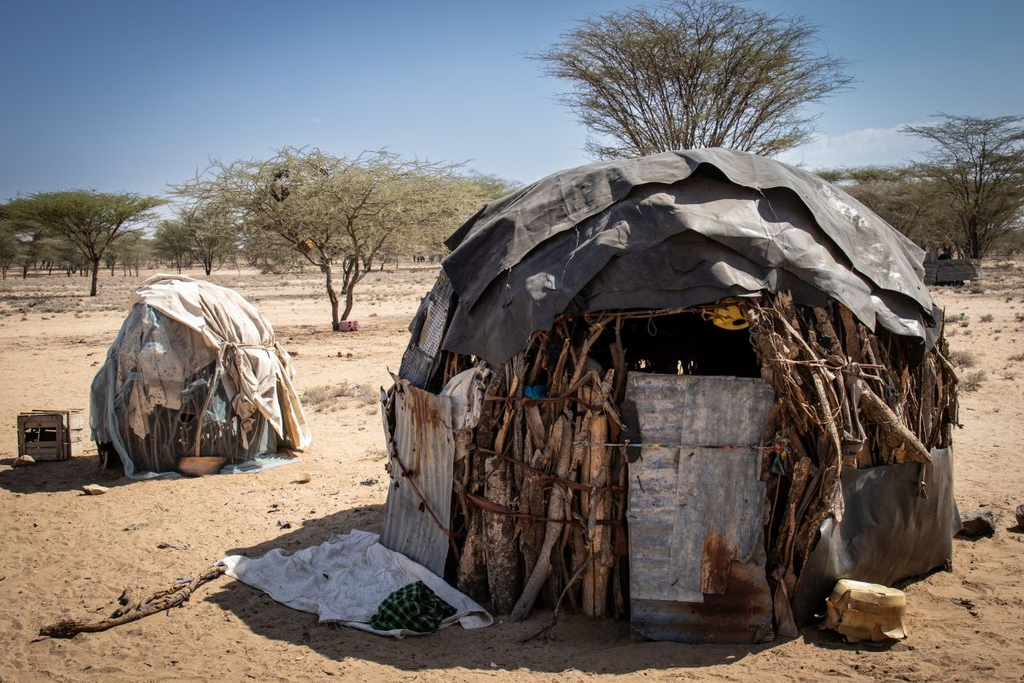
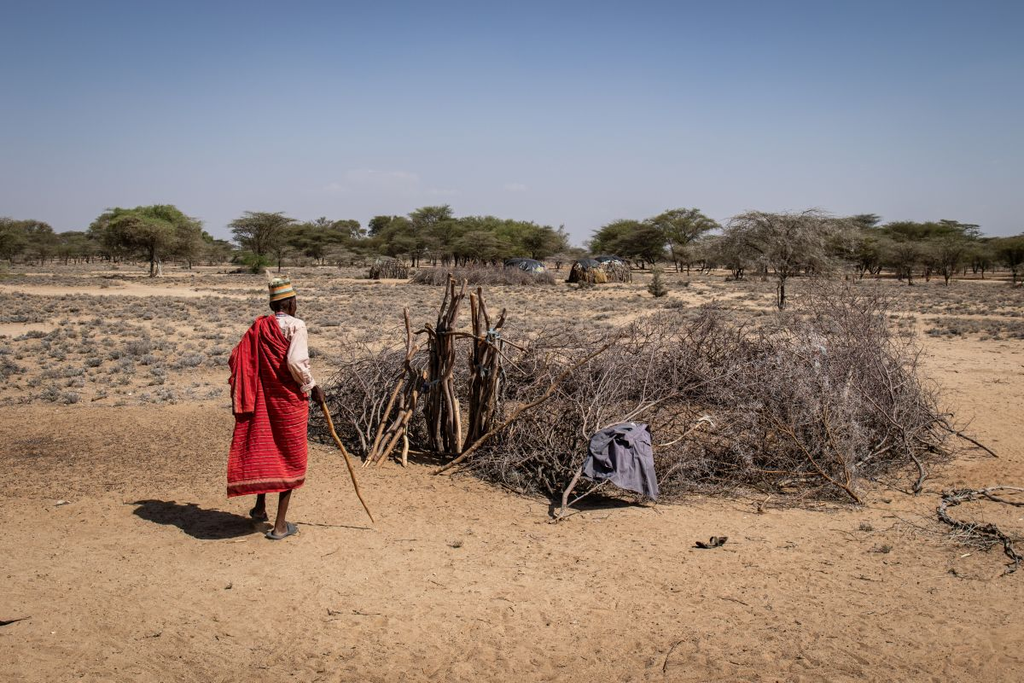
At first glance, there is little to suggest that Kapese, a dusty settlement of traditional manyattas and free-roaming livestock scattered across the parched landscape of northern Kenya’s Turkana region, is the epicenter of the country’s oil ambitions.
Beyond a couple of boreholes and a small primary school bearing the logo of Tullow Oil, the Anglo-Irish company that first discovered significant crude deposits here near the town of Lokichar in 2010, little of the development once promised to residents has materialized.
Since Tullow halted operations in 2020 after more than a decade of setbacks and spiraling debt, much of the extractive infrastructure that punctuated the surrounding scrubland has also been dismantled.
Locals have stripped gates and fencing from the well pads for scrap metal. Heavy plastic liners, once used to store drilling waste, now stretch across the roofs of many nearby manyattas.
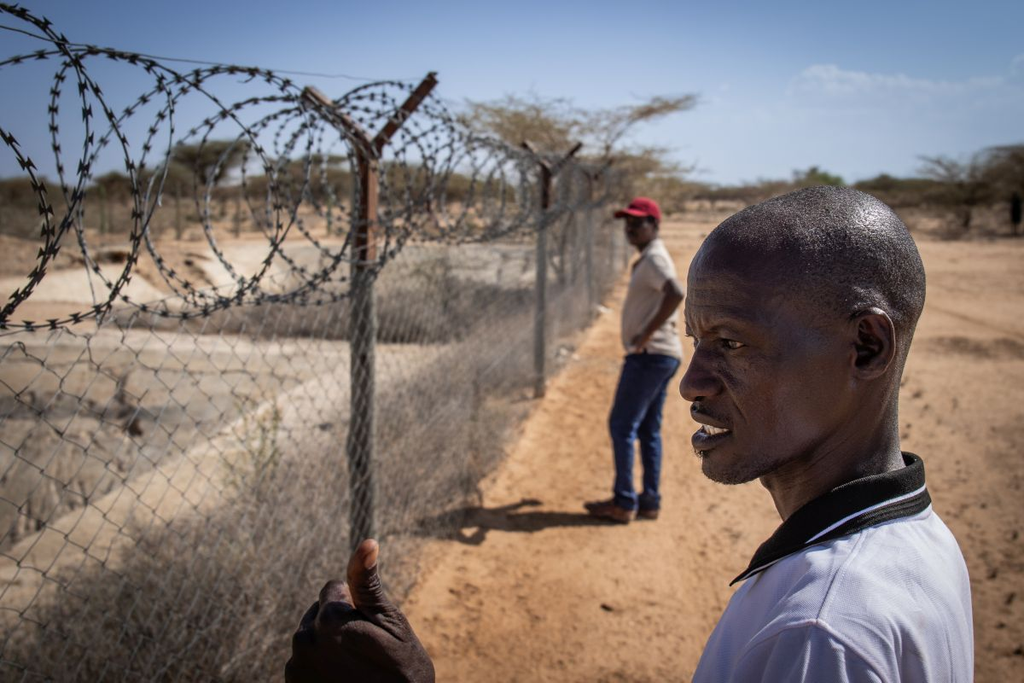
Yet, as one approaches the Twiga oil well, where several waste pits sit in long rows like burial sites behind a chain-link fence topped with coils of razor wire, a faint, acrid smell of petroleum still hangs in the air.
“That smell — you used to be able to smell it from 500 meters away,” said Enock Paule, a local community leader from Kapese, squinting into the harsh midday sun. “You couldn’t even go near this fence.” He recalled bringing a team of Kenyan journalists here some years ago, and several of them vomiting from the stench.
Today, Paule and other residents point to these pits as evidence of the toxic legacy of early oil exploration in Turkana. As Nairobi-based Gulf Energy seeks to revive the dormant project it acquired from Tullow in September 2025, they say the environmental damage and governance failures of those years remain unresolved.
While Gulf has reiterated Tullow’s past promises that the project will bring new economic opportunities to Turkana, the company has not publicly addressed these concerns.
But for Muturi wa Kamau, national network coordinator at the Kenya Oil and Gas Working Group, such issues will not simply disappear with a change in operator. “This is going to keep following them,” he said. “What happened during Tullow’s operations will continue to shape the present and the future of this project.”
Back on the ground in Kapese, Paule and his community say they are determined to set a new precedent: this time, people will be held to account.
Elkanah Elimlin was among those who believed Tullow’s initial pledge that oil would help transform Turkana, bringing much-needed jobs, public services and infrastructure to Kenya’s poorest county. “We really thought that we would benefit from this investment,” he said. “We were very happy about it.”
For a time, Elimlin, who lives in Lokichar but keeps livestock with relatives in Kapese, benefited directly from Tullow’s presence. Some of his children attended the new school in Kapese. In 2019, he got a job as a seismic field assistant, helping to collect data that would be sent back to Tullow’s London headquarters to help map underground oil reserves.
But after a year, that work ceased along with Tullow’s operations in 2020. Today, with the local economy having since slowed to a standstill, Elimlin is jobless. Like many people in this part of Turkana, he has spent the last six years living in a state of protracted limbo. Over that time, he has also become increasingly concerned about the safety of the area around the Kapese well pads.
In March 2024, Elimlin was one of 73 residents who filed a petition at the Environment and Land Court in Lodwar against Tullow, the Turkana County government, and Kenya’s National Environment Management Authority (NEMA), for what the filing described as “environmental violence.”
The case alleges that hazardous exploration activities and poor waste management damaged the local environment and pastoral livelihoods. Among the examples cited is the reported death of dozens of livestock that locals say died after drinking from a contaminated water source near the Kapese well pads. The petition seeks compensation and asks the court to require Tullow to post an environmental bond of 284 billion shillings ($2.2 billion) to fund land restoration and prevent further harm.
After several delays, hearings finally began in February this year and are currently ongoing.
Beyond the allegations set out in the court filing, residents point to a broader catalog of accidents they say highlight inadequate safeguards around oil infrastructure. In 2016, a 14-year-old boy drowned in a water-filled quarry that had not been properly decommissioned. In 2022, a senior police officer was killed while attempting to detonate unexploded ordnance left at Tullow drilling sites.
But for Elimlin, in an area currently facing a crippling drought, the possible contamination of critical water sources remains the greatest concern.
“We believe that hazardous waste has seeped into our community,” he told Mongabay. “It’s not just the animals that are dying. You look at the trees around the well pads, and many of them have died off. This environment can no longer support our pastoral activities.”
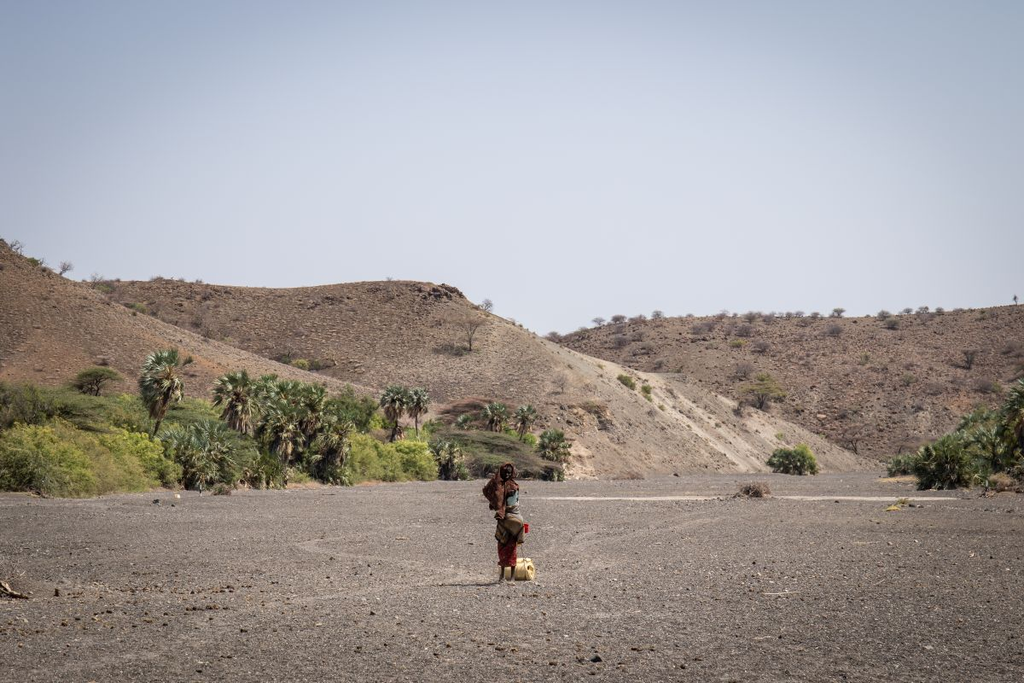
Such concerns do not only apply to Kapese. Kamau of the Kenyan Oil and Gas Working Group said that during a 2019 assessment of nine well pads across the South Lokichar Basin, waste containment had “clearly been compromised” at a site known as Akuwa-1, roughly 100 kilometers (60 miles) north of Kapese, with waste seeping into surrounding soils. Meanwhile, just meters away from the waste pits, a group of Turkana women was digging a shallow well to extract water.
“Once that seepage actually reaches the water table, in a water-scarce area like this, there’s a high likelihood that those women are going to be drinking water that has been contaminated,” Kamau said.
This thesis is supported by a 2022 study by a team of researchers at Kenyatta University in Nairobi. The study found that eight of 11 groundwater samples collected near oil well pads in the Lokichar Basin were “highly contaminated,” with levels of heavy metals and salts that far exceeded set drinking water standards. The researchers also warned that increased groundwater abstraction had contributed to declining borehole levels, a trend likely to worsen when oil activity resumes.
Meanwhile, Faith Nelima, a reproductive health and oncology nurse who previously worked at the Lokichar Health Centre and is now a school nurse at Lokichar Girls Secondary School, told Mongabay that she and her colleagues had observed unusually high rates of respiratory infections among residents of Kapese and other villages near oil extraction sites. She added that there was an unusual number of women presenting with breast lumps from the same communities.
Several community members also said that miscarriages have become more common. However, Nelima said this is difficult to verify because many women from pastoral communities do not seek treatment at formal health facilities.
Such information gaps have complicated efforts to assess the true impact of oil exploration in Turkana, where a broader lack of baseline data has fueled uncertainty among local communities. For Elimlin, this has taken on an acutely personal aspect: when his 7-year-old daughter was born with severe developmental challenges that doctors struggled to diagnose, he found himself wondering if it somehow stemmed from the drilling.
“It was the first time I’d ever seen anything like this,” he said. “You can’t help but ask yourself such questions.”
As Gulf Energy and the national government seek to resuscitate Kenya’s oil ambitions, residents’ concerns about water safety, unexplained illnesses, and the lack of clear environmental monitoring around past oil operations have repeatedly resurfaced at a recent series of public forums held across Turkana.
Critics say these gaps reflect long-standing weaknesses in regulatory oversight. Francis Emanikor, NEMA’s county environment officer for Turkana, conceded that communities have repeatedly complained about improper management of solid waste, but said that his department’s actions are restricted by a lack of resources.
“In terms of enforcement, there are just two of us, plus a driver,” he told Mongabay. “With such a lean team, we cannot ensure that there is full compliance with all the environmental regulations.”
With commercial production slated to begin in December this year, community leaders and local MPs also noted that key environmental assessments have not yet been completed, deepening anxieties about the project’s impact on water, land and livelihoods. “Considering the new timeline, these conversations should have happened a long time ago,” Kamau said.
The lack of transparency and accountability has been exacerbated by the void created when Tullow closed its Turkana field offices in 2020. For more than five years, as local communities waited in uncertainty, there were no longer any clear channels to raise their grievances. “There was no way for them to actually escalate some of these issues that they were facing because they did not know who to approach,” Kamau told Mongabay. “Hence the reason why they pursued litigation as a last resort.”
Elimlin echoed this sentiment: “When incidents happen, they never come back and explain to us,” he said. “We don’t get any results out of the things we raise with the government or with the investor. And that’s why we went to court.”
Similar frustrations have also spilled into a separate legal dispute over oil revenues and land governance. In 2024, community leaders in Lokichar filed a petition challenging the county government’s handling of 258 million shillings ($2 million) in oil-related revenue earmarked for local development, arguing the funds were disbursed without adequate consultation or transparency.
“We are still trying to follow that money,” said Veronica Lowoyan, chair of Lokichar’s Community Land Management Committee. “Nobody from the county government has ever come to speak to us or offer any support.”
Analysts say such disputes are likely to become more common as communities grow more aware of their rights. Elisabeth Schubiger, a researcher at the University of Fribourg in Switzerland, who studies natural resource governance and pastoral livelihoods in northern Kenya, said civil society groups have played a key role in this regard. “They have taught people how to engage with government representatives and companies,” she said. “People are very much more empowered now, and they will demand more.”
But even when communities seek accountability through the courts, the process can drag on for decades. In neighboring Marsabit county, residents are still pursuing legal action over the alleged dumping of toxic waste during oil exploration in the 1980s, which has been linked to unusually high cancer rates.
Back in Kapese, Paule said the experience of the past 15 years has fundamentally reshaped how people in Turkana perceive the county’s extractive promise. “At first, people believed this project would remove poverty and make their lives better,” he said. “Now we are asking questions.”
The article has been republished from Mongabay: https://news.mongabay.com/2026/03/kenyas-renewed-oil-push-faces-a-tainted-legacy/