

Global energy nonprofit organization CLASP has signed a Memorandum of Understanding (MoU) with the Makueni County Government to accelerate the adoption of clean cooking solutions in public institutions.
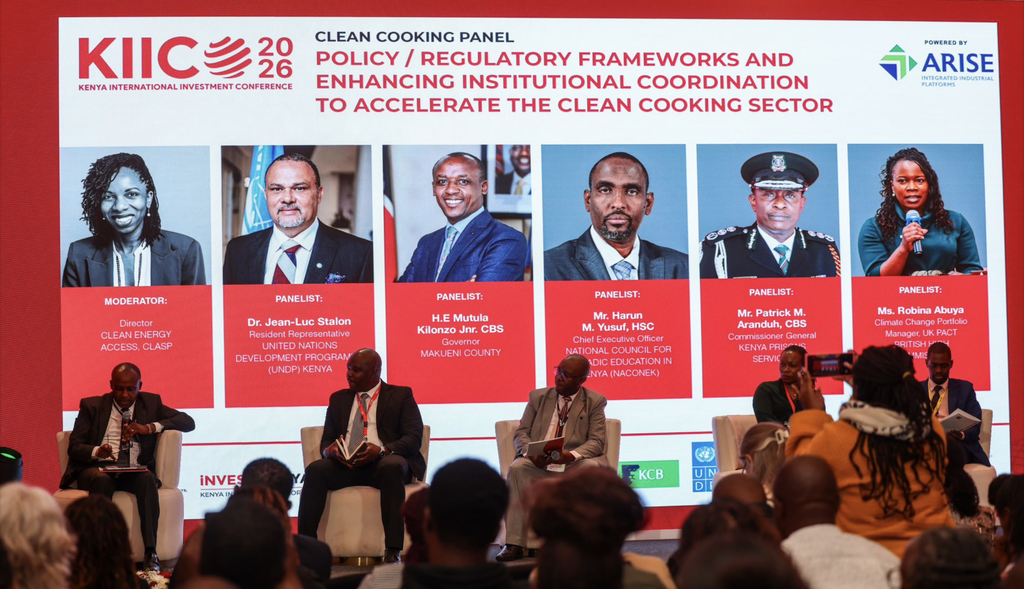
The agreement, signed during the Kenyan International Investment Conference in Nairobi, will directly benefit more than 4,500 people across 63 vocational training centers in the county.
The partnership coincides with the launch of Kenya’s first Institutional Clean Cooking Sector Pack, which highlights a Sh72 billion ($559 million) investment opportunity to transition over 100,000 institutions, serving 12.6 million people, to modern, clean cooking solutions.
Over the next five years, CLASP and Makueni County will collaborate with a growing network of Kenya-based clean-cooking suppliers to identify and prioritise institutions and communities for clean-energy transitions.
Speaking during the event, Nyamolo Abagi, Director of Clean Energy Access at CLASP and Programme Lead for the Modern Energy Cooking Services, emphasised the human impact of the initiative:
“This partnership is about restoring dignity to cooks working in institutional kitchens, who face daily exposure to heat stress and harmful indoor air pollution. Through MECS, we have spent years building the evidence and market systems needed to make clean cooking an accessible and affordable reality.”
While global efforts have largely focused on household cooking, institutional kitchens remain underserved. Estimates suggest that across sub-Saharan Africa, over 600,000 schools and nearly 100,000 healthcare facilities rely on firewood and charcoal.
Pilot projects in vocational training centers will leverage innovations from local companies such as Ecobora and Feion Green Venture to scale affordable, high-quality clean cooking technologies.
Speaking at the event, Makueni County Governor, Mutula Kilonzo Junior, highlighted the county’s commitment: “Makueni is open for investment, and clean cooking represents one of the most compelling opportunities available. We have already invested Sh157 million in solar energy, launched our County Energy Plan (2023–2032), and piloted clean cooking initiatives. This partnership with CLASP and MECS is about scaling impact, reducing fuel costs, and creating jobs for our youth in the clean energy sector.”
Despite Kenya’s significant progress in expanding electricity access, clean cooking remains a major challenge. Many households and institutions still rely on traditional fuels that drive deforestation, increase indoor air pollution, and lead to inefficient spending on energy.
According to the International Energy Agency (IEA), around 2.3 billion people globally still lack access to clean cooking, with the majority in sub-Saharan Africa relying on biomass fuels such as firewood and charcoal.
The World Health Organisation (WHO) estimates that household air pollution from these fuels contributes to approximately 3.2 million premature deaths each year, while the Food and Agriculture Organisation (FAO) links unsustainable fuelwood harvesting to forest degradation and deforestation across many regions.
The partnership aligns with Kenya’s National Cooking Transition Strategy (2024–2028), which targets universal access to clean cooking by 2030.