
By Ellys Mugunda
Most of these communities across Kenya’s Rift Valley and northern regions are grappling with an intensifying social crisis as rising lake levels swallow homes, schools, farms and critical infrastructure, displacing thousands and deepening social inequalities linked to climate change, experts have revealed.
Experts say that with close to 80,000 households affected across 13 counties, many families now face uncertain futures, contending not just with displacement but with broken social networks, disrupted education, loss of livelihoods and increased health and safety risks.
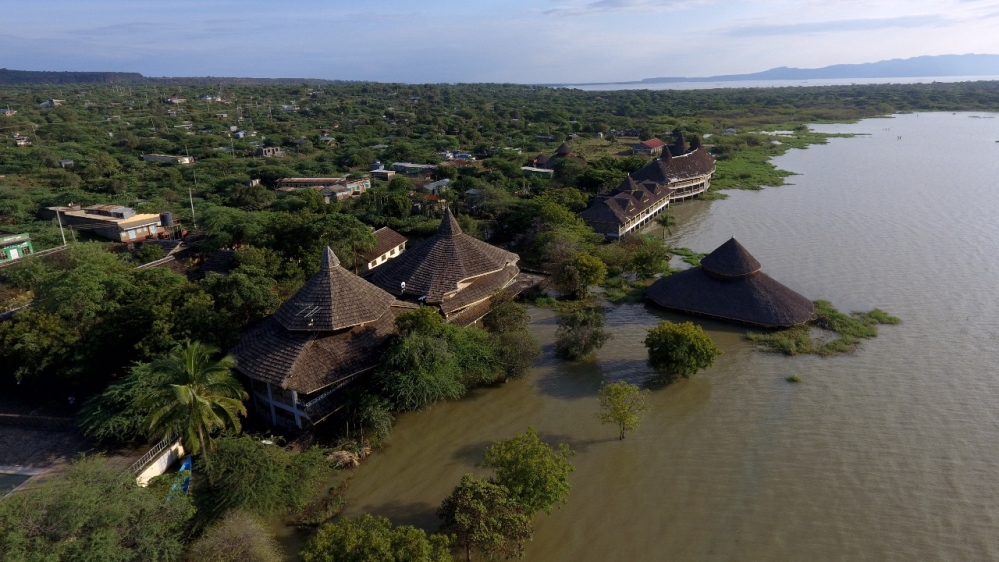
The rising lakes include Naivasha, Nakuru and Elementaita (Nakuru), Baringo and Bogoria (Baringo), Turkana in Turkana County and Ol’ Bolossat in Nyandarua, where swelling waters have surged beyond historic boundaries, forcing families from their homes and disrupting lives in ways that extend far beyond economic loss.
Experts now warn that the human toll of this environmental upheaval is both immediate and profound.
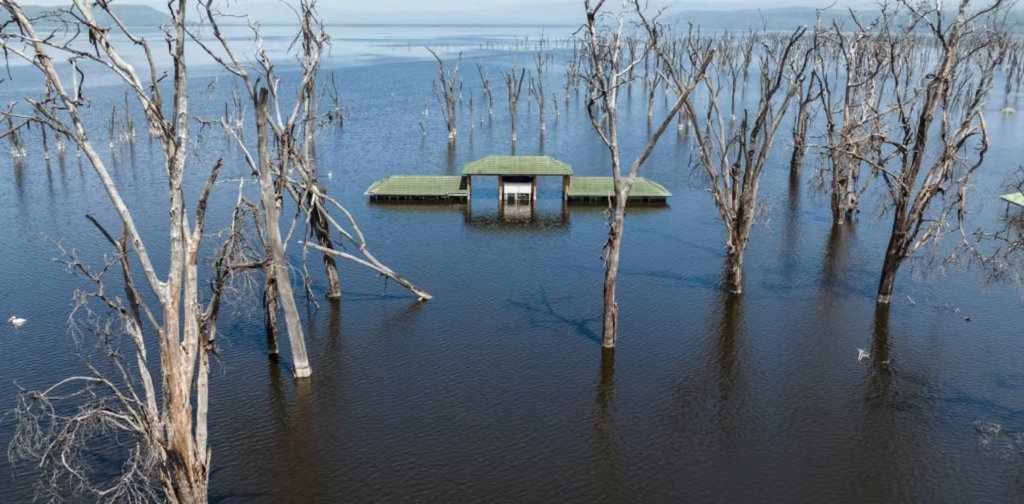
In Marsabit County, floodwaters from Lake Turkana have swallowed public facilities, including El Moyo Primary School, leaving pupils without classrooms and families without safe shelter. Elsewhere, markets, grazing lands and residential areas lie underwater, pushing vulnerable households to the brink of crisis.
“It’s not just homes being lost. It’s dignity, opportunity and community,” said Prof. Samuel Onywere of Kenyatta University, who described how advancing waters have displaced entire communities.
The scale of displacement is extensive. In the Rift Valley alone, tens of thousands of people have been forced from their land. Lake Naivasha’s recent surge submerged farmland and houses, leaving families scrambling for shelter after floodwaters inundated what was once fertile soil. Authorities say at least 5,000 people were displaced around the lake last year.
The crisis is also affecting basic services. Around Lake Baringo, entire schools and health centres have been submerged, limiting access to education and healthcare for local populations.
Similarly, agricultural land and tourism facilities are increasingly underwater, threatening long-term livelihoods in regions already facing economic hardship.
According to government officials and civil societies, women and children are among the hardest hit. Increased flood-related displacement has reduced school attendance, particularly for girls, and added to unpaid care work for women, who often shoulder the burden of securing food, water and safety for their families amid worsening conditions.