

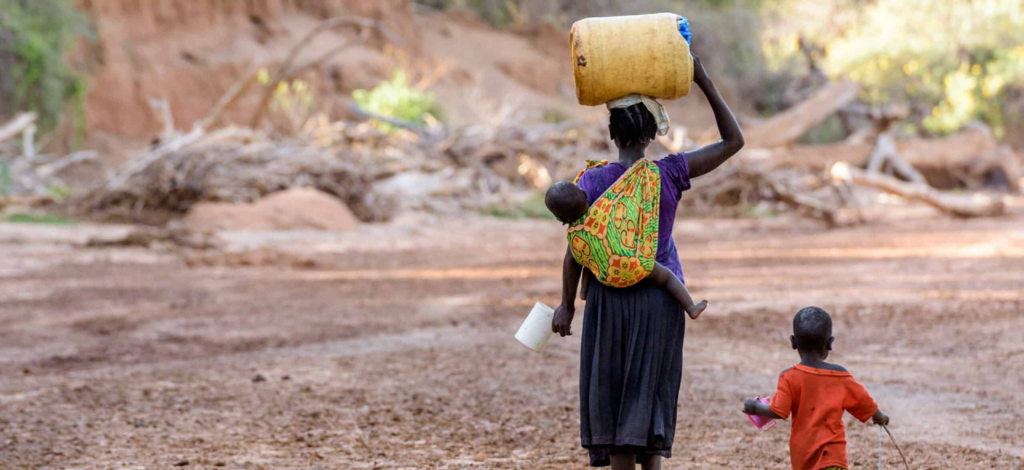

Before sunrise, 14-year-old Halima Diba joins a line of women and children already snaking around a dry borehole in Kargi village, Marsabit County. Each carries a yellow jerrican. The pump sputters, then falls silent. Someone says the generator ran out of fuel again. The line dissolves into murmurs of frustration. Halima will wait anyway. School can wait too. Water comes first.
For families across Marsabit County, the search for water has become a daily gamble. Water bowsers arrive unpredictably. Boreholes break down often. Rivers that once flowed seasonally now remain empty for months. Mothers ration cooking water. Livestock are led deeper into scrubland, sometimes not returning.
In Ganze, Kilifi County, Mariam Mwinyi walks three kilometres to a shallow well near a seasonal riverbed. The water is salty, warm, and cloudy, but it is all her family has. When the municipal supply fails, as it often does, queues form at private vendors selling a 20-litre jerrican for up to Sh100.
“We choose between water and food,” Mariam says quietly. Some days, she buys water and skips vegetables. Other days, she cooks but sends her children to bed thirsty.
In Kathonzweni, Makueni County, women drag empty wheelbarrows toward a rocky valley where a trickle of muddy water collects in a shallow depression. The sand dam built here years ago no longer holds much. Failed rains have lowered the water table. Buckets scrape the riverbed.
“We wake up at 4 a.m. to beat the crowds,” says Janet Mutua, balancing a jerrican on her head. “If you come late, there is nothing left.”
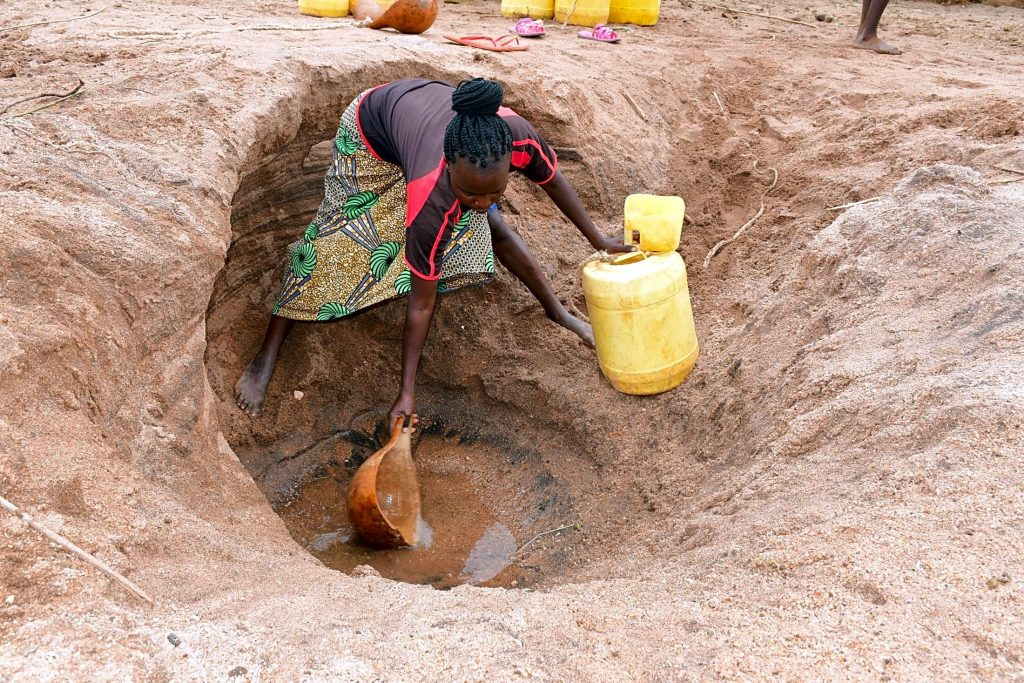
Farms lie idle. Mango trees drop fruit before ripening. Goats grow thin. Without water, even the most drought-resistant crops cannot survive.
In the blistering heat of Lodwar’s outskirts, five-year-old Ekiru clutches a plastic cup beside a solar-powered borehole. The pump serves hundreds. The line barely moves. Some families have camped here since dawn.
“Sometimes we wait all day,” says his grandmother, Nakiru Ekal. “When the pump breaks, we walk 10 kilometres to the next one.”
In Turkana, centuries of aridity have hardened survival instincts. But elders say conditions are worsening. Seasonal rivers dry earlier. Traditional grazing routes no longer hold water. Children faint in queues. Livestock die quietly in the bush.
In Kieni East, on the drier northern edge of Nyeri County, the struggle plays out far from Kenya’s arid headlines. In Ngorano village, taps have been dry for weeks. Residents trek to a muddy stream shared with cattle.
“We never thought Nyeri would become like this,” says farmer Peter Gichuki, washing a 20-litre container in brown water. His potatoes failed last season. His borehole collapsed. Water rationing now dictates when he plants, washes, or bathes.
“Even here, water is no longer normal,” he says.
These daily scenes echo the warning sounded in a new United Nations University report titled Global Water Bankruptcy: Living Beyond Our Hydrological Means in the Post-Crisis Era. The report argues that humanity is consuming freshwater faster than rivers, lakes and aquifers can replenish, pushing the world into a state of long-term water deficit.
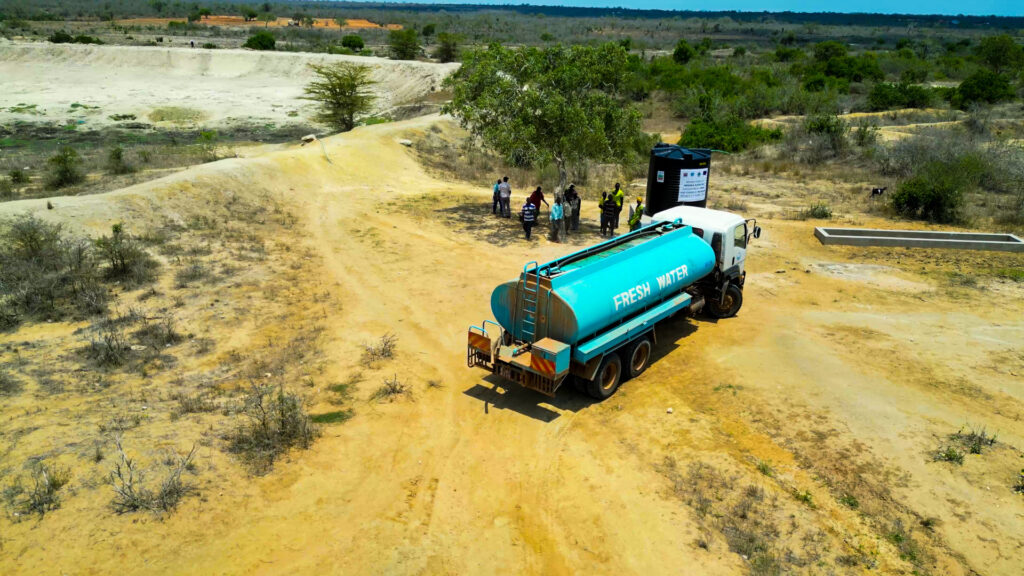
The UN report defines “water bankruptcy” as a condition where water use and pollution exceed nature’s ability to renew supplies, resulting in losses that are irreversible or prohibitively expensive to fix. It warns that emergency responses such as trucking water or drilling deeper boreholes are no longer enough.
In Kenya, analysts say the country mirrors many of the warning signs, which include shrinking water bodies, falling groundwater levels, growing urban demand, and climate-driven rainfall variability.
Climate change has intensified drought cycles, disrupted rainfall patterns, and increased evaporation. At the same time, population growth, agricultural expansion, and urbanisation are stretching water systems beyond sustainable limits.
In Kenya’s arid and semi-arid lands, home to nearly two-thirds of the country, the consequences are already severe. Water trucking has become routine. Boreholes are overused. Conflicts over water points are rising. Families are being forced to choose between hygiene, food, school, and dignity.
The crisis is not confined to dry counties. From western Kakamega to highland Nyeri, once-reliable water systems are failing under the weight of climate stress and poor infrastructure.
In Kenya, such measures have become the norm, but water experts warn that over-reliance on groundwater risks long-term collapse of aquifers, while continued deforestation and wetland loss are weakening natural water storage systems.
Without large-scale investment in catchment protection, efficient irrigation, rainwater harvesting, desalination, and water recycling, shortages are expected to deepen, experts warn.
For now, survival remains painfully local. In Marsabit, Halima finally fills her jerrican after six hours wait. In Kilifi, Mariam walks home with half her usual water. In Makueni, Janet’s wheelbarrow rattles empty. In Turkana, Ekiru falls asleep in the queue. In Kieni, Peter locks his dry tap again. Across Kenya, water is no longer something people are turning on. It is something they chase.



thank you