

By Mwangi Ndirangu
For years, Jane Wanjiku has watched her maize harvest shrink. On her small farm in Kabati, Murang’a County, the rains still come, sometimes too hard, sometimes too late, and she applies fertiliser as she always has. Yet each season, the bags she carries home from the field have become fewer and fewer.
“We are using more fertiliser than before, but harvesting less,” she says, echoing a frustration shared by many farmers across the county.
Agricultural experts say the problem may not lie in the effort farmers are putting in, but beneath their feet. It is for this reason that the County Government of Murang’a is launching a major exercise to diagnose soil health, a move officials say could directly address the declining yields farmers have been reporting.
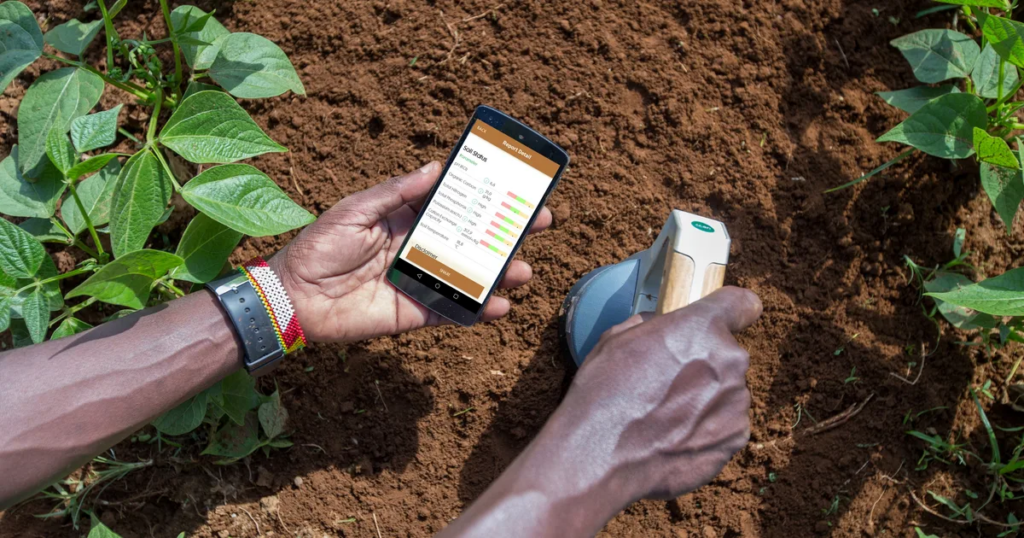
In preparation for the countywide exercise, which will cover all 35 wards, the Kenya Agricultural and Livestock Research Organisation (KALRO), in collaboration with the county government, launched a training programme for agricultural extension officers, IT officers and agripreneurs ahead of a Digital Soil Fertility Mapping Exercise scheduled to begin on February 23, 2026.
Murang’a is known for tea, coffee, bananas and vegetable farming. But years of continuous cultivation, limited organic replenishment and reliance on blanket fertiliser recommendations have taken a toll.
Agricultural officers say many soils have become increasingly acidic, reducing the effectiveness of fertilisers and limiting plants’ ability to absorb nutrients. In such conditions, farmers may apply more fertiliser without seeing proportional gains.
“The soil might be lacking specific nutrients or suffering from acidity, but farmers are applying general fertiliser blends,” said an official involved in the programme. “Without proper diagnosis, it becomes expensive guesswork.”
The digital soil fertility mapping exercise seeks to replace that guesswork with science.
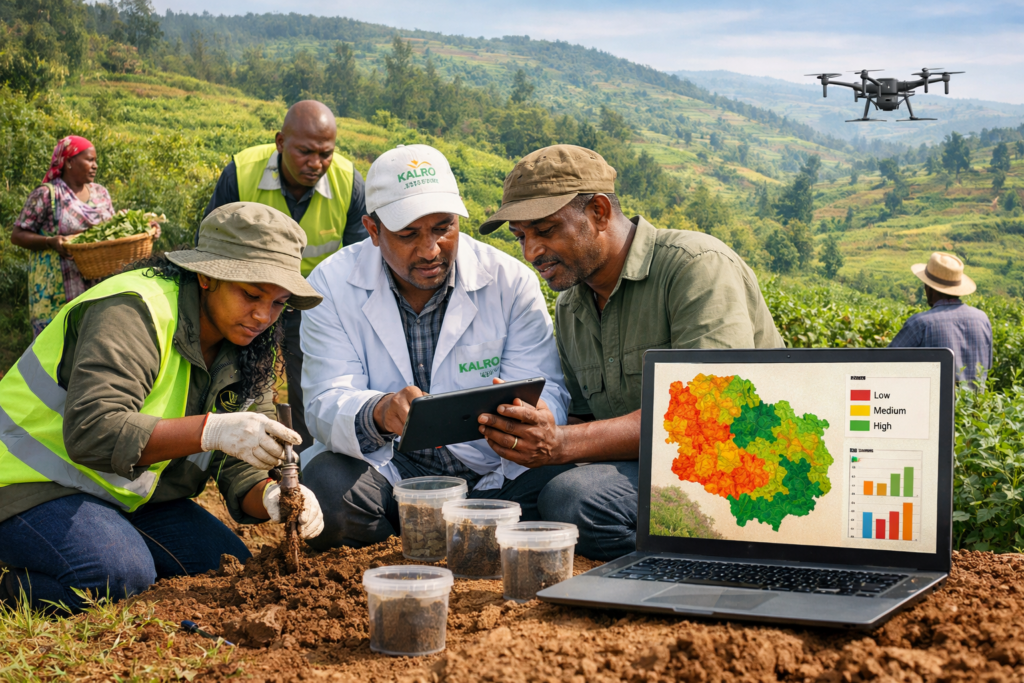
Under the initiative, trained officers will collect soil samples across the county and analyse them using geospatial technology to produce ward-level fertility maps. These maps will show nutrient deficiencies, acidity levels and other soil characteristics.
For farmers like Wanjiku, the implications could be significant. Instead of applying standard fertiliser formulas, they will receive site-specific recommendations tailored to their farm’s needs, such as adding lime to correct acidity, increasing organic matter, or adjusting nutrient ratios.
Experts say this precision approach could lower input costs, improve crop uptake of nutrients and gradually restore soil health and high yields.
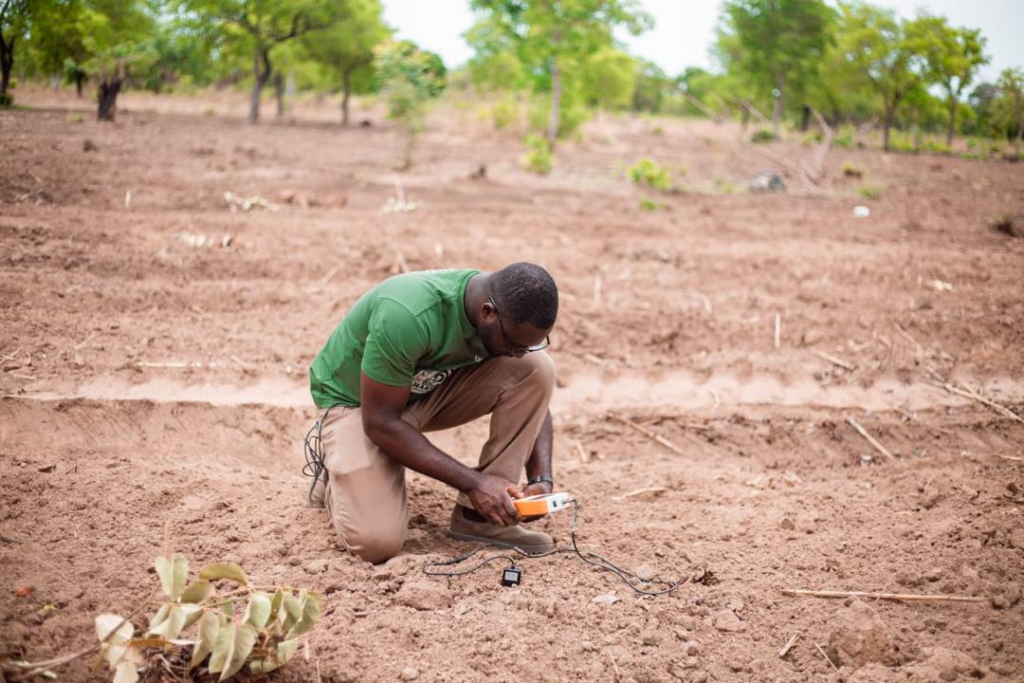
The implications stretch beyond farm productivity. Over-application of fertilisers contributes to nutrient runoff into rivers and groundwater, especially in highland areas prone to heavy rainfall. This can degrade aquatic ecosystems and affect water quality.
By aligning fertiliser use with actual soil requirements, officials hope to reduce nutrient losses and environmental pollution.
Healthy soils also play a role in climate mitigation. Soils rich in organic matter store carbon, helping reduce greenhouse gas concentrations in the atmosphere. Degraded soils, in contrast, release carbon and retain less water.
Improving soil structure and fertility also enhances water retention, reducing vulnerability to drought and curbing erosion during heavy rains, both of which have become more frequent in recent years.
The training of extension officers and IT personnel is designed to ensure accurate sampling, digital data management and effective communication with farmers. Agripreneurs are expected to help translate soil data into practical solutions, including supplying appropriate soil amendments and advisory services.
County officials say the data collected will also guide agricultural planning, targeted soil correction programmes and climate-smart agriculture initiatives.
For farmers grappling with shrinking harvests, the exercise represents cautious optimism. “If we understand our soils better, maybe we can farm better,” said Njuguna Waruingi, a farmer in Mugoiri during a recent training sensitisation session.