
By Charles Mpaka
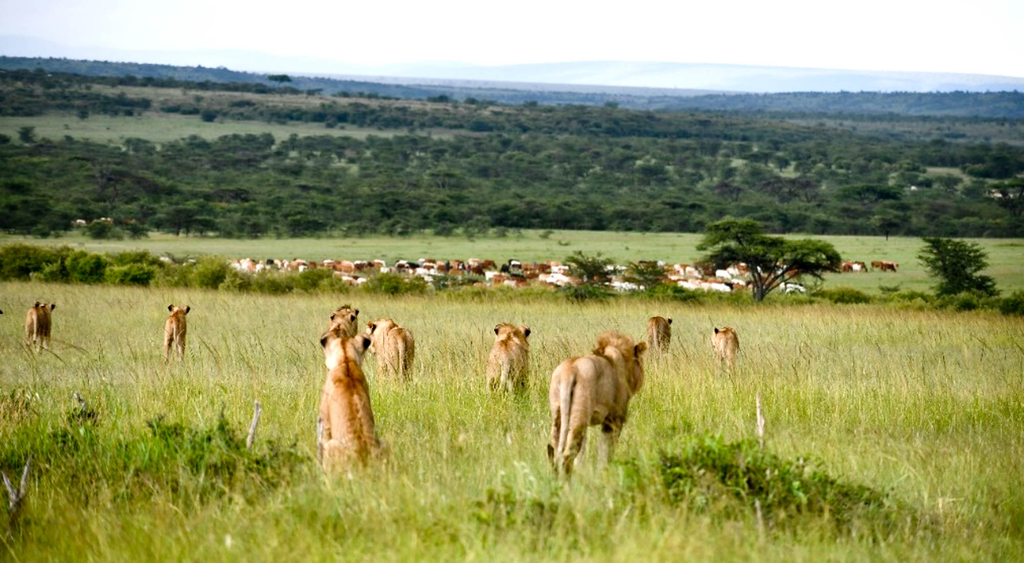
Lions in Kenya are increasingly avoiding areas used by livestock, even after herders have moved on, according to a new study by the Mara Predator Conservation Program.
Researchers say the findings challenge long-held assumptions about how wildlife and livestock share space in the country’s rangelands.
The study, led by biologist Niels Mogensen, surveyed seven community conservancies in the Maasai Mara ecosystem between 2015 and 2023. Covering nearly 69,000 kilometers, the research tracked the presence of lions alongside wild and domestic herbivores.
The results showed that lions avoided not only active grazing areas but also places where cattle had previously been.
“Lions continued to avoid areas with a history of high cattle use even when cattle were not present,” Mogensen said.
In Kenya, most wildlife lives outside protected areas, often on community-owned land, where pastoralists graze livestock. Conservancies typically allow herders to move across large areas, based on the assumption that wildlife returns once livestock leave. The new findings suggest that may not always happen.
Livestock play a central role in Maasai livelihoods, making any restrictions on grazing a sensitive issue. Mogensen said solutions should involve communities and could include zoning land for different uses, seasonal grazing plans and clearer sharing of conservation benefits.
Herders say current systems already work. Peter Kilani, speaking from Mosiro Conservancy in Kajiado County, said most communities manage grazing across shared land rather than setting aside exclusive wildlife zones. “We have done this since time immemorial,” he said.
Data from government aerial surveys shows broader changes in the rangelands. Populations of large wild herbivores, excluding elephants, have declined by about 70% since the late 1970s. While cattle numbers have slightly decreased, sheep and goats have increased sharply.
Daniel Sopia of the Mara Wildlife Conservancy Association said most conservancies use rotational grazing, where wildlife often follows livestock to feed on shorter grass. He said communities have not observed lions avoiding areas long after grazing. “We have not heard conservancies complain about the lack of lions due to cattle presence,” Sopia said.
Nakedi Maputla of the African Wildlife Foundation said managing grazing access must be handled carefully to avoid conflict with communities.
The study adds new evidence that livestock grazing may be influencing predator behavior, raising questions about how Kenya’s conservancies will manage land use in the future.
The article has been republished from Mongabay: https://news.mongabay.com/2026/03/study-finds-livestock-pushing-lions-away-from-shared-rangeland-in-kenya/