
By Achieng’ Otieno
On a quiet morning at Dunga Beach in Kisumu County on the shores of Lake Victoria, a small group of bird-watchers follows a narrow wooden boardwalk into a dense fringe of papyrus. Their guide, Victor Ochieng’ Didi, pauses, scanning the reeds for movement. The visitors have travelled far for a glimpse of the papyrus gonolek, a near-threatened bird whose survival depends almost entirely on wetlands like this one.
The sightings of these birds are a result of nearly two decades of work by a local community group, the Dunga Ecotourism and Environmental Association (DECTTA), whose efforts have helped restore a fragile ecosystem once on the brink of collapse.
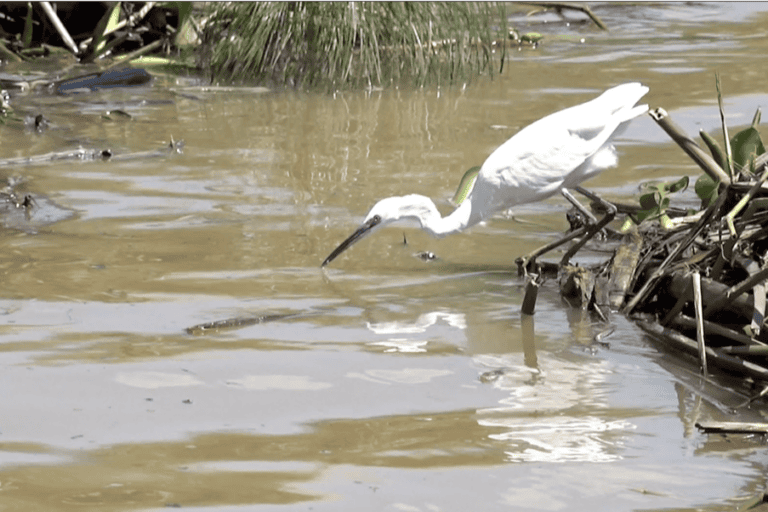
Dunga Wetland, a designated Key Biodiversity Area, supports a range of species, including the papyrus gonolek and the papyrus yellow warbler, both dependent on intact swamp habitats. It is also home to the elusive sitatunga antelope, whose population in Kenya remains critically low. Beyond biodiversity, the wetland acts as a carbon sink and a natural filtration system for Lake Victoria, often described by scientists as the lake’s “lungs.”
Two decades ago, the picture was different. “In the early 2000s, this place was choking,” Didi says. Plastic waste clogged the shoreline, while papyrus reeds, vital for fish breeding and bird habitats, were harvested unsustainably. As fish stocks declined, many residents turned to crafting furniture and household items from the reeds, accelerating their depletion.

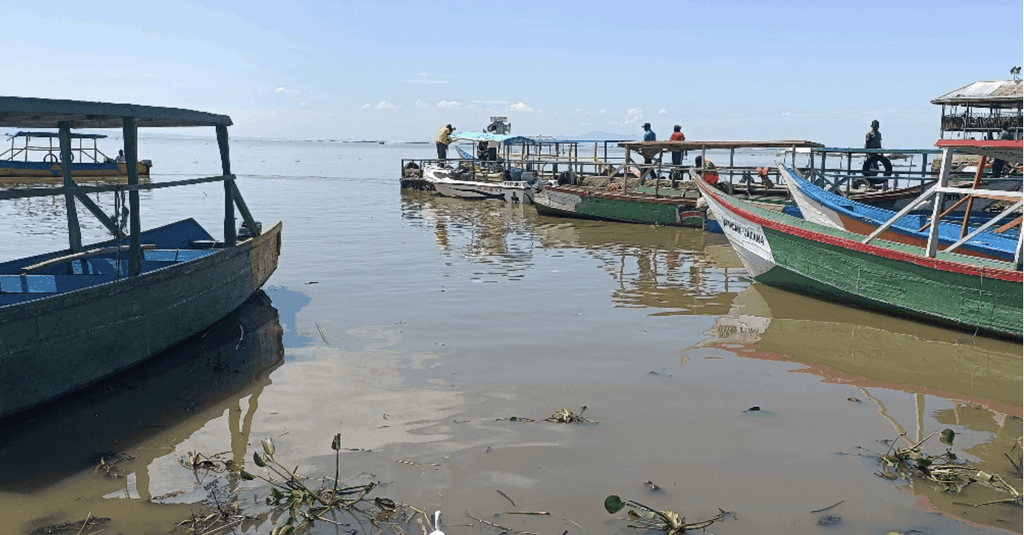
DECTTA emerged in 2002 out of this crisis. Initially formed by members of the Dunga Beach Cooperative, the group sought to tackle both environmental degradation and economic hardship by promoting ecotourism. Youths were mobilized to clean up waste, guide visitors, and operate boats along the lake.
For a time, the model worked with cleaner beaches and renewed biodiversity, attracting tourists, but the momentum proved fragile.
By 2006, conservation gains began to unravel. Fishers encroached on breeding zones, while demand for papyrus products surged. “Everyone became an artisan,” Didi recalls. “The reeds were being harvested faster than they could regenerate.” DECTTA itself weakened as community interest shifted back to short-term income.
The turning point came in 2008 as economic and political instability in Kenya drove many young people back to the village, creating an opportunity to rebuild. DECTTA was revived, this time with a sharper focus on linking conservation directly to livelihoods. Today, that approach defines the group’s work.
Visitors pay modest fees for guided tours through the wetland, generating income that supports conservation activities and community welfare programmes. The group operates boats for excursions and has introduced small-scale attractions such as zip-lining to diversify revenue. Proceeds help fund school programmes and food support for elderly residents.
“At the end of the day, people want to earn a living,” Didi says. “When conservation brings income, it becomes easier to protect the wetland.”
Faith Adhiambo, DECTTA’s treasurer, says this model has gradually shifted attitudes. “People now see the wetland as an asset worth protecting, not just a resource to exploit,” she says.
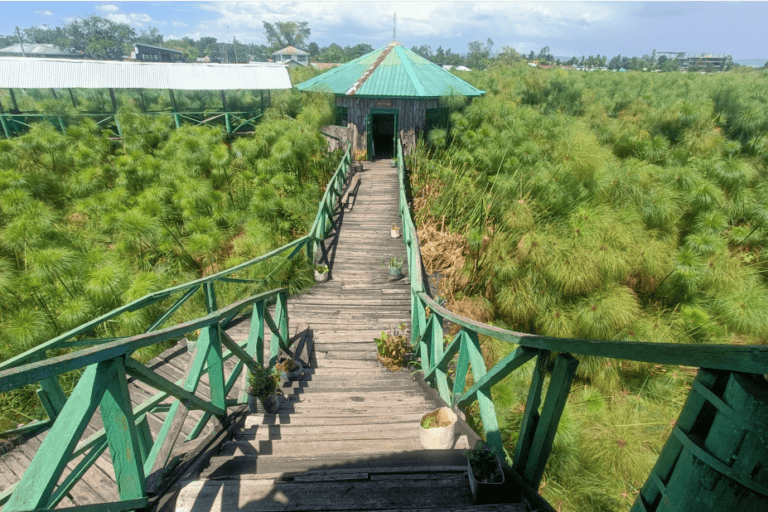
DECTTA has also moved beyond tourism into advocacy and restoration. The group is working with partners, including the Food and Agriculture Organisation (FAO) and Kisumu County authorities, to pilot a “wetland garden”, which is a small-scale recreation of the ecosystem designed to attract wildlife and demonstrate the value of conservation.
At the same time, members conduct community outreach, urging residents to avoid encroaching on wetland areas and to adopt sustainable practices. These efforts are supported by collaborations with youth groups under the Dunga Swamp Site Support Group.
Yet, despite these gains, major challenges remain. many of which are beyond the community’s control. One of the biggest obstacles is the lack of formal legal protection. Although Kenya has multiple policies touching on wetlands, there is no single, unified framework governing their management. As a result, enforcement is often weak and fragmented.
“Currently, less than 10% of wetlands are under legal protection through gazettement,” says environmental scientist Faith Omole. Without such designation, wetlands like Dunga remain vulnerable to encroachment and development.
Tom Togo, a former county environment official, says community dynamics complicate matters. According to him, much of the wetland overlaps with privately owned land, making it difficult for authorities to impose restrictions. “You cannot dictate how people use their land,” he says. “That is why degradation continues.”
DECTTA members say this legal gap undermines their work. Didi points to the expansion of lakeside hotels and other infrastructure, which often involves clearing papyrus and disrupting habitats. “We rarely win these battles,” he says. “Our efforts are not backed by law.”
There have been some signs of progress. In late 2025, Kenya’s Environment and Lands Court ordered the demolition of structures built illegally on riparian land around Lake Victoria, in a case that had dragged on for more than a decade. Conservationists see the ruling as a precedent that could strengthen future protection efforts, even as the path to formal gazettement of Dunga wetland remains uncertain.
Another critical challenge is data. Didi, who holds a degree in environmental science, says the lack of comprehensive mapping and monitoring weakens the case for protection. “We don’t even know the exact size of the wetland,” he says. “Without data, it is hard to argue for its boundaries or measure the extent of degradation.”
Regional research underscores the urgency. A 2025 study commissioned by the Lake Victoria Basin Commission found rising contamination in nearshore waters, driven by untreated wastewater, agricultural runoff and solid waste. Experts warn that without healthy wetlands to filter pollutants, the lake’s ecosystem could face severe decline.
“Wetlands are the final filter,” says Christopher Aura of the Kenya Marine Fisheries and Research Institute. “If we lose them, the lake will suffer.”
Against this backdrop, DECTTA’s work represents a grassroots response to a complex environmental crisis that links conservation, livelihoods and governance.
The group is now saving to acquire a fibreglass boat to expand its ecotourism operations, with proceeds earmarked for conservation projects, including the wetland garden. It also continues to lobby for the gazettement of Dunga and other wetlands in the region.
For Didi, the goal is securing both ecological and economic sustainability. “If we can show that conservation works for the community,” he says, “then it becomes much harder to destroy what we have built.”
This article has been republished from Mongabay: https://news.mongabay.com/2026/04/on-the-shores-of-lake-victoria-a-youth-led-campaign-to-revive-a-wetland/