

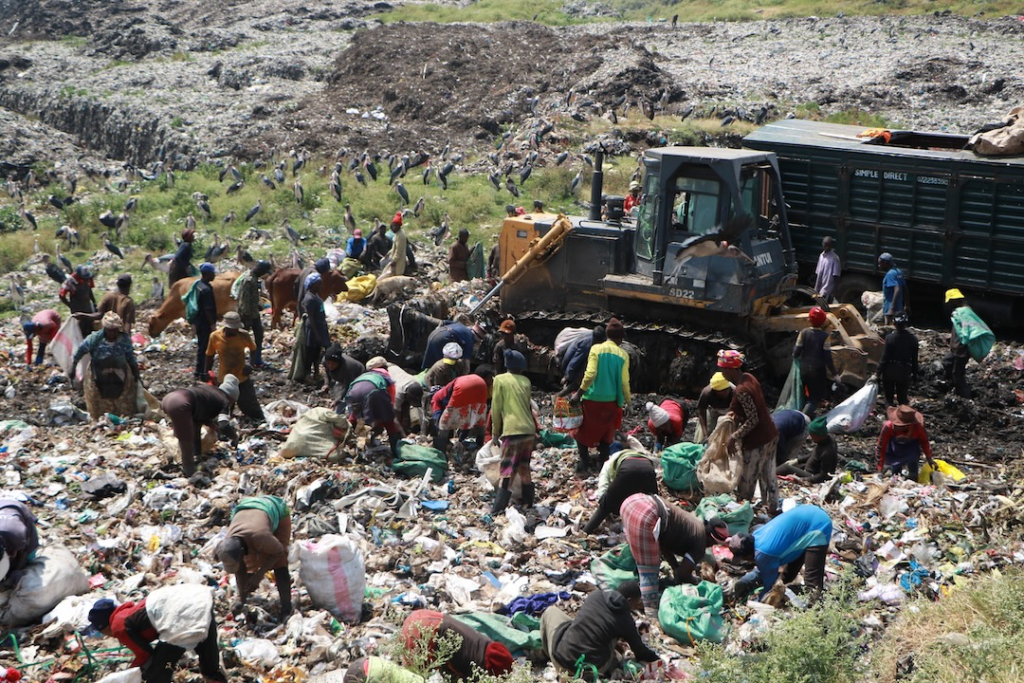
Waste tells the most honest story about a city. What it values, what it neglects, and who bears the cost of that neglect. In Nairobi, that story is written every day at Dandora dumpsite, where mountains of refuse continue to grow in the shadow of homes, schools, and rivers.
Dandora receives an estimated 2,500 to 3,000 tonnes of waste daily, despite being declared environmentally unfit years ago. What was once designed as a temporary landfill has become a permanent scar on the city’s landscape, absorbing the by-products of unchecked urbanisation and weak enforcement.
The health consequences are well-documented. Communities living around Dandora report high incidences of respiratory illness, skin conditions, and water contamination. Heavy metals have been detected in soil and food chains, turning waste into a slow, invisible poison rather than a manageable by-product of city life.
Yet Nairobi’s struggle is not unique. Across Africa, cities generate over 180 million tonnes of municipal solid waste annually, a figure expected to more than double by 2050. Less than half of this waste is formally collected. The rest is burned, dumped in open spaces, or washed into waterways.
Waste in Africa is often framed as a technical failure, but in reality, it is a governance failure. It reflects planning systems that lag behind population growth, budgets that prioritise reaction over prevention, and policies that ignore the economic potential embedded in discarded materials.
This is where comparisons with cities in China, as highlighted in the LinkedIn post, become instructive rather than aspirational. Several Chinese cities now operate large-scale waste-to-energy plants that process thousands of tonnes of garbage daily, converting it into electricity while drastically reducing landfill dependence.
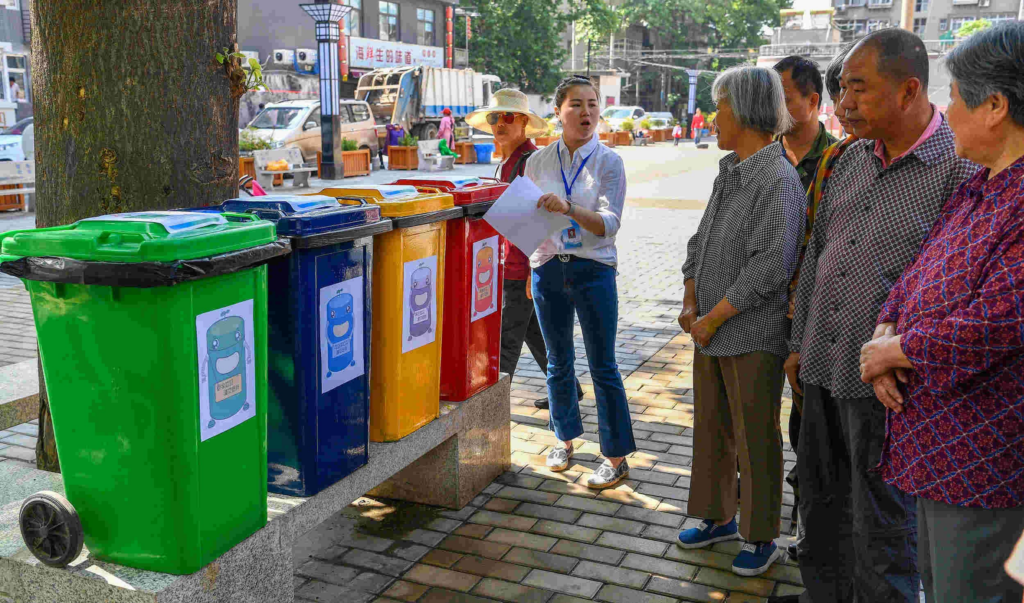
China still produces enormous volumes of waste, but the difference lies in intent and infrastructure. Waste is treated as a resource stream that must be controlled, monitored, and monetised. Sorting at source, strict enforcement, and heavy public investment have shifted waste from the margins of urban planning to its core.
The lesson for Kenya is not that incinerators or mega plants are the silver bullet. The real lesson is that waste systems work when cities decide that dumping is no longer acceptable. Transformation begins with political commitment, not technology.
Nairobi’s waste is predominantly organic, making composting and bio-digestion far more appropriate than endless landfilling. Plastics, metals, and glass already sustain an informal economy of thousands who recover value under dangerous conditions, without recognition or protection.
Formalising this workforce would immediately improve recycling rates while restoring dignity to labour that already keeps the city functioning. Waste pickers are not the problem. They are evidence of an untapped solution.
Dandora does not exist because Nairobi lacks options. It exists because dumping has been cheaper than planning. But cheap solutions always produce expensive consequences, paid through public health, environmental collapse, and lost opportunity.
Africa’s waste crisis is not about copying China. It is about learning that cities do not become clean by accident. They become clean by design. Kenya now stands at a crossroads where waste can either continue to bury communities or be redesigned to build resilience, jobs, and justice.