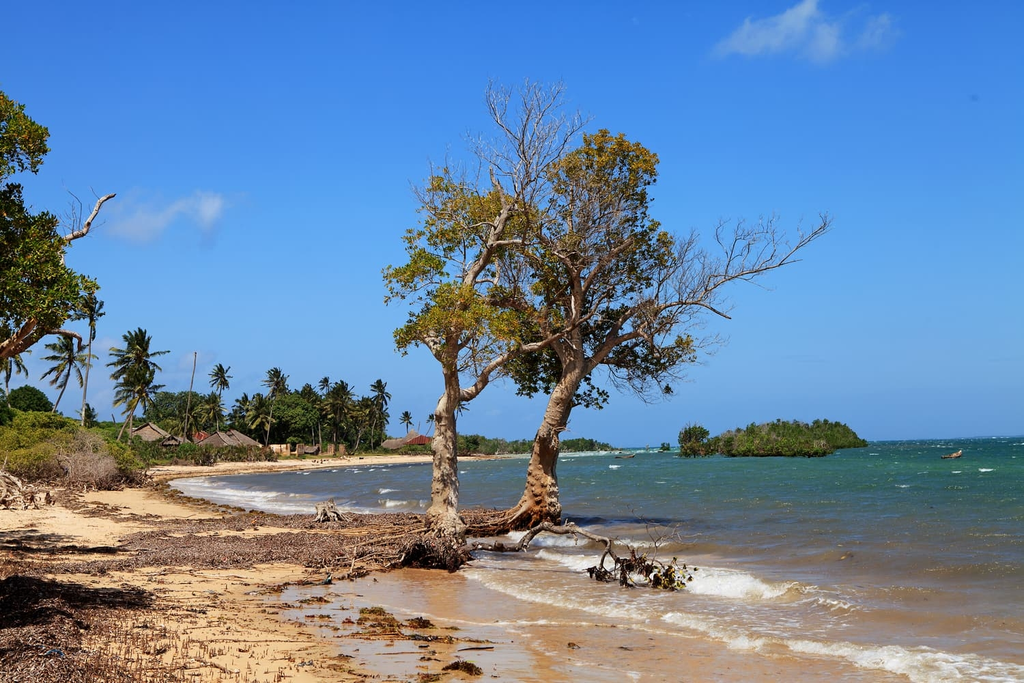

Recent research from early 2026 reveals an alarming acceleration in sea level rise across Africa. This phenomenon is now occurring at a rate significantly higher than the global average in most regions, posing a critical threat to coastal communities and ecosystems.
New data by nature.com, indicates that African sea levels have risen by an average of 11.26 cm since 1993. Since 2010, the rate of rise has surged to 4.34 mm/year, more than four times the rate observed in the 1990s. This rapid increase highlights a critical shift in climate patterns affecting the continent.
The 2023–2024 period witnessed the largest sea level spike ever recorded in African waters. This unprecedented surge was driven by a rare convergence of El Niño with record-positive phases of the Indian Ocean Dipole and Atlantic Niño. Such complex climatic interactions are intensifying the impact on coastal areas.
During this recent spike, thermal expansion, where water swells as it heats, accounted for over 70% of the rise. This effectively caused the ocean to experience a “fever,” indicating a direct link between rising global temperatures and the accelerating sea levels around Africa.
The impact of sea level rise is unevenly distributed across the continent’s Large Marine Ecosystems (LMEs). The Red Sea and Guinea Current regions exhibit the highest overall trends, with the Red Sea reaching rates of 3.91 mm/year due to its confined geography and high heat retention.
Waters around Mozambique and Madagascar in the Western Indian Ocean are experiencing the sharpest acceleration. Surges of up to 3.87 cm were recorded in a single year during the recent El Niño, demonstrating the vulnerability of these coastal areas to extreme weather events.
Uniquely, the Mediterranean Sea has shown a slower trend of 2.70 mm/year. This is because increased salinity has made the water denser, partially counteracting the rise from thermal expansion. This regional variation highlights the complex interplay of factors influencing sea levels.
By 2030, an estimated 108–116 million people in Africa will reside in low-elevation coastal zones, less than 10 meters above sea level. This demographic concentration in vulnerable areas underscores the urgent need for adaptation strategies and infrastructure development.
Coastal megacities like Lagos, Nigeria, face a “triple threat” of river, rainfall, and coastal flooding. Land subsidence, often due to groundwater extraction, is magnifying the relative sea level rise significantly, with rates of 8–12 mm/year.
Alexandria, Egypt, is also at high risk, with projections suggesting that a 0.5-meter rise could displace over 2 million people and cause $35 billion in property damage by 2050. These figures highlight the immense economic and social costs associated with rising sea levels.
Saint-Louis, Senegal, is frequently cited as a primary example of a historic city actively “disappearing” under the rising Atlantic. The erosion and inundation experienced here serve as a stark warning for other vulnerable coastal settlements.
The economic and human impacts extend to vital sectors such as fisheries. Rising and warming seas are disrupting fish populations, threatening a 30% contraction of Africa’s $25 billion marine fisheries sector by 2050. This will have severe consequences for food security and livelihoods.
Infrastructure and public health are also severely affected. Rising groundwater is transforming some urban areas into wetlands, leading to backflowing sewers and contaminated aquifers. In Lagos, 50% of hospitalizations are already linked to water-borne diseases exacerbated by these conditions.
Planners are increasingly advocating for “nature-based solutions” as more cost-effective and resilient defenses than traditional sea walls. Restoring mangroves in Mozambique and Senegal, for instance, offers a sustainable approach to coastal protection and ecosystem preservation.