

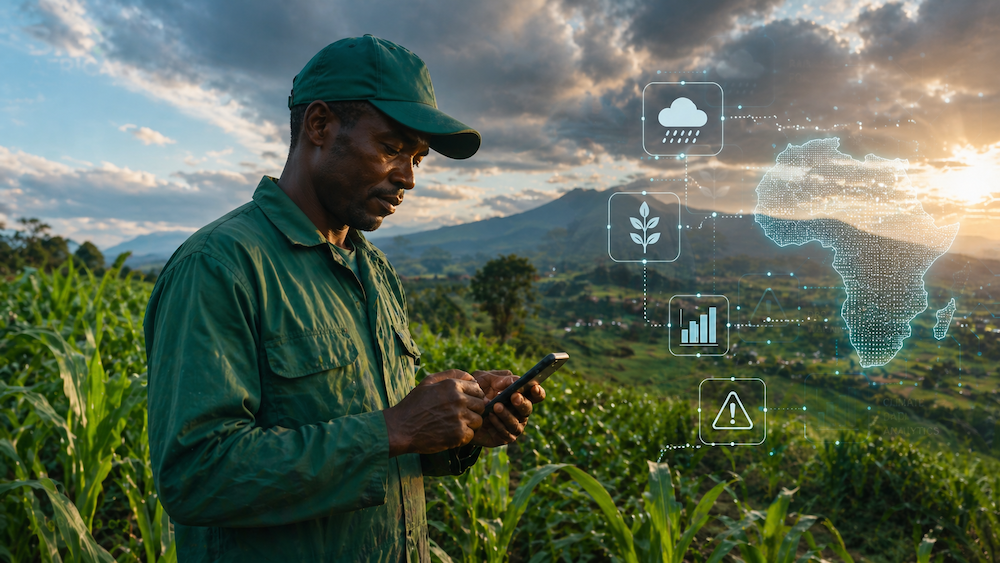

On his small farm in Naro Moru, Nyeri County, Benson Muriuki stands at the edge of his maize field and studies the sky with the kind of patience only farmers understand. The rains are late again. Last season, they came too early and vanished too soon, leaving his crop stunted and his income uncertain. In February this year, the question weighed heavily: plant now and risk another loss, or wait and gamble on a shortening season?
This quiet anxiety is no longer unique to Muriuki. It is the lived reality of millions across Kenya and, increasingly, the world. What farmers have long sensed is now firmly backed by science that the climate is changing faster than expected, and the pace is accelerating.
According to findings cited in recent climate research, global greenhouse gas emissions have surged at an unprecedented pace. Over a span of 140 years, from 1850 to 1989, emissions rose by about 58 percent. But in just 30 years, between 1990 and 2019, they increased by another 42 percent, almost matching the previous century and a half.
This acceleration is pushing the planet toward dangerous thresholds as scientists project that global temperatures could rise by 1.5°C between 2030 and 2050, and exceed 2°C by mid-century if emissions are not drastically reduced.
For communities on the frontlines, these numbers translate into failed harvests, more pests and diseases, and deepening poverty.
In East Africa, erratic rainfall and rising temperatures are already cutting yields of staple crops like maize, because delayed rain can mean seeds never germinate and a sudden heatwave can destroy crops at their most delicate stage. Elsewhere, floods are becoming more intense, washing away homes, contaminating water sources, and triggering outbreaks of diseases such as cholera and malaria.
And yet, there is a clear injustice at the heart of the crisis. The sectors driving most global emissions, which include energy, industry, and transport, accounted for roughly 79 per cent of greenhouse gases in 2019, while agriculture, forestry, and land use contributed about 22 per cent, and many African countries, with relatively low emissions, are bearing the brunt of impacts they did little to cause.
This has created what experts describe as a “development paradox.” Nations striving for economic growth often rely on the very activities that increase emissions including industrialization, energy expansion, and infrastructure development. Growth fuels emissions, emissions fuel climate change, and climate change in turn erodes the gains of growth. It is a cycle that is proving difficult to break.
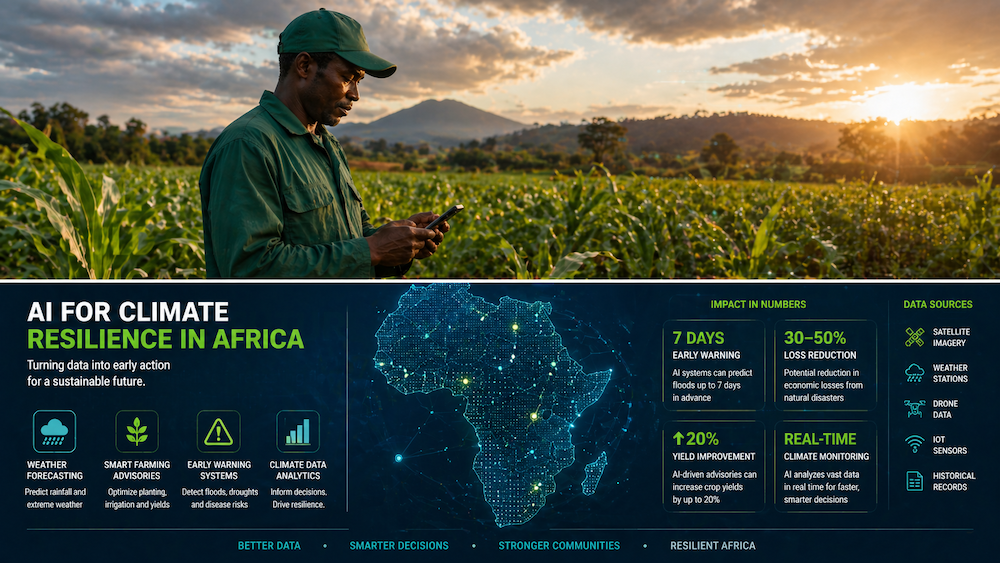
But amid the worsening crisis, a new set of tools powered by artificial intelligence (AI) is beginning to reshape how the world responds. This means that Muriuki did not have to rely solely on instinct and experience to decide when to plant. Instead, he receives a message on his phone informing him that rainfall is expected in five days, with a high probability of continuing for two weeks. Plant now. Another alert warns of a potential dry spell later in the season and suggests drought-resistant seeds.
Artificial intelligence systems are increasingly capable of analyzing massive amounts of climate data in real time. They can forecast temperature and rainfall patterns, predict extreme events such as floods and droughts, and even simulate how different policy decisions might affect future emissions.
Some technologies are already demonstrating their impact. AI-powered flood forecasting systems can predict disasters up to seven days in advance, giving governments and communities critical time to prepare. In some cases, these systems have significantly reduced both economic losses and fatalities.
Other platforms can run climate simulations hundreds of times faster than traditional models while using far less energy. For instance, digital “twins” of cities, virtual replicas built from satellite and meteorological data, allow planners to test how adding vegetation or redesigning urban spaces could reduce heat and flooding. On the other hand, real-time carbon emissions tracking tools are helping organisations understand and reduce their environmental footprint.
For Africa, the implications could be transformative. Agriculture remains the backbone of many economies, yet it is highly vulnerable to climate shocks. AI-driven advisories could help farmers decide when to plant, irrigate, or harvest. In pastoral communities, early warnings of drought could guide migration patterns and protect livestock. In cities, better forecasting could prevent flood-related disasters and improve infrastructure planning.
Perhaps most importantly, AI offers a shift from reactive to proactive adaptation and from responding to disasters after they occur to anticipating and minimizing their impact.
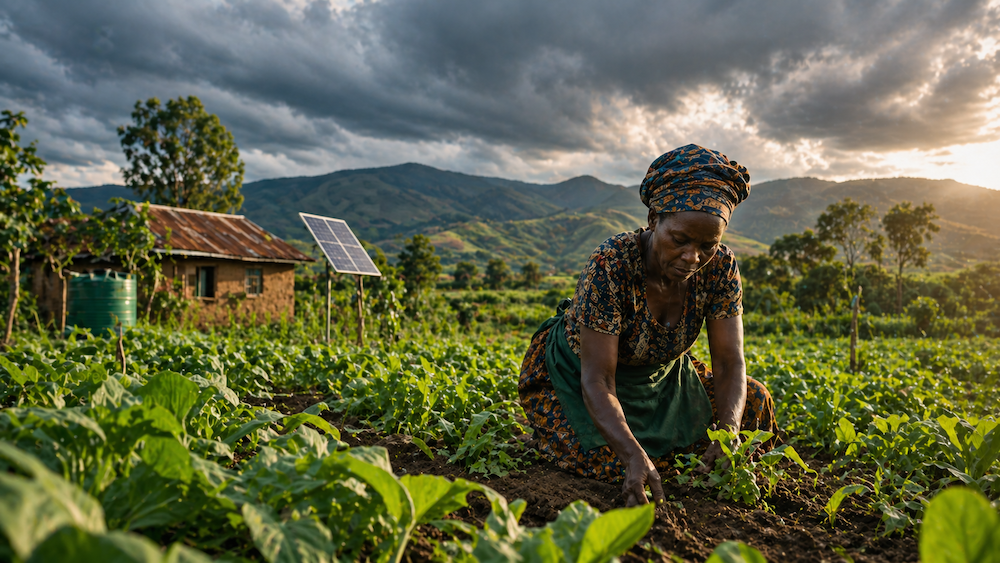
But the path to this future is far from guaranteed. Across much of Africa, the foundations needed to support these technologies are still fragile. Weather monitoring systems are often incomplete or fail to meet global standards, limiting the accuracy of forecasts. Digital infrastructure remains uneven, and high data costs make it difficult for many people, especially smallholder farmers, to access critical information.
There is also a skills gap. Without sufficient training in digital and AI technologies, the ability to develop, deploy, and maintain these systems remains limited. At the policy level, many countries lack clear regulations governing the use of AI, slowing adoption and creating uncertainty.
Investment is another major constraint. Governments balancing urgent needs in health, education, and infrastructure often struggle to prioritize funding for digital climate solutions, yet experts argue that these barriers are not insurmountable.
Expanding digital infrastructure, strengthening meteorological networks, and integrating climate adaptation into all sectors, from agriculture to education, are seen as critical steps. Building local expertise through science and technology education could empower countries to develop their own solutions rather than relying solely on imported technologies.
There is also growing recognition of the need for regional cooperation, with institutions like the African Union (AU) and regional blocs playing a key role in scaling solutions across borders.
Still, even the most advanced technologies have their limits. AI can predict floods, but it cannot stop the rains from falling. It can model future climate scenarios, but it cannot on its own reduce emissions. As scientists emphasize, the ultimate solution to the climate crisis remains cutting greenhouse gases at their source. Without that, adaptation efforts, no matter how sophisticated, risk being overwhelmed.
Back in Naro Moru, the stakes remain deeply personal for Muriuki as for him, watching the skies, the difference between a good forecast and a failed season can mean the difference between stability and hardship. In that fragile space between uncertainty and survival, technology is beginning to offer something clearer, and in a changing climate, that may be one of the most powerful tools of all.


Such a great article. AI indeed is transforming how things are being done. Adoption of AI in all spheres of interaction is critical and the changing Clinate landscapes need it now more that ever.
Great article Dr.M. Kabara