
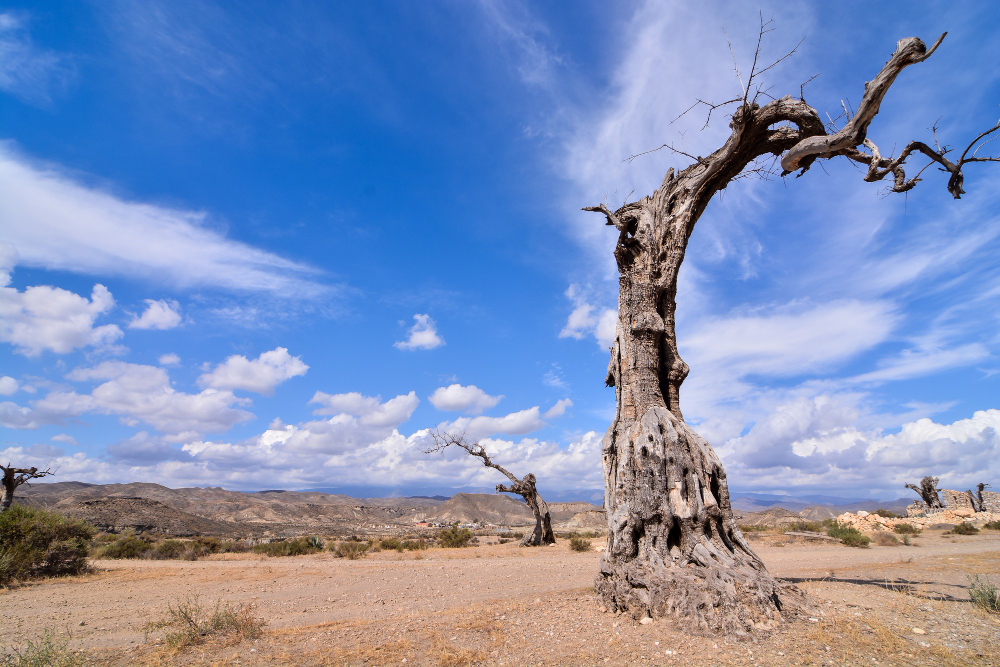

As the dry season tightens its grip across Kenya’s, especially in arid and semi-arid lands (ASAL), communities across 23 counties are now facing acute food and water shortages.
The latest update from the National Drought Management Authority (NDMA) warns that the crisis is worsening and could deepen before the next rains arrive.
According to the December 2025 drought bulletin from NDMA, of the 23 ASAL counties, nine are on “Alert” and one, Mandera County, is already in the “Alarm” phase.
The counties in the “Alert” category are Wajir, Garissa, Kilifi, Kitu, Marsabit, Kwale County, Kajiado, Isiolo and Tana River.
Meanwhile, 13 counties including Samburu, Turkana, Taita‑Taveta, West Pokot, Tharaka‑Nithi, Embu, Nyeri, Laikipia, Narok, Baringo, Makueni, Meru and Lamu are classified as “Normal,” though many of these are on a downward trend.
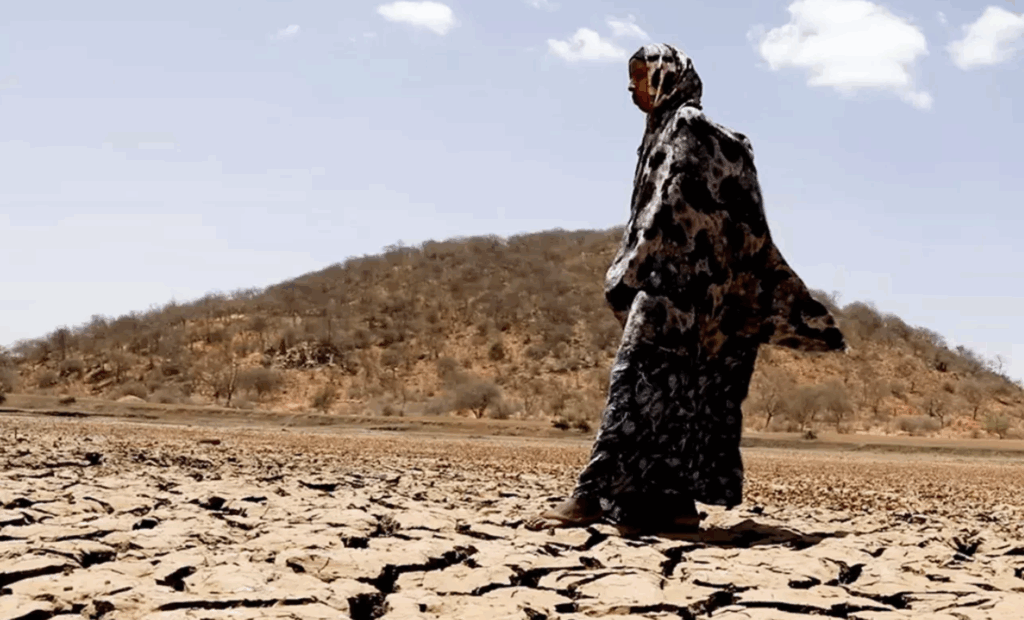
The latest NDMA assessment estimates that about 1.76 million people currently require urgent food assistance, a figure projected to rise to 2.12 million by January 2026 if conditions do not improve.
Among those most vulnerable are households in crisis-hit counties such as Mandera, Marsabit, and Turkana, which the agency identifies as being in the “Crisis Phase” (IPC Phase 3) under the Integrated Food Security Phase Classification (IPC).
In northeast Kenya, residents describe a daily struggle for survival. Health facilities in several counties report rising cases of acute malnutrition among children under five, and among pregnant or lactating women.
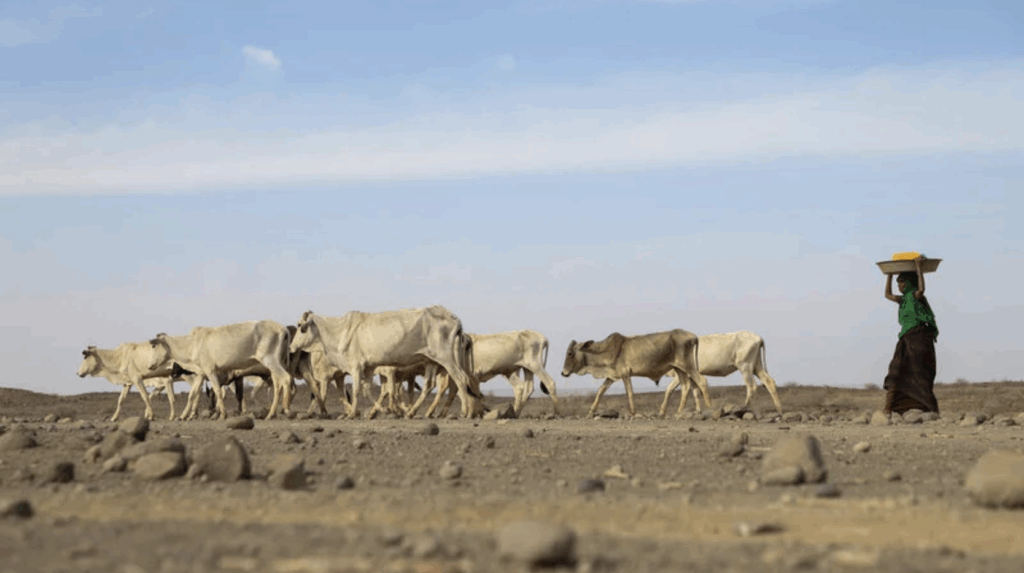
NDMA points to the repeated failure of successive rainy seasons as the key driver of the current disaster. The poor performance of the 2024 short rains, followed by scant rainfall during the 2025 long-rains season and the depressed October-November-December short rains, has left pasture depleted, water points dry, and livestock extremely vulnerable.
Livestock deaths combined with rising cereal prices have deeply eroded household purchasing power. With maize and other staples becoming more expensive, families who once relied on market purchases now struggle to afford even one meal a day.
According to a 2025 report by the Food and Agriculture Organization (FAO) and its global early warning unit, rangeland conditions improved in some pastoral areas earlier in the year due to near-average rains. However, that recovery proved short-lived, and for many communities the gains were not enough to reverse years of drought-induced vulnerability.
In response to the crisis, NDMA together with humanitarian partners have launched relief initiatives including distribution of food aid, water trucking, cash transfers, nutrition screening and treatment, and livestock-offtake programmes in some counties.
Experts caution that unless interventions expand significantly, including scaled-up food and water distribution, nutritional support, livestock feed and veterinary care, and long-term investment in water infrastructure (boreholes, water pans, dams), the coming months could bring widespread hunger, displacement, and suffering.
Community leaders warn that if drought conditions persist and aid remains patchy, more counties are likely to slide into crisis or emergency stages.
With regional climate forecasts pointing to below-average rainfall, any of the counties now under “Alert” or “Normal risk tipping into more severe drought phases.