

Kenya has marked ten years of the Upper Tana Water Fund with renewed calls for greater investment in watershed restoration and nature-based solutions to secure the country’s water future.
The milestone was celebrated during a breakfast event at the Nairobi Serena Hotel, bringing together government officials, conservation partners and private sector investors supporting the initiative.
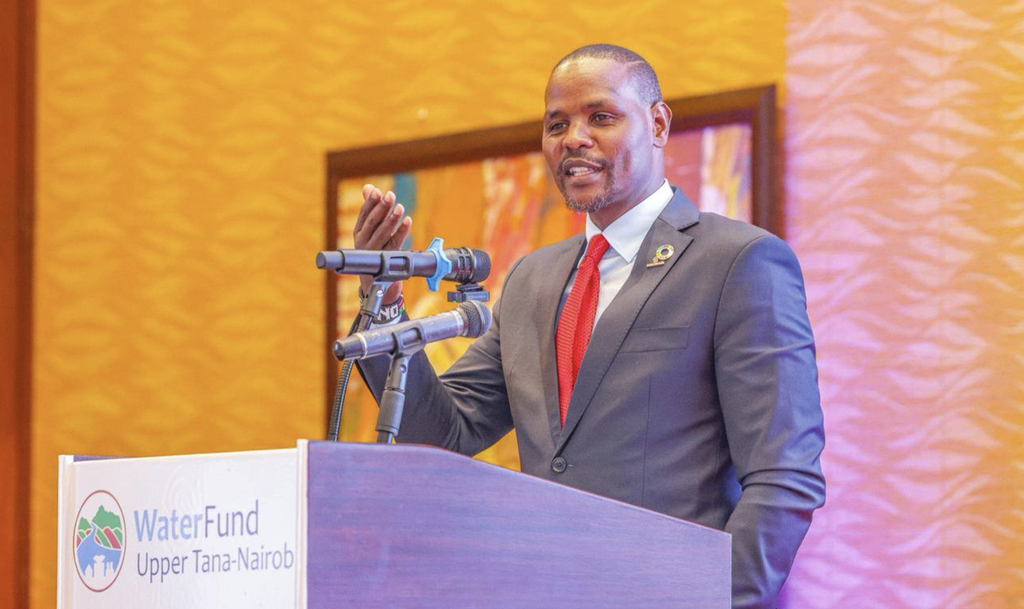
Speaking at the event, Festus K. Ng’eno, Principal Secretary in the State Department for Environment and Climate Change, described the fund as one of Kenya’s most successful public-private partnerships for protecting critical water sources.
Ng’eno said the model demonstrates how cooperation between government agencies, utilities, communities and businesses can safeguard water resources by investing in the health of upstream ecosystems.
Kenya became the first African country to establish a water fund in 2015 through the Upper Tana Nairobi Water Fund Trust. Since then, the approach has inspired the creation of 17 water funds across 11 African countries.
The initiative channels funding from downstream water users — including utilities, companies and public institutions — into conservation activities in the Upper Tana catchment that supplies much of Nairobi’s drinking water.
Partners supporting the programme include the Nairobi City Water and Sewerage Company, East African Breweries Limited, Frigoken, Pentair and the Coca‑Cola Africa Foundation.
International partners such as the Global Environment Facility and the Embassy of Sweden in Kenya have also provided financing and technical support.
The programme focuses on nature-based solutions, including forest restoration, protection of riparian areas and improved soil management to strengthen watershed resilience.
According to the government, investing in healthy ecosystems can often be more cost-effective than relying only on conventional grey infrastructure like dams and treatment plants.
Over the past decade, the initiative has delivered measurable results across the Upper Tana basin.
More than 452,000 acres of farmland have been placed under sustainable land management, while over 5.5 million trees have been planted across key water catchments.
The programme has also supported the construction of 1,285 kilometres of terraces, conserved 984 kilometres of riparian reserves and installed more than 17,000 rainwater harvesting water pans.
These interventions have helped improve water quality, reduce sedimentation and stabilise river flows that supply millions of people in Nairobi and surrounding counties.

The programme has also improved livelihoods by promoting climate-smart agriculture and creating environmental jobs for communities living in the catchment.
Among those attending the anniversary event were Jennifer Morris, CEO of The Nature Conservancy (virtually), Eddy Njoroge, President of the UTNWFT Board of Trustees, and Moses Badilisha, Governor of Nyandarua County.
Looking ahead, the government is urging climate funds, development partners and private investors to expand support for water funds as pressure on Kenya’s water towers grows due to population growth, land-use change and climate impacts.
Officials say scaling similar initiatives across the country could help secure water for cities while restoring ecosystems and strengthening climate resilience.