
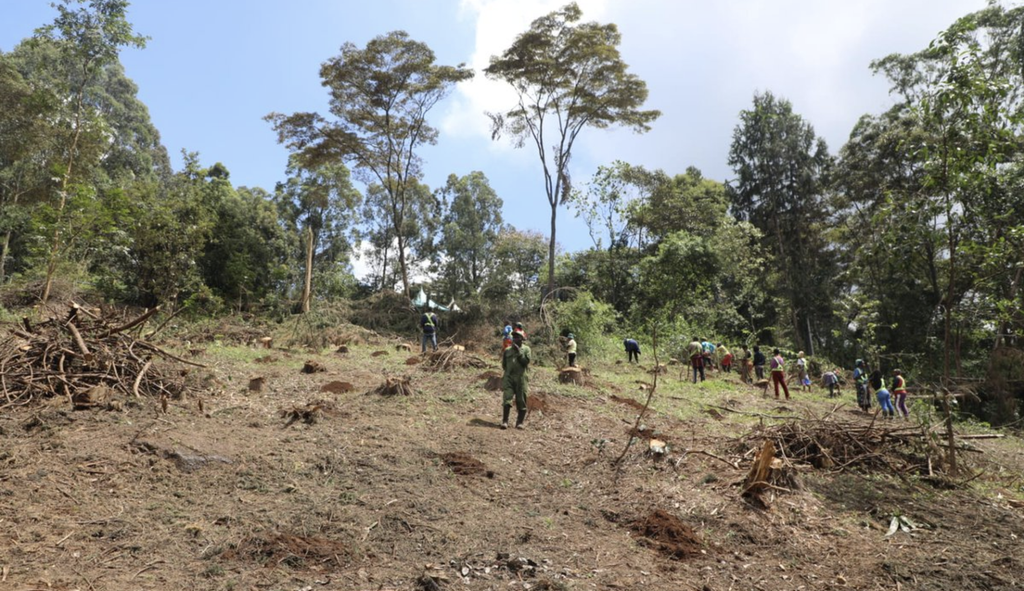

Confusion has arisen over ongoing tree clearance inside Karura Forest after Environment Cabinet Secretary Deborah Barasa offered a new explanation for the activity, contradicting an earlier statement from the Kenya Forest Service (KFS).
This confusion has deepened concerns among conservationists about the fate of Nairobi’s iconic urban forest.
The controversy, which erupted after indigenous trees were felled around the forest’s Rangers Village, has taken a new turn following Barasa’s interview.
The CS now describes the site as a “24/7 logistics hub” for a new tree nursery. This characterisation differs significantly from the Kenya Forest Service’s initial framing of the area as an “administrative zone” for National Youth Service containers.
Friends of Karura Forest (FKF), the community association that co-manages the 1,041-hectare forest with KFS, raised an alarm last week over what it termed “destructive” tree clearance around Rangers Village.
The association said numerous indigenous trees had been felled since the weekend, with chainsaw operators and heavy machinery clearing the area.

The group, which has co-managed the forest since a landmark 2009 agreement with KFS, said it was not notified of the works despite a recent Joint Management Committee meeting. FKF board member Prof Njoroge Karanja demanded an immediate halt to the clearance.
In an initial response on social media, KFS claimed the cleared area falls within its headquarters. However, FKF disputed this, stating the site is approximately one kilometre from the headquarters and “right inside the forest”.
The association noted that the KFS headquarters area bordering Kiambu Road spans about 55 hectares and contains ample space for any required facilities.
But during her television interview, CS Barasa offered a different justification. She described the project as a “logistics hub” intended to support a new tree nursery as part of the government’s ambitious 15 billion trees programme.
While she framed it as nursery infrastructure, conservationists note that tree nurseries typically do not require the kind of heavy machinery and tree removal witnessed over recent days.
The Green Belt Movement has also challenged the rationale for establishing a large-scale nursery inside an ecologically sensitive urban forest, arguing that such facilities could be located elsewhere without compromising forest cover.
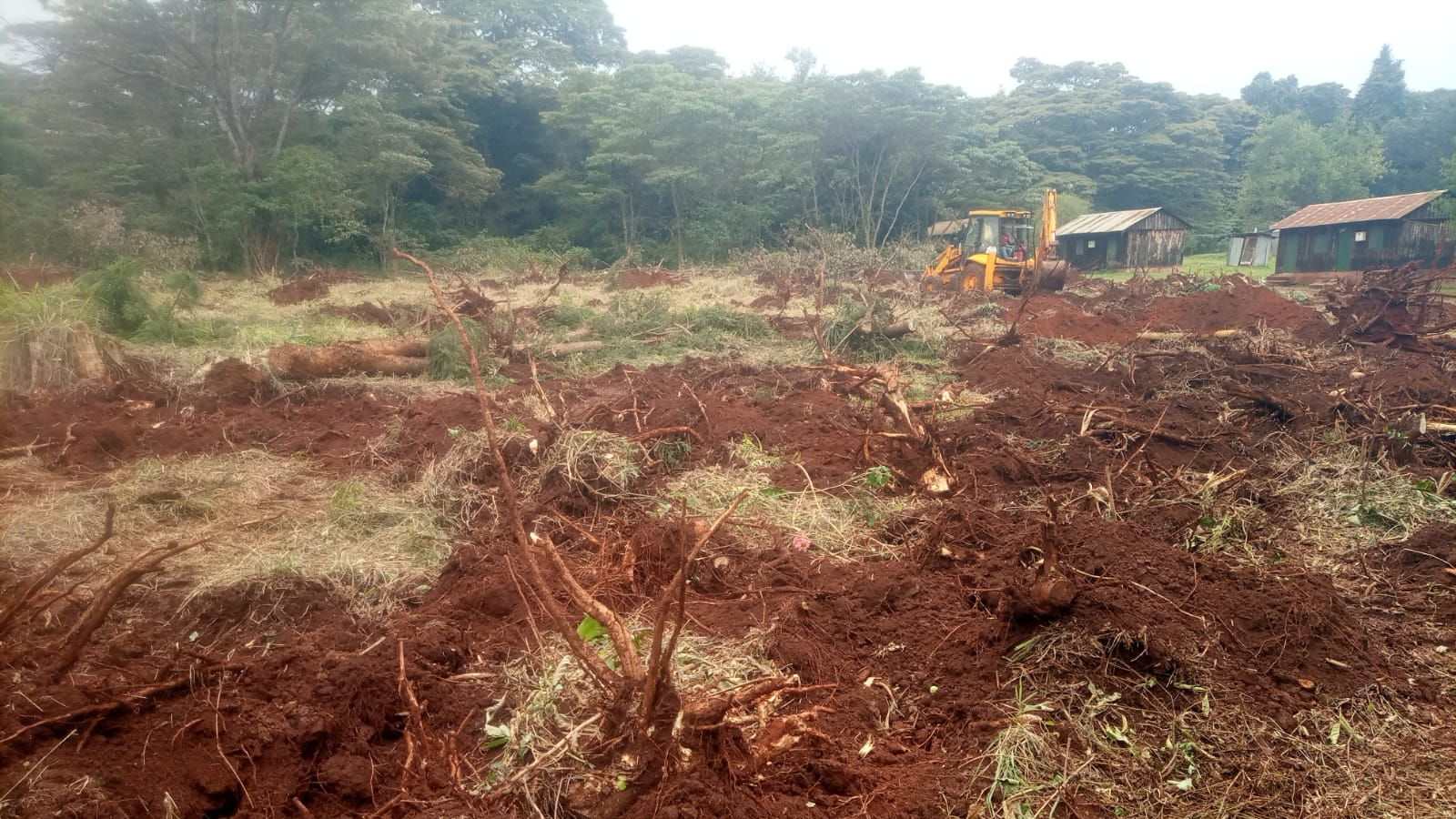
The current Karura Forest Management Plan (2021-2041) specifically provides for the relocation of Rangers Village to KFS headquarters, with the vacated land to be returned to the indigenous forest. FKF argues the current clearance violates this plan.
Conservationists point out that if the project is indeed for a nursery, there should be no reason to conceal plans from co-managers or bypass established consultation processes. The Forest Conservation and Management Act of 2016 explicitly encourage community participation and questions why public participation was not conducted before the current clearance commenced.
The Karura confusion comes barely seven months after CS Barasa faced intense parliamentary grilling over a controversial construction of a luxury hotel inside Ngong Forest. It emerged that political influence played a role in the approval of the project.
Further investigation revealed that NEMA had not issued any license for the Ngong project, and that the contractor had proceeded with construction without approval, despite claims that the eco-lodge would use only degradable materials.
KFS eventually suspended construction pending consultations, but the episode exposed significant gaps in oversight and approvals processes.
Karura Forest has long been a target for powerful individuals seeking to grab portions of its 1,041 hectares. The forest was gazetted in 1932, but beginning in the 1990s, it faced systematic encroachment.
In 2003, the NARC government moved to revoke dubious land allocations from the KANU era, with developers beginning to relinquish properties after it became clear the new administration would investigate.