
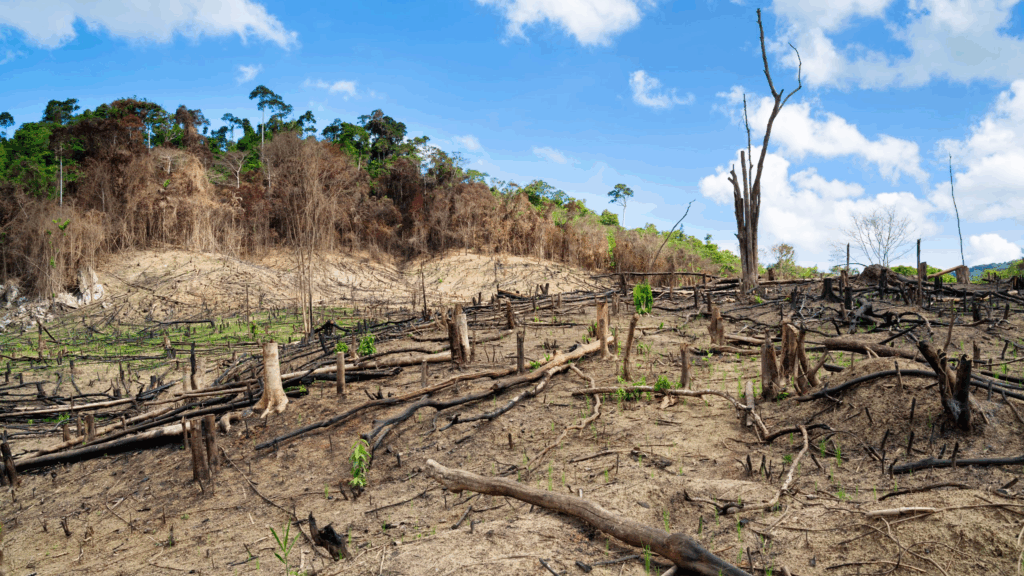

The destruction of forests can increase the risk of severe floods by up to eight times, according to new research highlighted by the United Nations Office for Disaster Risk Reduction, a finding that raises fresh concerns for countries like Kenya that are grappling with increasingly destructive floods.
The study, reported by the disaster risk reduction platform PreventionWeb, found that removing forest cover dramatically alters how landscapes absorb rainfall, making flood events far more likely and severe.
Scientists involved in the research say the loss of forests can transform what would normally be a once-in-64-year flood into an event that occurs roughly once every eight years.
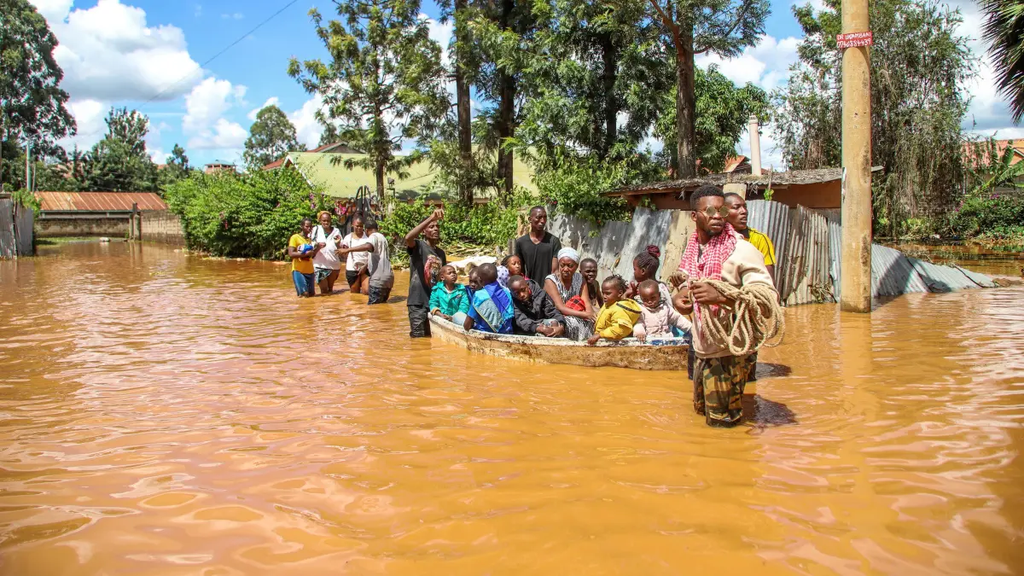
The warning comes as parts of Kenya continue to experience flooding that has killed dozens of people, displaced families and destroyed homes and infrastructure in several counties.
According to the report, forests act as natural buffers against flooding by intercepting rainfall and allowing water to slowly infiltrate into the soil. Furthermore, tree canopies reduce the impact of raindrops on the ground, while roots and organic matter in forest soils absorb large quantities of water.
When forests are cleared, that natural sponge disappears, enabling rainwater to reach the ground faster, saturating soils more quickly and flows rapidly into streams and rivers, creating powerful surges that can overwhelm riverbanks and drainage systems.
Researchers analysed long-term hydrological records from forested catchments and compared flood patterns before and after large-scale forest loss. Their findings showed that areas that lost forest cover experienced dramatically higher flood peaks and significantly greater flood frequency.
The findings have direct implications for Kenya, where environmental experts have repeatedly warned that deforestation and land degradation are weakening the country’s natural flood defenses.
Key water towers such as the Mau Forest, the Aberdare Range, and Mount Kenya play a crucial role in regulating water flow into major river systems. But decades of logging, settlement, and agricultural expansion have significantly reduced forest cover in some of these areas.
At the same time, rapid urbanisation in cities such as Nairobi has replaced natural landscapes with concrete surfaces that prevent water from soaking into the ground.
Environmental planners say this combination of deforestation upstream and poorly planned urban growth downstream can dramatically worsen flooding during heavy rains.
Scientists say climate change is also increasing the intensity of rainfall events across East Africa, raising the stakes for countries already dealing with environmental degradation.
The United Nations Office for Disaster Risk Reduction says restoring forests and protecting watersheds should be a central strategy in reducing disaster risk.
Experts say reforestation, improved land-use planning and the protection of wetlands could help reduce the scale of flooding in vulnerable regions.