
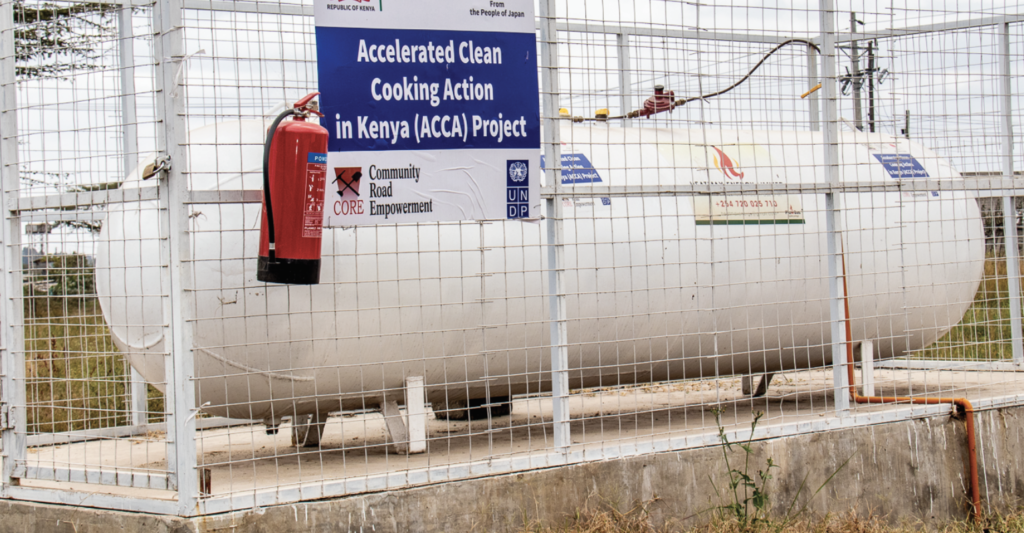

Kenya is off track to achieve universal access to clean cooking by 2030, with millions of households still dependent on polluting fuels, a new report by the International Renewable Energy Agency (IRENA) shows.
The report, Tracking Clean Cooking in 100 Countries (2026), finds that only about 30–32 percent of Kenya’s population currently has access to clean cooking solutions, leaving nearly 70 percent, or roughly 37 million people, reliant on firewood, charcoal and other traditional fuels.
While Kenya has recorded gradual gains in recent years, the pace of progress remains insufficient to meet the 2030 target, the report indicates.
Despite ambitious government targets and a flurry of international initiatives, projections indicate Kenya will achieve only 57 percent clean cooking access by the end of the decade, far short of the Sustainable Development Goal 7 target of universal coverage. The shortfall carries an estimated annual economic cost of $39 billion (KES 5 trillion), encompassing healthcare expenses, lost productivity, and environmental degradation.
According to the report, continued reliance on wood, charcoal, and dung for cooking exacts a devastating toll across the country. Indoor air pollution from inefficient combustion of solid fuels contributes to nearly 700,000 premature deaths annually across Africa, with women and young children bearing the disproportionate burden of respiratory illnesses.
The time-consuming task of fuel collection, primarily undertaken by women and girls, perpetuates cycles of poverty and educational disadvantage, reducing school attendance and reinforcing time poverty. In rural areas, where biomass reliance is at 90 percent, the daily chore of gathering firewood consumes hours that could otherwise be spent on income generation or education.
Environmental consequences are equally severe. Burning solid fuels releases carbon dioxide, methane, and black carbon, a pollutant accounting for 10-15 percent of global warming that accelerates glacial melting and disrupts weather patterns. Cooking-related greenhouse gas emissions represent approximately 2 percent of global CO2 output.
The report highlights a stark urban–rural divide underpinning the country’s clean cooking challenge. Access in urban areas has risen to over 60 percent, driven largely by the expansion of LPG and alternative fuels. In contrast, rural access remains critically low at just over 11 percent, with most households continuing to depend on biomass.
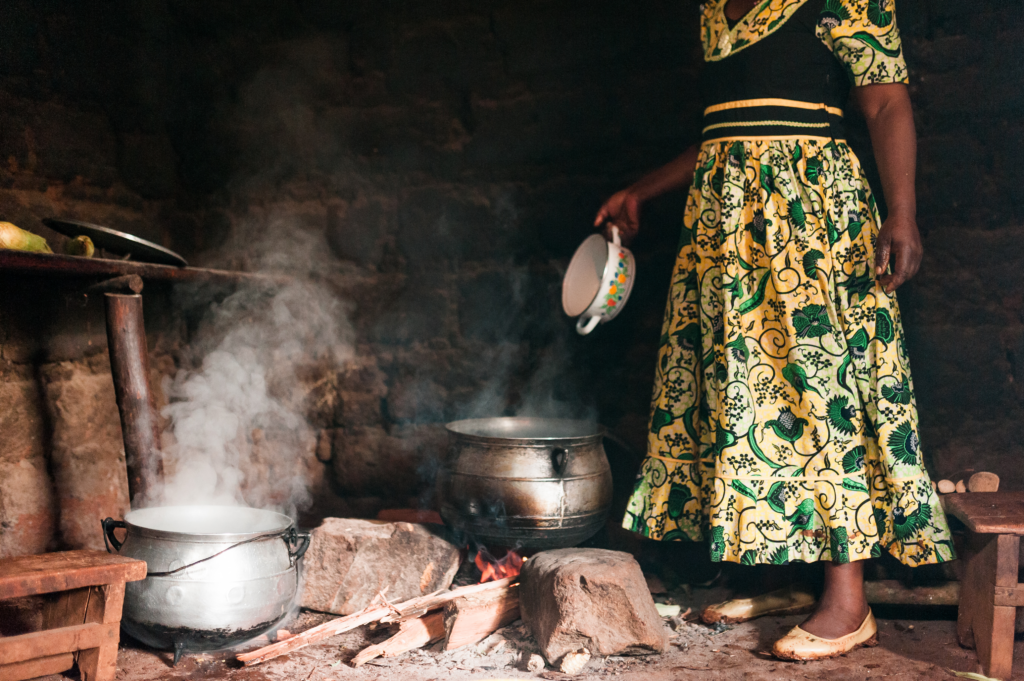
IRENA describes this pattern as a “two-speed transition,” where urban populations benefit from expanding energy markets while rural communities are left behind.
Recent events have exposed the fragility of Kenya’s clean cooking transition. In January 2026, Koko Networks, a bioethanol fuel distributor serving over 1.5 million Kenyan homes, abruptly shut down its operations after failing to secure government authorization for carbon credit sales and import permits. The closure left more than 3,000 supply points idle and forced low-income households to choose between returning to smoky charcoal or purchasing more expensive LPG .
“The clean cooking situation in Kenya, and across Africa, is a serious crisis,” said Amos Wemanya, a senior analyst at Power Shift Africa. “This is not just about emissions or climate targets. It is about development, health, dignity and household survival”.
The challenges facing Kenya reflect a broader continental emergency. Across sub-Saharan Africa, nearly 900 million people lack access to clean cooking solutions, and population growth continues to outpace gains in access, widening the deficit by an estimated 14 million people annually. Globally, 2.1 billion people remain dependent on polluting cooking fuels.
IRENA has identified clean cooking as a defining challenge for Africa’s prosperity, estimating that closing the global access gap requires more than $2 billion annually. However, current financing flows remain dramatically insufficient, with a significant gap between available funds and the capacity of target recipients to absorb them due to a lack of bankable projects, high interest rates, and stringent requirements.
In response to the widening gap, a coalition of international organizations launched the Clean Cooking Accelerator Initiative at the IEA’s 2026 Ministerial in Paris. The partnership, involving The Rockefeller Foundation, Global Energy Alliance for People and Planet, Clean Cooking Alliance, and Energy Corps aims to strengthen supply chains, invest in infrastructure, and develop bankable project pipelines across approximately half a dozen African countries.
The initiative will deploy Clean Cooking Fellows to build institutional capacity and will align with Mission 300, a World Bank and African Development Bank-led effort to provide 300 million Africans with electricity by 2030. A second Summit on Clean Cooking in Africa is scheduled for July 9-10, 2026, in Nairobi, co-chaired by Kenya, Norway, the United States, and the IEA.
However, experts caution that without fundamental shifts in financing mechanisms and policy frameworks, these efforts may prove insufficient. IRENA’s analysis emphasizes that scaling up clean cooking solutions requires annual investment of approximately $8 billion by 2030, alongside strategies to modernize transitional fuels like charcoal rather than ignoring them entirely.
“Sustainable energy solutions are not just about protecting the environment; they are about improving lives and securing our future,” said Lorraine Kirigia of Lowaki Eco-Solutions Limited, a Kenyan firm promoting energy-efficient stoves.


What’s up it’s me, I am also visiting this site regularly,
this website is genuinely nice and the people are truly sharing pleasant
thoughts.