

By Stella Cheptoo
The government has stepped up efforts to protect the country’s forests through an expanded fencing programme, even as conservationists caution that physical barriers alone may not be enough to shield critical ecosystems from powerful land interests.
The initiative was reinforced on May 4 when Chief Conservator of Forests, Alex Lemarkoko, commissioned the Kaptagat ecosystem fencing project and officially handed over the site to the Kenya Forest Service (KFS) fencing unit.
The first phase of the project will cover 50 kilometers in the Kapkoi area within Sabor Forest Station in Elgeyo Marakwet County. KFS officials say the project is part of a broader national strategy aimed at curbing forest encroachment, reducing human-wildlife conflict, and restoring degraded ecosystems.
Speaking during the commissioning, Lemarkoko said the fencing programme would play a critical role in protecting biodiversity and securing essential ecosystem services such as water catchment, carbon sequestration, and soil stability.
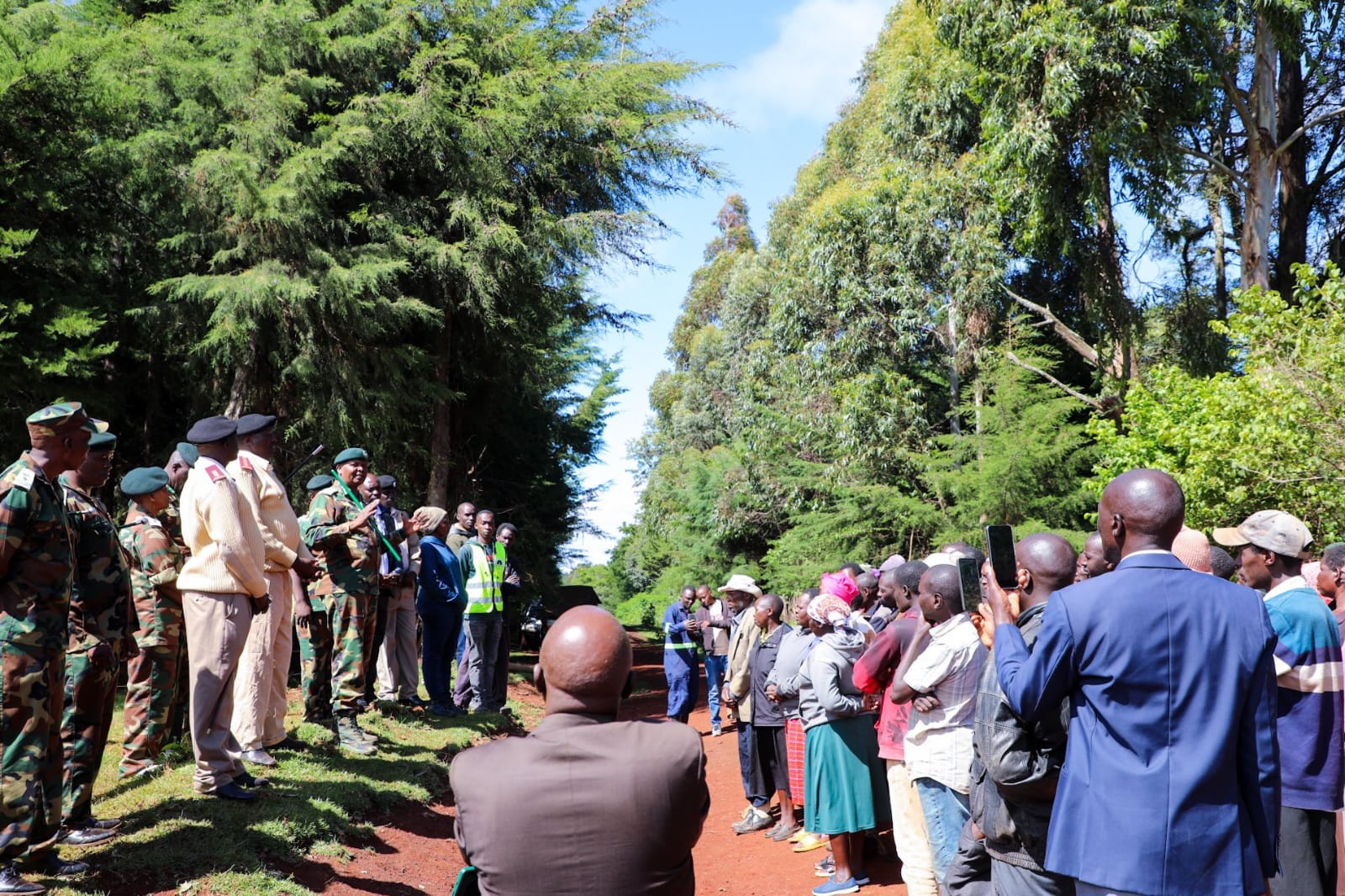
He also urged surrounding communities to act as “social fences” by safeguarding nearby forests, while encouraging Kenyans to take advantage of the ongoing rains to plant trees under national campaigns such as #JazaMiti and the 15-billion-tree target by 2032.
Kenya is turning to fencing as a frontline conservation tool, particularly in key water towers and forest ecosystems, including the Mau Forest, Aberdare Forest, and Mount Kenya Forest. These landscapes are vital for sustaining rivers, regulating climate, and supporting agriculture and energy production.
The push for fencing has gained momentum after years of widespread degradation driven by illegal logging, charcoal burning, and irregular land allocations. By clearly demarcating forest boundaries, authorities say fencing helps deter small-scale encroachment and limits human-wildlife conflict.
However, environmental experts warn that while fencing may address grassroots pressures, it does little to stop large-scale, politically connected land grabbing.
“Fencing is effective against everyday encroachment, but it is not a silver bullet,” said a Nairobi-based conservation policy analyst. “The bigger threat often comes from well-organized actors who can bypass or even legally alter protections.”

Today, forests are central to Kenya’s climate commitments, with the government targeting at least 10 percent forest cover and positioning tree growing as a key climate mitigation strategy. Programmes like the Kaptagat fencing project are therefore seen as part of a broader push to restore degraded landscapes and strengthen environmental resilience.
Even so, conservationists argue that the success of such initiatives will depend on more than infrastructure.
“There must be accountability and transparency in how forest land is managed,” said a member of a local Community Forest Association. “Without strong governance, even fenced forests can still be allocated, excised, or developed.”
Experts are increasingly advocating for a combined approach that integrates fencing with community stewardship, legal enforcement, and institutional reforms. Community Forest Associations, in particular, have been highlighted as critical partners in protecting forests from day-to-day pressures, though their influence is often limited when faced with high-level decisions.