
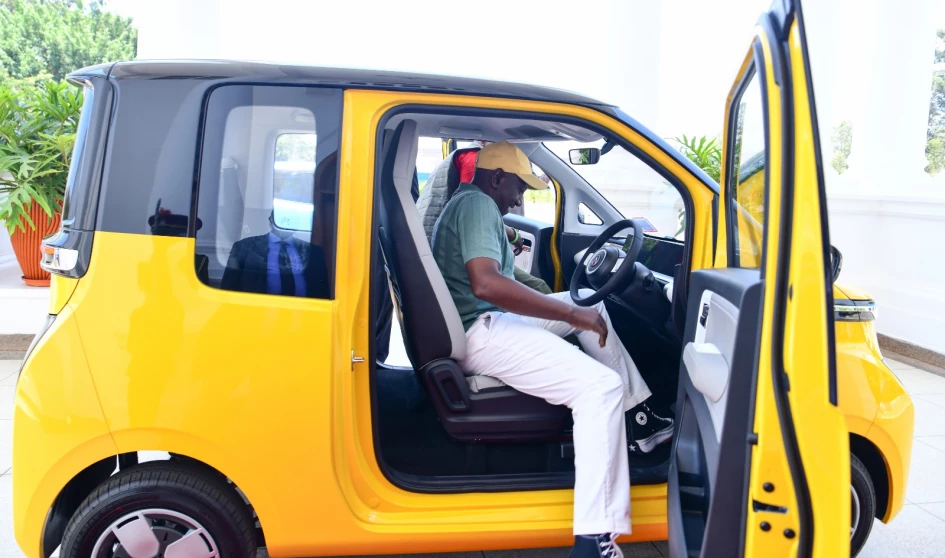

Dr. Kalua Green, a distinguished ecopreneur and unwavering advocate for sustainable living, stands as a beacon for a greener future. His personal journey, spanning an impressive 16 years, vividly illustrates a deliberate choice for efficiency over extravagance, primarily through his embrace of small and electric vehicles.
This commitment has led to him saving a whopping KSh 36.7 million on fuel, maintenance, and vehicle costs, and it also powerfully underpins his broader advocacy. Dr. Green consistently champions environmental stewardship as an intrinsic way of life, demonstrating unequivocally that sustainable choices are both eminently practical and remarkably financially rewarding.
His visionary perspective aligns with Kenya’s recent, monumental strides in e-mobility. On February 4, 2026, the Kenyan government officially launched its National E-Mobility Policy and proudly unveiled distinctive green number plates specifically for electric vehicles. This decisive action signals a robust national commitment to fostering clean transport and reducing carbon emissions.

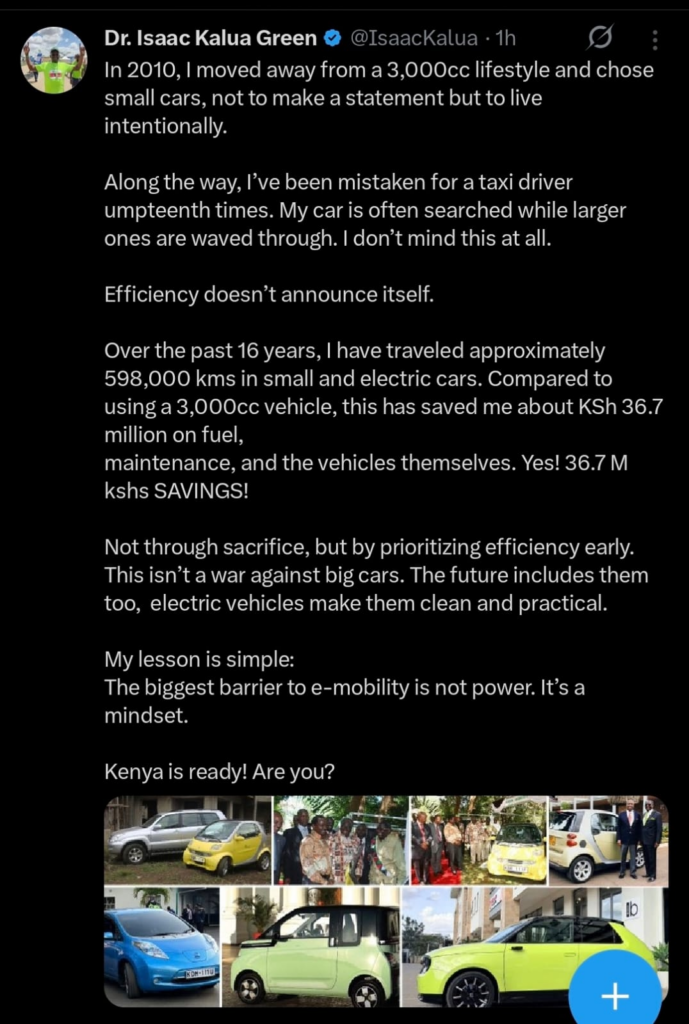
The newly introduced policy is meticulously designed to achieve several critical objectives. It aims to cultivate a comprehensive regulatory framework, actively promote the local assembly and manufacturing of electric vehicles, and significantly diminish the nation’s reliance on imported fossil fuels. This represents a strategic and forward-thinking move to harness Kenya’s abundant geothermal and wind energy resources for a truly sustainable future.
Transport Cabinet Secretary Davis Chirchir eloquently underscored the immense economic benefits of this transition, highlighting the transformative potential to replace an annual petroleum import bill of KSh 5.6 billion. This ambitious initiative firmly positions Kenya as a pioneering leader in the e-mobility transition, setting an inspiring benchmark for other African nations to emulate.
Dr. Green’s core lesson resonates more powerfully than ever: the most significant barrier to widespread e-mobility adoption is not a lack of power, technological limitations, or infrastructure, but rather a deeply ingrained mindset. He argues that once individuals and societies embrace the inherent value of efficiency and sustainability, the path to a green future becomes clear.
With the steadfast backing of the government and the passionate advocacy of influential figures like Dr. Green, Kenya is unequivocally poised for this green revolution. The nation is not just adapting; it is actively shaping a sustainable tomorrow. The question now echoes with greater urgency and relevance: Are you ready to embrace the efficiency-driven, sustainable future of e-mobility that Kenya is championing? Your choices today will define tomorrow.