
Five years after its launch, Kenya’s flagship Financing Locally Led Climate Action (FLLoCA) programme is beginning to show what happens when climate finance is pushed down to the grassroots.
What started as an ambitious experiment in devolved climate financing has now reached at least one million people directly across participating counties, with total beneficiaries, both direct and indirect, rising to 2.5 million. Notably, women account for 56 per cent of those reached, underscoring the programme’s emphasis on inclusive climate action.
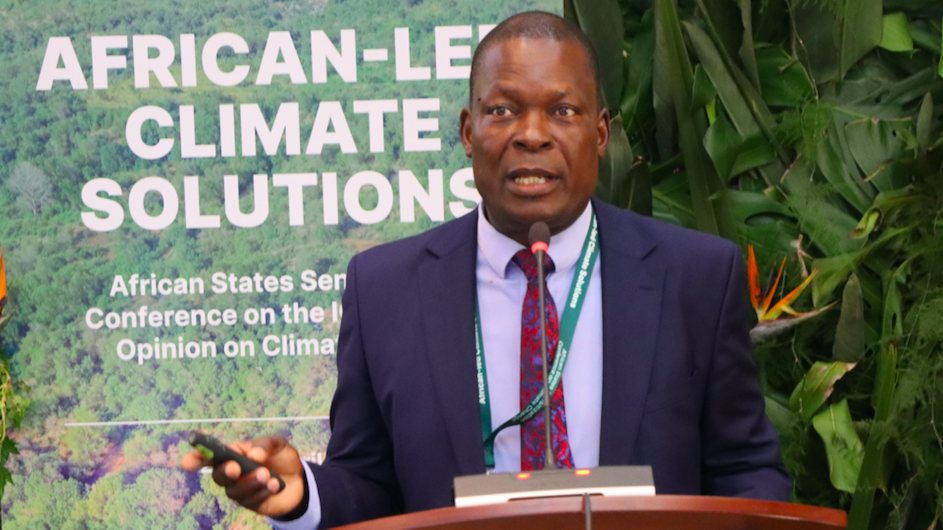
Speaking in Nairobi, Head of the Climate Finance and Green Economy Unit under FLLoCA, Peter Odhengo, described the programme as one that has steadily translated funding into tangible community impact.
Over five years, FLLoCA has spent approximately $295 million, channelled into projects that range from water systems and climate-smart agriculture to ecosystem restoration.
In total, 1,610 projects have been initiated, with 1,060 already completed and 516 still underway across counties. These projects span 1,238 wards, embedding resilience efforts deep within local governance structures.
Beyond the numbers, the environmental footprint is significant. More than 28,000 hectares of landscapes, covering both terrestrial and inland water ecosystems, have been conserved through sustainable land and water management practices.
Sector-specific gains are also emerging with agriculture and livestock systems improving by 22 per cent, water access and management by 46 per cent, and environmental outcomes by 25 per cent in areas where interventions have been implemented.
The programme’s core insight is that communities are not passive victims of climate change but central actors in confronting it. Lessons from implementation point to the growing importance of structured engagement platforms, where local stakeholders collectively plan, finance, and execute resilience projects.
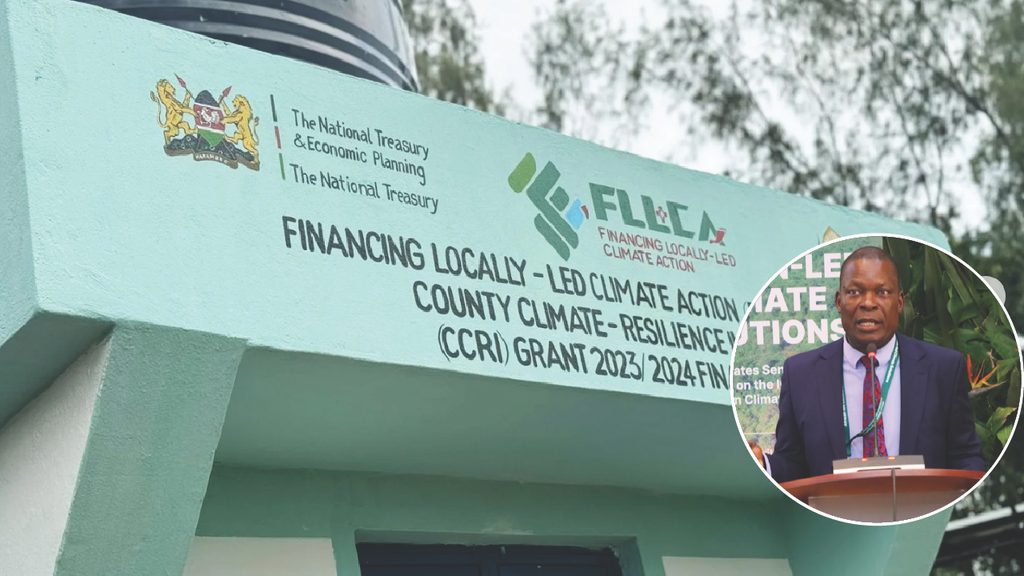
County Climate Resilience Investment (CCRI) Plans have become a key tool in this process, helping counties move from reactive responses to more strategic, forward-looking climate planning. At the same time, integrating climate priorities into county budgeting processes is proving essential in ensuring that adaptation efforts are not treated as stand-alone projects, but as part of everyday governance.
Technology, too, is supporting early warning systems, improving water management, and strengthening agricultural productivity in climate-stressed regions.
As the programme approaches its scheduled end on December 31, 2026, attention is turning to what comes next. There are growing calls to scale and replicate FLLoCA’s model beyond Kenya, positioning it as a potential blueprint for locally led climate action across the continent.
At the policy level, this future hinges on the implementation of Kenya’s Green Fiscal Incentives framework, outlined in Sessional Paper No. 5 of 2024, as well as the operationalisation of the Green Bonds Framework. Plans are also underway to establish a Kenya Green Investment Bank aimed at mobilising up to $100 billion over the next decade, alongside the creation of a National Climate Change Fund.
FLLoCA itself is backed by a coalition of funders, with the World Bank providing $150 million through its IDA facility. Additional contributions have come from Denmark, Sweden, and the Netherlands ($21.4 million), the Government of Kenya ($80 million), and KfW, which has committed $33.5 million targeting 16 counties in Western Kenya.
As climate shocks intensify across the region, FLLoCA’s early outcomes offer a compelling case that resilience is most effective when it is local, inclusive, and built from the ground up.