
By Amos Wemanya
East Africa stands on the brink of a major decision. Whether to ramp up fossil fuel infrastructure or leap decisively into the energy systems of the future.
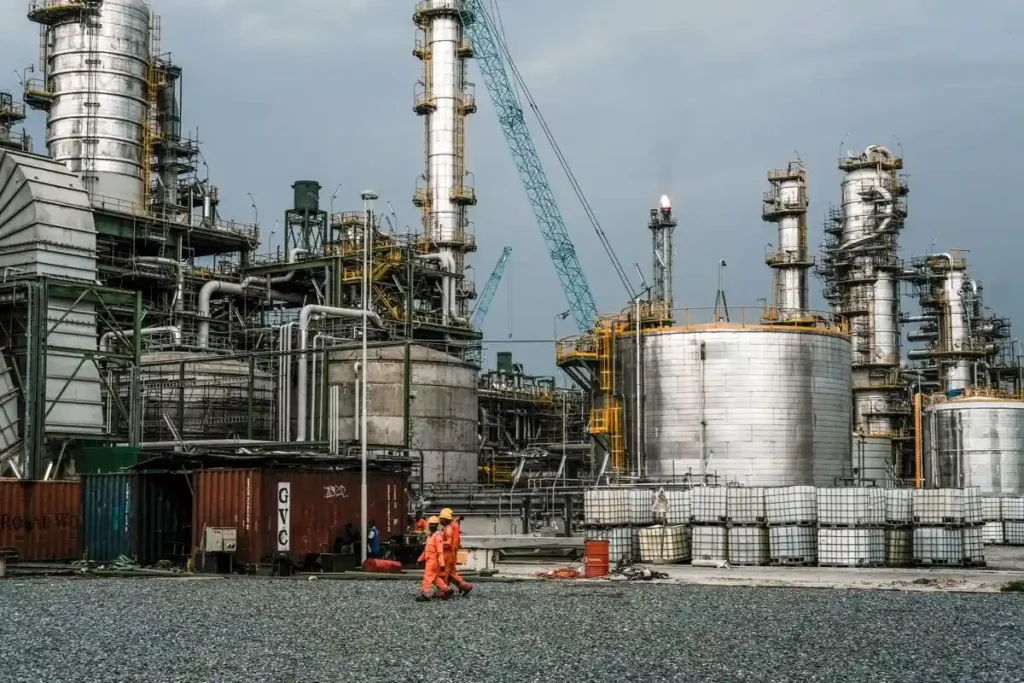
The proposed mega-refinery in East Africa, backed by Aliko Dangote and modelled after his 650,000-barrel-per-day facility in Nigeria, is being framed as a bold step toward energy security and regional integration. But it risks becoming a costly detour that could lock African economies into outdated energy pathways at precisely the wrong moment.
The timing could hardly be more out of step with global trends. Today, oil majors are moving to accelerate the transition away from fossil fuels. Last week, world nations met in Colombia for the first international conference to coordinate efforts to transition away from fossil fuels.
This alone makes the argument for an oil refinery superficially compelling. East Africa imports a significant share of its refined petroleum products, with regional demand estimated at 15 million metric tonnes per year and an annual import bill of around USD 15 billion. Given that most countries in the region almost entirely depend on imports due to limited domestic refining capacity, this exposes them to global price volatility and supply disruptions, particularly in the Middle East.
Recent energy crises, worsened by geopolitical tensions, have shown just how fragile this dependency can be. A regional refinery supported by infrastructure like the East African Crude Oil Pipeline promises to localise value chains, reduce import bills, and enhance energy sovereignty. But this is a short-term fix masquerading as a long-term strategy.
While refining crude oil locally may cushion economies from immediate shocks, it leaves African economies in uncertainty. What is guaranteed is that investors like Dangote will reap big in the near term. Africa must, however, ask itself a more fundamental question: is refining oil where the future lies?
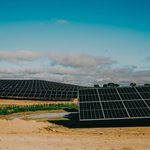
The global energy system is undergoing a profound transformation. Renewable technologies, solar, wind, and storage are advancing at a pace that is rapidly outcompeting fossil fuels on cost, scalability, and resilience. In 2026, the economics of clean energy are no longer theoretical. Solar is now the cheapest source of new electricity in many parts of the world, including in Africa, at approximately 40 percent lower than fossil fuel alternatives. Storage technologies are improving, and distributed energy systems are reshaping how power is generated and consumed.
Investing billions into pipelines and refineries is a gamble that Africa can ill afford. These are capital-intensive, long-lived assets designed to operate for decades. What will happen when global oil demand peaks and then declines within that same timeframe? What will happen when electric mobility scales, when renewable technologies disrupt industrial fuel markets, when carbon regulations tighten globally? The risk is stranded assets and infrastructure that consumed scarce public and private capital but can no longer deliver returns.

Africa has been here before. The continent missed the peak of the oil and gas boom. Nigeria, for instance, began producing oil in 1956, but the window to become a dominant global refining hub closed decades ago. Today, competing with established giants like Saudi Arabia and the United Arab Emirates in petrochemicals and refining oil is not just difficult. It is structurally improbable. Why, then, should Africa invest in catching up with a system that the rest of the world is beginning to move away from?
Africa’s real advantage lies elsewhere. Unlike Europe or North America, it does not have deeply entrenched, aging fossil fuel infrastructure. This is not a weakness; it is an opportunity. A chance to leapfrog. To build energy systems designed for the 21st century, not bygone centuries.
Imagine a different vision for East Africa. Instead of a mega-refinery tethered to volatile global oil markets, it could become a hub for renewable energy manufacturing, solar panels, battery assembly, and green industrial zones powered by clean energy.
Partnerships with global leaders like China could accelerate technology transfer, local capacity building, and industrialisation aligned with the energy transition.
Is it not time for Africa to begin reducing its dependence on oil?
Beyond its well-documented environmental harm, oil has been linked to prolonged conflict and instability in several regions, often fuelling violence, displacing communities, and entrenching cycles of poverty and insecurity for communities. Equally, the volatility of global oil markets continues to expose African economies to external shocks, undermining livelihoods, straining public finances, and deepening poverty.
In addition, many economies have suffered from the effects of Dutch disease, where overreliance on oil exports leads to currency appreciation, weakens other productive sectors such as agriculture and manufacturing, and ultimately undermines long-term, diversified economic growth.
East Africa cannot afford to follow this path.
Energy sovereignty in the 21st century will not be defined by who refines the most, but by who controls the technologies, supply chains, and infrastructure of clean energy. It will be defined by resilience, systems that are not hostage to distant conflicts or shipping lanes. Systems that are decentralised, adaptable, and economically competitive.
The proposed refinery at the East African coast and parallel projects like Uganda’s planned refinery in Hoima reflect a broader tension in Africa’s development pathway. The desire to extract value from existing resources is understandable. But the risk is that, in doing so, the continent locks itself into a model that is already losing relevance.
Africa does not need to refer to the past to secure its future. The choice is not between development and decarbonisation. It is between two different development models, one anchored in the declining logic of fossil fuels, and another built on the accelerating momentum of clean energy innovation.
The refinery may promise quick wins. But the energy systems of the future promise something far more valuable, competitive, and truly sovereign.
Africa must choose wisely.