
The Kenya Meteorological Department (KMD) has released its seasonal forecast for the March–April–May (MAM) 2026 long-rains season. The outlook warns of stark regional contrasts and uneven rainfall distribution across the country. While some areas anticipate adequate moisture, others, especially the coastal strip, face significantly drier conditions and rising heat.
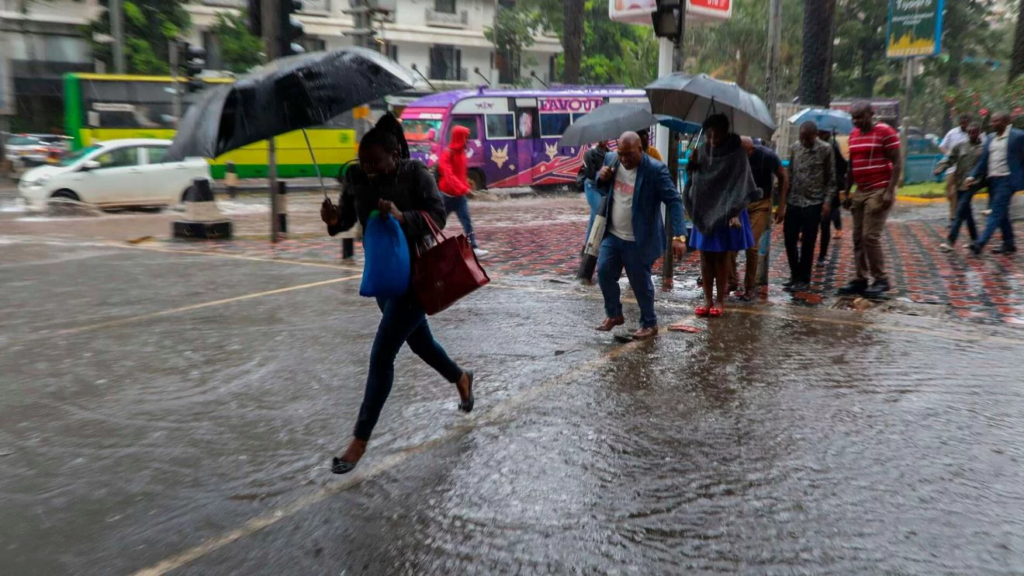
The 2026 long-rains season presents “mixed fortunes.” KMD projects a sharp divide between the western highlands and eastern arid lands. Regions like the Lake Victoria Basin, Rift Valley, and highlands (west and east of the Rift Valley, including Nairobi, Nyeri, Kiambu, Meru, Murang’a, Nakuru, Narok, Eldoret, Turkana) expect near-average to above-average rainfall. These agricultural hubs may experience heavy downpours, risking localized flooding and landslides.
Conversely, Arid and Semi-Arid Lands (ASALs) in the Northeastern and Southeastern lowlands (including Machakos, Garissa, Wajir, Kitui) anticipate near-average to below-average rainfall. The Coastal region (Mombasa, Kilifi, Lamu, Kwale) faces the driest outlook, with below-average (depressed) rainfall expected this season.
KMD warns that total rainfall amounts might be misleading due to poor temporal distribution. Most regions expect a normal to late onset, with intermittent dry spells. This “stop-and-go” pattern challenges farmers relying on consistent moisture.
Rainfall is expected to peak in April for most areas, except the Coast, where it will peak in May. KMD identified 2023 as an “analogue year,” indicating similar global climate conditions and offering a historical reference for the season.
Short-term climate drivers, like the Madden-Julian Oscillation (MJO), will significantly influence the season. The MJO, a tropical disturbance, can enhance or suppress East African rainfall. KMD urges monitoring weekly and monthly updates, as these drivers are only predictable at shorter lead times.
The entire country also faces warmer-than-average temperatures, most intensely in the Lake Victoria Basin, Coast, and Southeastern lowlands. This rising heat, coupled with depressed rainfall, could increase heat stress for humans, livestock, and crops.
The forum’s theme, “From Crisis Response to Climate Preparedness – Inclusive Early Warning Services for All,” emphasizes proactive planning. Farmers should consult agricultural officers for resilient crop varieties. Disaster managers must prepare for localized highland flooding. Public health authorities should anticipate heat-related illnesses and water-borne diseases.
KMD provides shorter-term updates via its official X (Twitter) account and county meteorological offices.