

A week of biodiversity negotiations in Nairobi has delivered the scientific and technical blueprint for this year’s UN Biodiversity Conference (COP17).
The negotiations have also underscored the scale of the challenge facing governments after a global assessment found the world is off track to achieve most of its 2030 biodiversity commitments.
The 28th meeting of the Subsidiary Body on Scientific, Technical and Technological Advice (SBSTTA-28), which concluded on August 1 at the United Nations Office in Nairobi, adopted a package of recommendations that will now be forwarded to the Convention on Biological Diversity’s Conference of the Parties (COP17) in Yerevan, Armenia, in October.
The recommendations are expected to guide negotiations on how countries accelerate implementation of the Kunming-Montreal Global Biodiversity Framework (KMGBF), the landmark agreement adopted in 2022 to halt and reverse biodiversity loss by the end of the decade.
Unlike COP meetings, which adopt political decisions, SBSTTA serves as the Convention’s scientific advisory body. Its conclusions are not legally binding, but they provide the evidence base on which governments negotiate global biodiversity policy.
This year’s session was especially significant because it considered the first global review of collective progress towards the Framework’s 23 targets. The review, based on national reports submitted by Parties, concludes that although countries have stepped up planning and reporting, implementation remains too slow and uneven to meet most of the 2030 goals without major changes in policy, financing and delivery.
During six days of negotiations, delegates refined scientific recommendations on issues that will dominate COP17. Among them were the global review of progress under the biodiversity framework, marine and coastal biodiversity conservation and sustainable wildlife management.
Othe recommendations are updates to the Programme of Work on Protected Areas, the use of recent scientific assessments produced by the Intergovernmental Science-Policy Platform on Biodiversity and Ecosystem Services (IPBES), and technical guidance to improve monitoring and reporting of biodiversity commitments.
The meeting also examined how science can better support implementation of the Global Biodiversity Framework, particularly as countries prepare revised national biodiversity strategies and action plans.
Several of these recommendations are intended to strengthen measurement of progress towards the framework’s headline goals, including protecting at least 30 per cent of the world’s land and oceans by 2030, restoring degraded ecosystems, reducing pollution, addressing invasive alien species and mobilising substantially greater financial resources for biodiversity conservation.
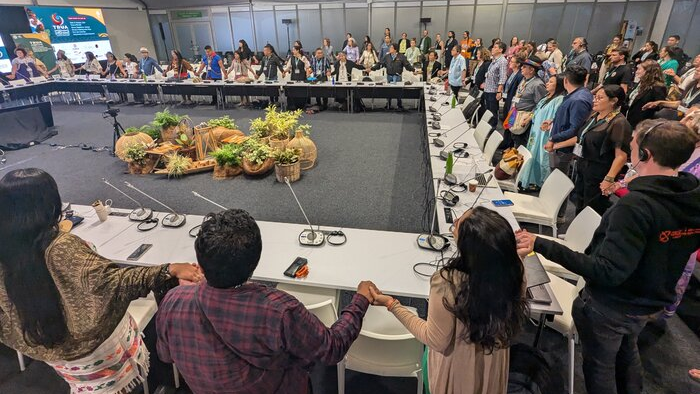
Negotiations on synthetic biology, covering advancing technologies such as engineered organisms and other emerging genetic techniques, proved among the most contentious discussions of the week.
Delegations differed over whether existing international governance arrangements on synthetic biology are sufficient to manage environmental risks or whether additional oversight mechanisms are required.
Developing countries also pushed for stronger commitments on technology transfer, capacity building and equitable sharing of benefits arising from new technologies.
Unable to bridge these differences, negotiators agreed to forward unresolved issues for further political consideration during the implementation meeting and eventually at COP17.
The debate illustrated a broader challenge confronting biodiversity governance, where scientific innovation is advancing faster than international regulatory frameworks.
For African countries, the Nairobi meetings reinforced concerns that success will depend less on new global targets than on the resources available to implement those already agreed.
Many countries on the continent host globally important biodiversity hotspots while facing competing development priorities, debt pressures and limited domestic conservation financing.
African negotiators have consistently argued that achieving the Global Biodiversity Framework requires greater international financial support, improved access to technology and stronger institutional capacity.
Those questions now move onto the agenda of the seventh meeting of the Subsidiary Body on Implementation (SBI-7), which opens in Nairobi this week. SBI-7 will focus on biodiversity finance, resource mobilisation, implementation mechanisms, digital sequence information, communication and public awareness, and review of national implementation efforts before forwarding recommendations to COP17.
The Nairobi meetings came at a pivotal point in the implementation of the KMGBF. With only four years remaining until the 2030 deadline, COP17 in Yerevan is expected to be the first major political stocktake of whether governments are translating commitments into measurable conservation outcomes.
The recommendations emerging from Nairobi define the negotiating agenda that ministers will inherit in Armenia and will influence decisions on biodiversity finance, protected areas, ecosystem restoration, wildlife management, scientific cooperation and emerging technologies.