

By Pauline Kairu
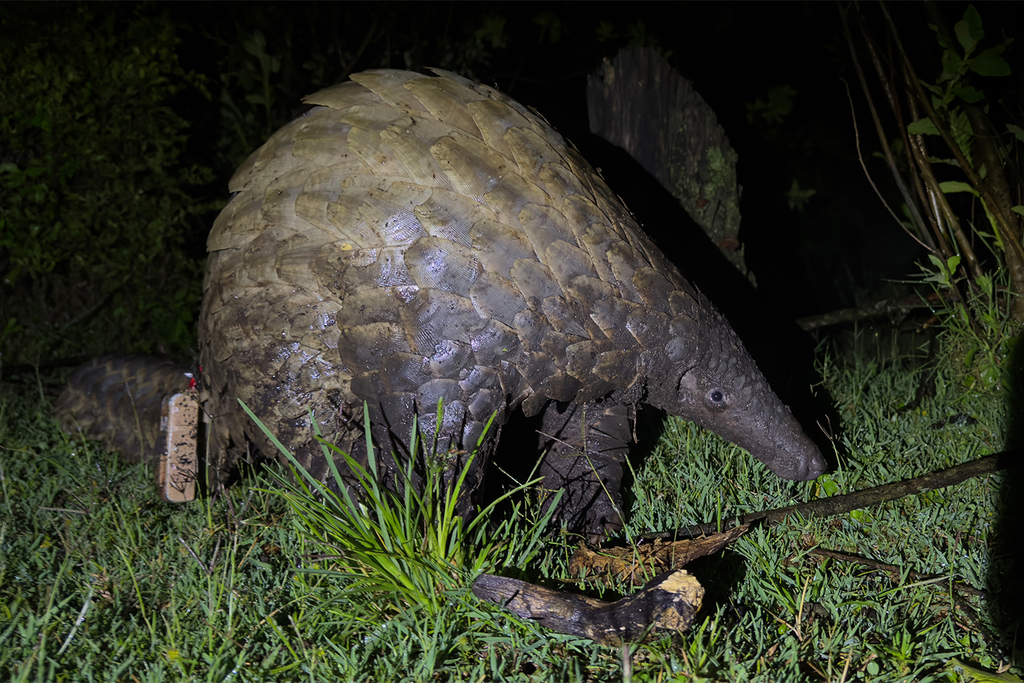
Naserian, a giant ground pangolin, spent about two years moving through Nyekweri Forest, one of Kenya’s last strongholds for the endangered species.
At night, Naserian left the forest and travelled through a changing landscape of woodland, farms and grazing land on the western edge of the Maasai Mara National Reserve. Researchers from The Pangolin Project tracked her movements using GPS, watching as she crossed privately owned plots separated by fences.
Then, one night, her signal stopped. When the team reached her location, they found Naserian dead beneath an electric fence.
Her death highlights a growing danger for giant ground pangolins in Kenya. While poaching remains a serious threat to pangolins around the world, in Nyekweri, electric fences and habitat loss are now among the most immediate risks.
Since 2022, researchers have recorded 15 pangolin deaths in the area, 14 of which were caused by electrocution on electric fences, with fewer than 30 giant ground pangolins believed to remain in Kenya, meaning every loss matters.
“People often assume poaching is the greatest danger facing pangolins, but in Nyekweri the reality is far more alarming,” says Michael Koskei, conservation monitoring and data manager at The Pangolin Project. “Right now, these fences are killing pangolins faster than traffickers are taking them.”
Nyekweri Forest was once part of a larger, connected landscape where wildlife could move freely across communal Maasai land. Today, more than 80% of the forest has been cleared over the past 20 years, according to conservation group, Legado, and what remains is home to many species, including giant ground pangolins.
Peter Ole Tompoy, chairperson of the Nyekweri-Kimintet Community Forest Conservation Trust, has lived in the area all his life. He remembers a time when wildlife could move without barriers. Now, land subdivision and fencing have broken up the routes that animals have used for generations.
Researchers have mapped about 268 kilometres of electrified fencing across Nyekweri, and for a pangolin, this can be deadly. Unlike many animals, pangolins cannot jump over a fence. When frightened, they curl into a tight ball, which is an effective defence against predators, but it offers no protection from an electric current.
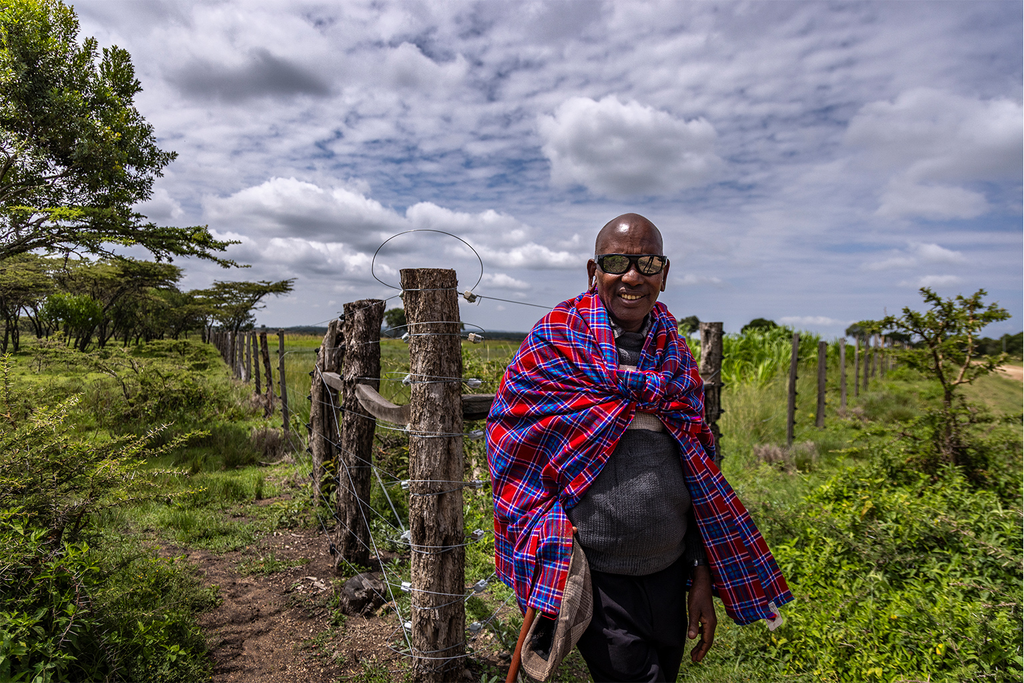
For many families living beside the Maasai Mara, fencing is not a choice made lightly as wildlife regularly enters farms and grazing areas. Naisenya Rakita, whose property sits near the Maasai Mara National Reserve, says fences help protect her family’s crops and animals. “Lions often follow wild prey into the area and, in the process, end up preying on our livestock,” she says.
For people who depend on cattle, sheep and goats, losing animals can mean losing income, food and security. Compensation for wildlife damage exists under Kenyan law, but residents say it is not always available when they need it.
That is why conservationists are not asking landowners to remove fences completely. Instead, they are working with them to make fences safer by leaving the bottom two or three wires of an electric fence unpowered. The gap is small enough to keep livestock protected and discourage larger wildlife from entering farms but it allows pangolins to pass underneath safely.
Across Nyekweri, landowners have voluntarily de-electrified lower strands along about 134 kilometres of fencing. That is roughly half of the mapped electric fencing in the area.
Resident Ben Sulel also agreed to change his fence after learning that pangolins still lived nearby. He now encourages neighbours to do the same. “When I understood what pangolins need to survive, I realised my land is part of something much bigger,” he says.
Farmer Ole Manguyo has taken another approach. Rather than fence his entire property, he has concentrated fencing around areas used for farming and grazing, leaving more natural habitat open. He has also kept the lower wires unpowered.
“Before, I thought pangolins might become a problem for my farm,” he says. “It wasn’t until I learned more about them that I realised they don’t damage crops.”
In fact, pangolins can be helpful to farms and ecosystems as they feed mainly on ants and termites, using their long sticky tongues to collect insects. A single pangolin can eat millions of insects each year.
The Pangolin Project uses GPS tracking and digital fence maps to monitor tagged pangolins in the area. Through the EarthRanger monitoring platform, researchers can receive alerts when a tracked pangolin approaches a high-risk fence. This gives field teams a chance to respond before an animal reaches danger.
However, only seven giant ground pangolins in Nyekweri currently carry GPS tags, meaning many others still move through the landscape unseen.
The tracking data has nevertheless helped conservationists show landowners how often pangolins cross private land and why safer fencing matters.
Not everyone has adopted the approach yet. But Wilson Parkesui, a habitat protection officer with The Pangolin Project, says attitudes are shifting. “Little by little, more landowners are beginning to understand that making space for pangolins doesn’t mean giving up their livelihoods,” he says.
The Pangolin Project and local communities are also using voluntary conservation agreements to protect remaining forest and restore wildlife corridors and more than 6,000 hectares of private land have so far been placed under conservation easements.
Beryl Makori, the organisation’s chief programme officer, says pangolins cannot survive without connected habitat. “Switching off the lower fence wires removes one immediate threat, but it is only part of the solution,” she says. “Without protecting what remains of the forest, there will be nowhere left for pangolins to feed, shelter and breed.”
For Nyekweri’s communities, protecting pangolins is also about protecting forests, water sources, livelihoods and the wider Maasai Mara ecosystem. Naserian’s death was a warning. But the response from local landowners shows that small changes, made across a shared landscape, can give Kenya’s remaining giant pangolins a safer path forward.
This article has been republished from Mongabay: https://news.mongabay.com/2026/09/electric-fences-that-kill-and-the-maasai-trying-to-save-kenyas-last-giant-pangolins/