
By Lerato Pooe
Growing up in Dema, Zimbabwe, Isaac Chikutukutu watched his parents combine full-time jobs with farming. What stayed with him was how dramatically the results from the same field could change from one season to the next.
“It used to bother me that one year we would have such a bumper harvest that we ran out of storage, but the next year, on the same field, we would get nothing at all,” he said.
That experience led the software developer and technology entrepreneur, who studied Business Studies and Computer Science at the University of Zimbabwe before pursuing postgraduate studies in Development Finance at Stellenbosch University, to build Divisi, a platform that gives small-scale farmers advice based on the location and conditions of their farms.
What began as a WhatsApp chatbot was released publicly in early August 2026. By early September, Chikutukutu told bird it had more almost 1,000 users.
The adoption has been cross-border. According to usage data Chikutukutu consulted during an interview, the platform’s five leading markets over the preceding 28 days were Kenya, Nigeria, South Africa, Malawi and Uganda. Zimbabwe, where most of the development focus group was based, was outside the top five.
“Number one is Kenya, number two is Nigeria, number three is South Africa, then Malawi and Uganda,” he said. “I thought Zimbabwe was going to be on top, but it’s not.”
People in Kenya and Tanzania had begun finding and installing the app before its formal launch. “I was seeing people from East Africa already picking it up before we even started saying, ‘This is out for everyone,’” Chikutukutu said.
To recommend crops and guide farmers on production, Divisi uses information about a farmer’s specific location. Chikutukutu says the system is based on the FAO (UN Food and Agriculture Organisation) Global Agro-Ecological Zoning framework, combined with Harvard data sources.
“We have about 30 years of climate data going back to 1996, and we use the climate variables, the minimum temperatures, maximum temperatures, rainfall and so forth, and then we match that against the crop profiles”, he says.

Chikutukutu ensures the app’s recommendations are not generated by AI but uses a deterministic system. Once a farmer has set the app on their field, Divisi can also provide customised advice for each season.
“The advice is not AI, the engine is a fully deterministic, and it can be audited to actually so we can interrogate why did you tell this farmer to grow these crops at this time,” he says.
A key part of the app’s design is that it does not require internet connection to function. Farmers need internet for initial set up and can use the app’s features offline but synchronises with the server when connected to the internet. Some of the features that farmers can access offline include farm records, diary and ledger entries, recording crop sales, and receiving notifications on farm guides.
“Most farmers are in rural areas, and sometimes the network might be a challenge,” he said. “Offline, you can access the entire farm diary [and] record everything that’s happening. When it goes online, it just synchronises with the server.”
Chikutukutu says the app is not meant to replace experts or extension officers, but to multiply the impact that they’re already making and make their job easier.
He acknowledges that because the app is still new, there hasn’t been enough time to evaluate whether it has improved farmers’ yields.
The app is free to farmers. Chikutukutu abandoned an earlier plan for a paid version because payment systems and access to financial services differ across the continent. “Putting up a paywall would disadvantage the people who need the app the most,” he said. The company instead plans to charge contracting companies, agricultural dealers and other organisations that benefit when farmers produce consistent yields and quality.
Divisi’s development is still an ongoing process based on feedback such as requests to add a chat section where farmers can connect with agronomists remotely.
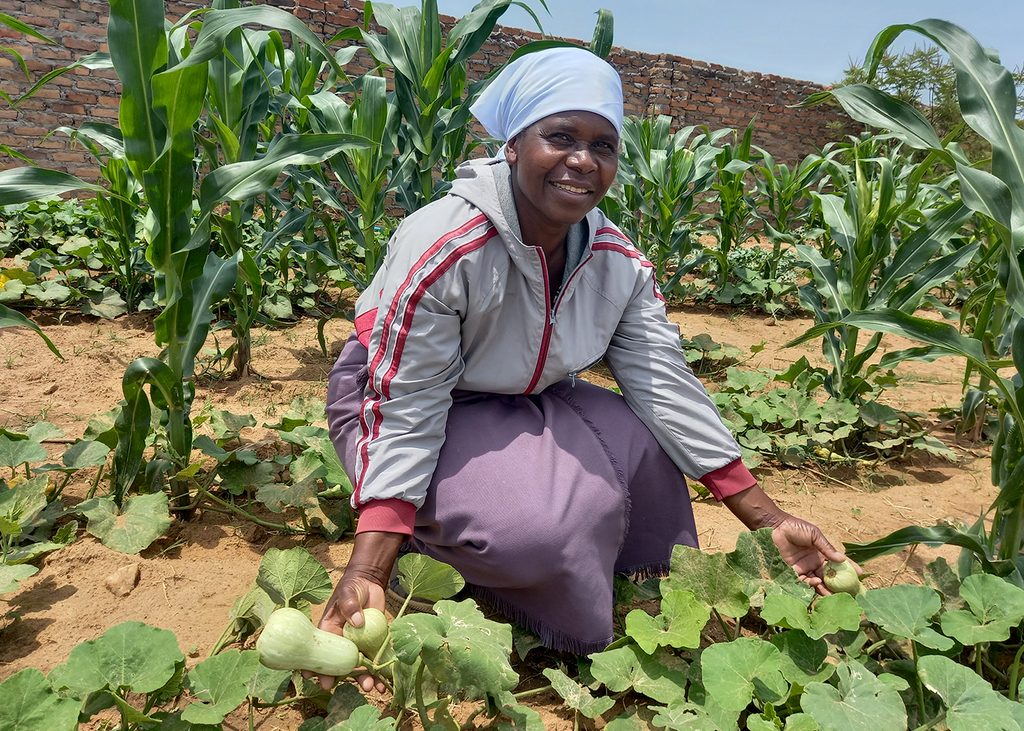
Chikutukutu’s mother, Basi Tsiga, was the platform’s first user. She has farmed for about 20 years on two acres in Dema, Zimbabwe, growing maize and vegetables. Before trying the app, she relied largely on neighbouring farmers and agricultural consultants.
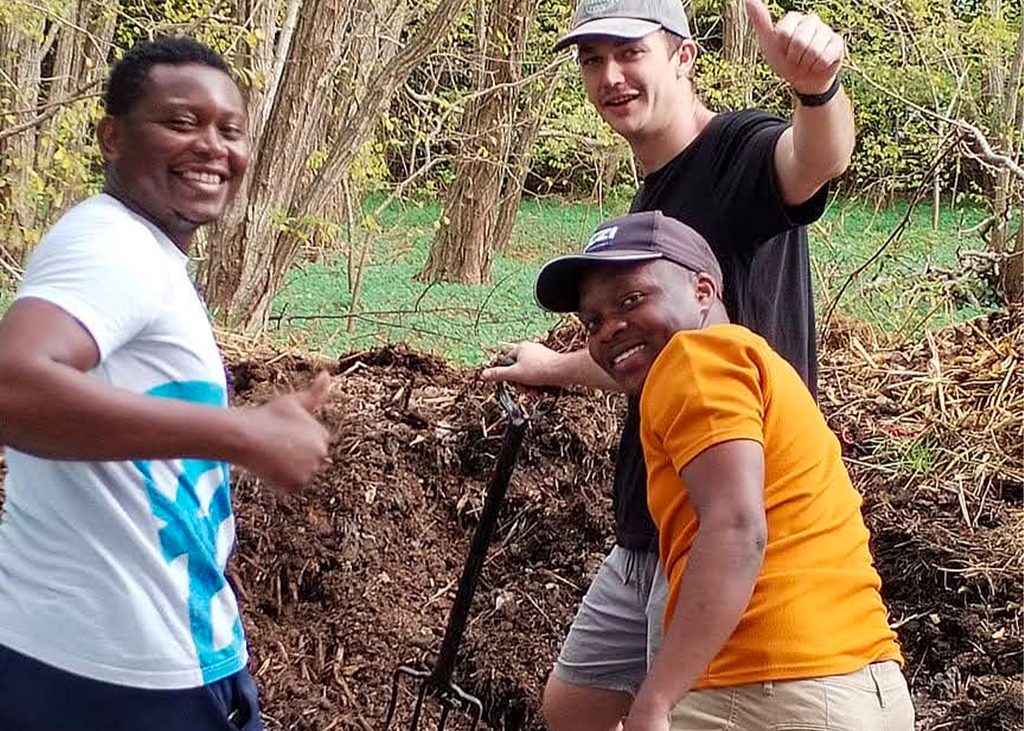
“When Isaac asked me to try it, I was initially sceptical,” she said. “I thought, ‘Let’s see how a phone can help me,’ because I was tired of constantly travelling to find extension officers.”
Tsiga began using the platform to decide what to plant according to the season and weather. She expanded into beetroot, strawberries and mooli, a long white radish. Chikutukutu said the app recommended mooli because its planting window was open after those for crops the family had initially considered had passed.
Tsiga says she has also diversified into fish farming and raising free-range chickens, and hired an assistant.
Digital agriculture researcher Dr Farai Alice Gwelo of the University of Johannesburg said developers must recognise that small-scale farmers are not a uniform group. Their experience, crops, resources, connectivity and access to expert support differ widely.
“Involving the farmers is so important because they’ll let you know exactly what they need,” she said. “Farmers understand their own situation better than anyone else ever can.”
The article has been republished from Bird Story Agency: https://agency.birdstoryagency.com/stories/this-african-built-app-gives-farmers-customised-advice-for-their-fields?locale=en