

By James Wakibia
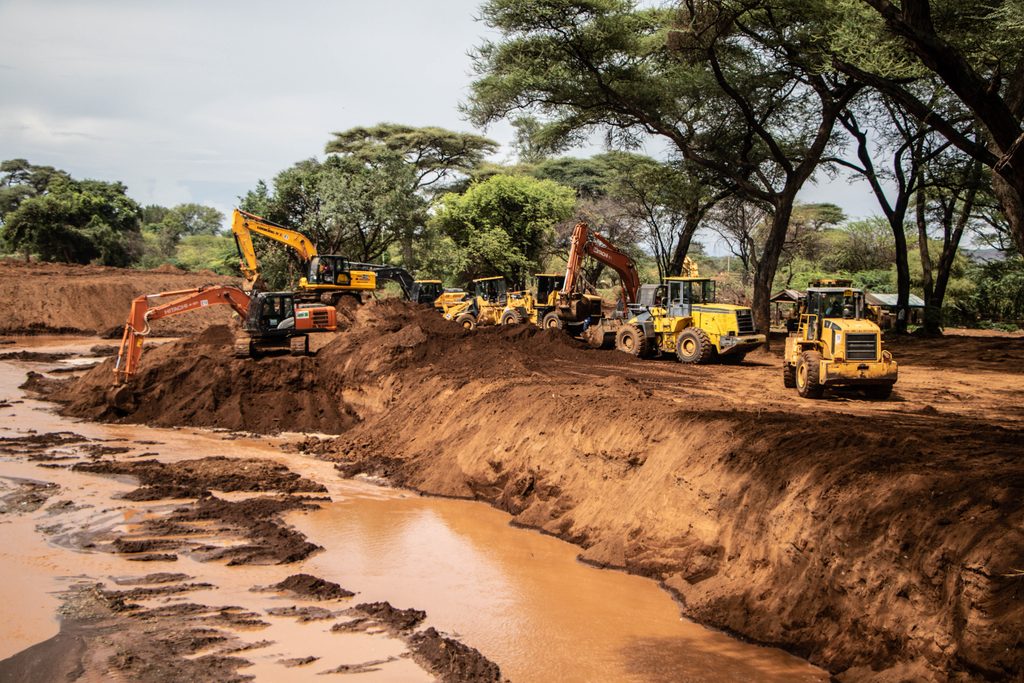
Excavators are tearing through sediment-choked river channels in Baringo County, cutting new pathways for the Loboi and Waseges rivers in an ambitious engineering operation aimed at reversing years of hydrological changes that have left communities vulnerable to flooding and raised fears of an ecological disaster.
The heavy machinery is being used to desilt and retrain the rivers, restoring their former drainage routes in an effort to prevent them from spilling into Lake Bogoria and ease pressure on settlements, farmland and infrastructure in the surrounding areas.
But beyond the excavated channels and earthmoving equipment lies a much bigger environmental concern of the possibility of Lake Bogoria, an alkaline soda lake, connecting with neighbouring freshwater Lake Baringo, potentially altering the water chemistry and threatening ecosystems that have evolved under very different conditions.
The intervention marks a new phase in a crisis that has progressively transformed the landscape of Kenya’s Rift Valley, where rising lake levels have submerged homes, displaced families, swallowed agricultural land and disrupted livelihoods.
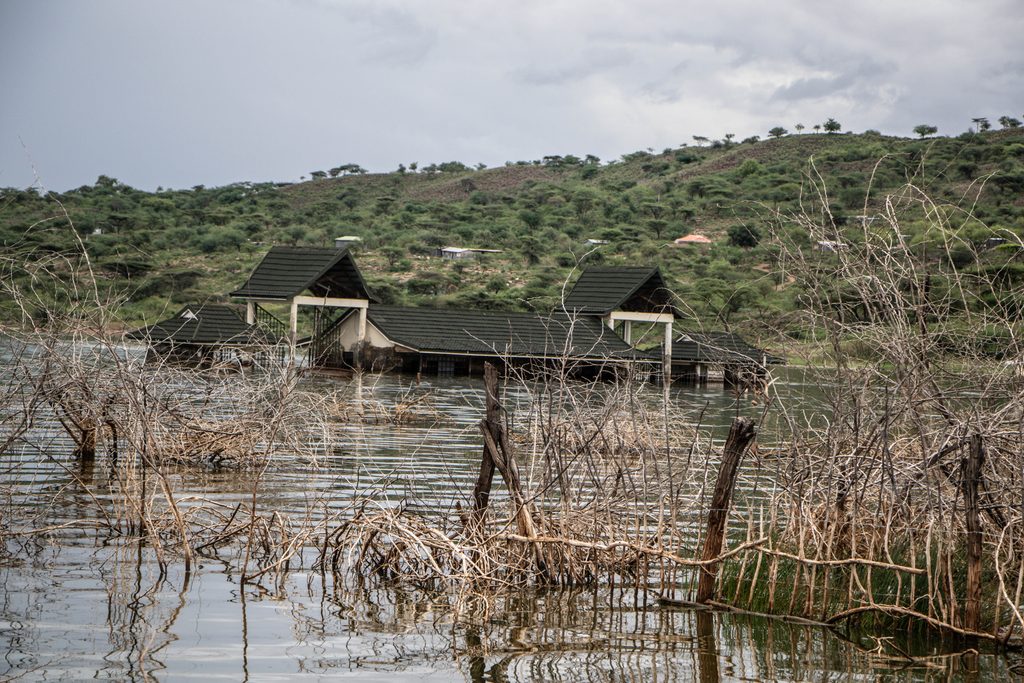
The changes became particularly pronounced around 2010, when several lakes in the Rift Valley began experiencing sustained rises in water levels. Lakes Baringo and Bogoria were among the worst affected, with expanding shorelines inundating settlements, roads, farms and public facilities.
A 2024 study published in the Journal of Hydrology: Regional Studies found that average annual rainfall recorded at Marigat increased from approximately 463 millimetres before 2010 to 978 millimetres between 2010 and 2018. The researchers also found that although the number of rainy days declined, days recording at least 30 millimetres of rainfall increased by approximately 318 per cent.
The changing rainfall patterns, together with catchment hydrology and other environmental factors, contributed to the expansion of the lakes.
The effects have been devastating for communities that traditionally depended on the surrounding land for farming, livestock keeping, fishing and tourism.
A report published by Nature Africa in April 2026 documented families around Lake Bogoria who had been forced to relocate repeatedly as rising waters consumed their homes and agricultural land. One resident, Jones Lewatchum, had moved his family three times since 2012.
The expansion of the lakes has also affected public infrastructure. Earlier assessments documented submerged schools, inaccessible health facilities, damaged roads and tourism establishments forced to close or relocate.
For communities around Loboi and Sandai, the advancing waters have meant losing not only homes but also the land and natural resources that sustained their livelihoods.
The growing proximity of Lakes Baringo and Bogoria has added an ecological dimension to the crisis. Although geographically close, the lakes have fundamentally different water characteristics and support distinct ecosystems.
Lake Baringo is a freshwater lake supporting fish populations, hippopotamuses, crocodiles and hundreds of bird species. Its resources are central to the livelihoods of surrounding communities.
Lake Bogoria, on the other hand, is an alkaline soda lake renowned for its hot springs, specialised microorganisms and large populations of lesser flamingos, which depend on algae and other microscopic organisms found in its waters.
Scientists have warned that a hydrological connection between the lakes could have serious consequences, particularly if alkaline water from Bogoria flows into freshwater Baringo.
Research by Mathew Herrnegger and colleagues, published in 2024, examined the possibility of Lake Bogoria overflowing towards Lake Baringo as water levels continued to rise. The study estimated that in 2020, Bogoria’s water level was approximately 0.7 metres below the elevation at which overflow towards Baringo could begin.
Although water levels subsequently declined in 2023, observations reported in 2026 have renewed concerns about the possibility of an overflow.
A sustained connection could change the chemical composition of Lake Baringo, placing pressure on freshwater fish and other aquatic organisms adapted to its existing conditions. Fishing, tourism and other economic activities dependent on the two lakes could also be affected. The concern is therefore the possibility of disrupting two distinct ecological systems.
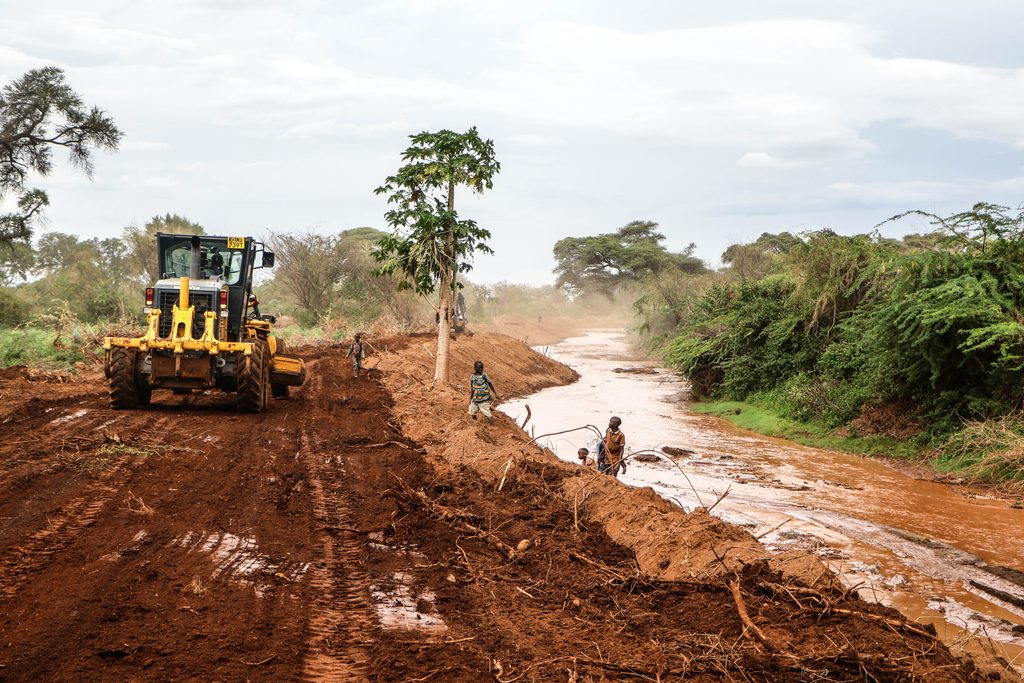
The ongoing river-training operation is intended to address one of the major hydrological changes contributing to the crisis. The Loboi and Waseges rivers have been affected by sediment accumulation and altered drainage patterns, with water increasingly flowing towards Lake Bogoria instead of following their former drainage routes. The engineering works involve removing accumulated sediment, excavating channels and guiding the rivers back towards their historical courses.
One of the proposed interventions involves reopening the old drainage pathway towards the Kimolong’o swamp, with a channel approximately 25 metres wide intended to carry Waseges water away from the threatened areas.
According to Irrigation Principal Secretary Ephantus Kimotho, the government had deployed more than 100 excavators and other heavy machinery to undertake the restoration works, which is also expected to improve drainage and reduce the accumulation of water in areas where communities have experienced repeated flooding.
While the intervention seeks to protect communities and the lakes, it has also raised questions about its implications for people living along the proposed river channels. Some farmers in Loboi and Sandai have expressed concern that redirecting the rivers could affect their access to irrigation water and agricultural production. Others have raised concerns about land affected by excavation and the possibility of displacement.
Scientists and environmental experts have repeatedly emphasised the importance of managing the wider catchments, including controlling soil erosion, protecting wetlands and restoring degraded landscapes, saying without such measures, sediment could accumulate again, undermining the river restoration works.