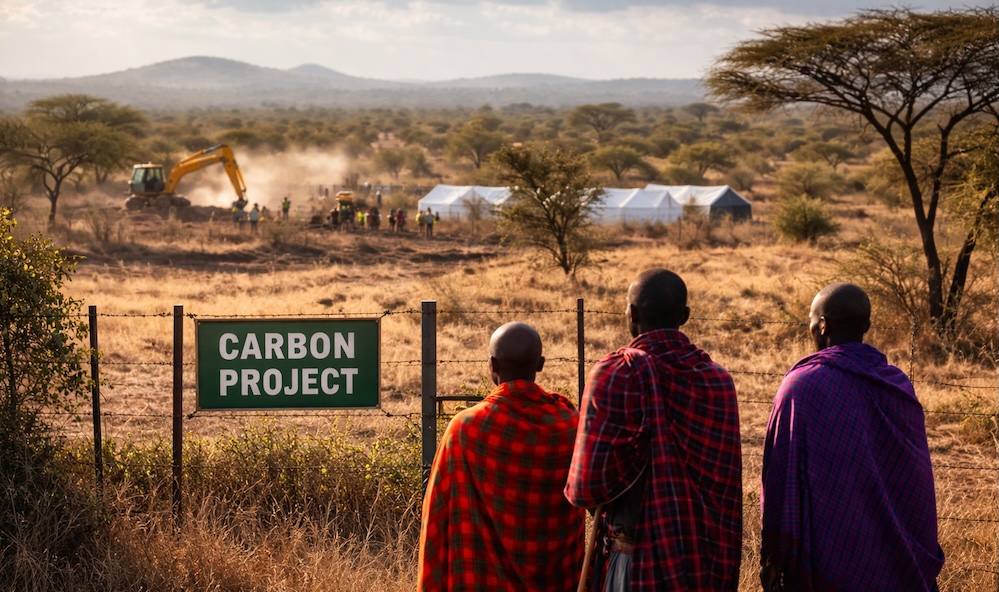

As carbon credit projects spread across Kenya’s communal and conservation lands, critics warn that climate finance is quietly reconfiguring land ownership, access, and control. What is marketed as environmental stewardship, they argue, increasingly mirrors extractive practices—where communities carry long-term risks while decision-making and profits remain external.
While the government and private developers promote carbon credits as a climate solution, a source of foreign exchange, and a bridge between conservation and development, critics argue that on the ground, the projects are reshaping land relations in ways that mirror older exploitative extractive models.
“What is being sold as climate finance is beginning to look uncomfortably familiar,” said Climate governance expert Deborah Sialo. “Communities are promised benefits, but they rarely control the projects. Consent is implied, but often not informed.”
Africa’s attractiveness to carbon developers, critics say, is no accident. Vast communal lands, weak land governance systems, and low historical emissions have made the continent a prime target for large-scale nature-based projects. But this has also triggered what experts describe as a carbon “gold rush,” where speed and profit are prioritised over rights and long-term stewardship.
Sialo has been among the most vocal critics. In her widely cited guide for African landowners, she warns that carbon markets risk reproducing colonial patterns if safeguards are ignored.
“Carbon markets must not become extractive models in green disguise, where African landowners carry the risk while others reap the rewards,” Sialo cautions.
She has raised alarm over what she calls long-term lock-in, in which communities are tied into contracts they do not fully understand, sometimes for periods of up to a century.
“If a contract ties your land or carbon rights for 30, 50, or even 100 years, that is not a partnership. That is dispossession delayed,” she writes, warning that such agreements can prevent communities from changing land use, responding to climate shocks, or passing land on to future generations with autonomy.

Critics also point to vague and unfair benefit-sharing arrangements. “Any deal that cannot clearly state, in writing, what percentage of revenue goes to the community is already unfair,” Sialo notes.
In several Kenyan projects, communities reportedly receive small annual payments, while developers and intermediaries retain control over carbon ownership and global sales.
These concerns are no longer theoretical. In Kajiado County, an investigative documentary by Africa Uncensored, Carbon Colony, has exposed how a carbon offset project became entangled with land subdivision and elite capture within the Maasai community land.
The documentary describes the process as “a massive, silent land grab happening under the banner of climate action.”
According to the investigation, communal land once held collectively has been fragmented through opaque processes linked to carbon projects. Some parcels were reportedly registered to politically connected individuals and external entities.
Maasai residents interviewed said they were never fully consulted and did not understand that carbon agreements could reshape land ownership itself.
“This is not conservation,” one Maasai youth leader says in the film. “It is colonization using contracts instead of guns.”
Similar tensions have emerged in northern Kenya. Investigative reporting by Africa Uncensored found that carbon-linked conservancies in Isiolo restricted access to grazing land and cultural sites, contributing to pasture scarcity and conflict.
In a landmark ruling in 2025, a Kenyan court declared two conservancies illegal for a lack of public participation and for failing to register community land.
Residents testified that conservation enforcement disrupted traditional grazing systems and worsened insecurity. “When communities are excluded from decisions about their land, conservation becomes a source of conflict,” the investigation concluded.
Critics argue that the common thread across these cases is the failure to uphold Free, Prior, and Informed Consent (FPIC). Communities, they say, are treated as beneficiaries rather than rights holders. Consent is assumed rather than documented, and legal review is often discouraged.
“If a developer tells you not to involve a lawyer, walk away,” Sialo warns.
Kenya’s 2024 Carbon Markets Regulations, which mandate a minimum 40 percent revenue share for communities, are seen by critics as an admission that earlier projects failed to protect local interests.
But many caution that regulation without enforcement risks becoming another checkbox exercise. Where transparency is weak, and power is concentrated, they say, elite capture thrives.
Critics warn that when carbon markets prioritise offsetting emissions elsewhere over strengthening local climate resilience, they hollow out the very idea of climate justice.
As Kenya accelerates its carbon market ambitions, observers say the country now faces a defining choice: either anchor carbon projects in community sovereignty and rights, or entrench a new era of green extraction.
“If carbon markets are not grounded in rights, they will fail, not just morally, but environmentally,” Africa Uncensored has warned.