

An audit by Auditor General Nancy Gathungu exposed a major crisis in Kenya’s climate finance management. Billions of shillings, including significant funds from the IMF and Green Climate Fund (GCF), cannot be traced. This startling revelation sent shockwaves through the nation’s financial and environmental sectors.
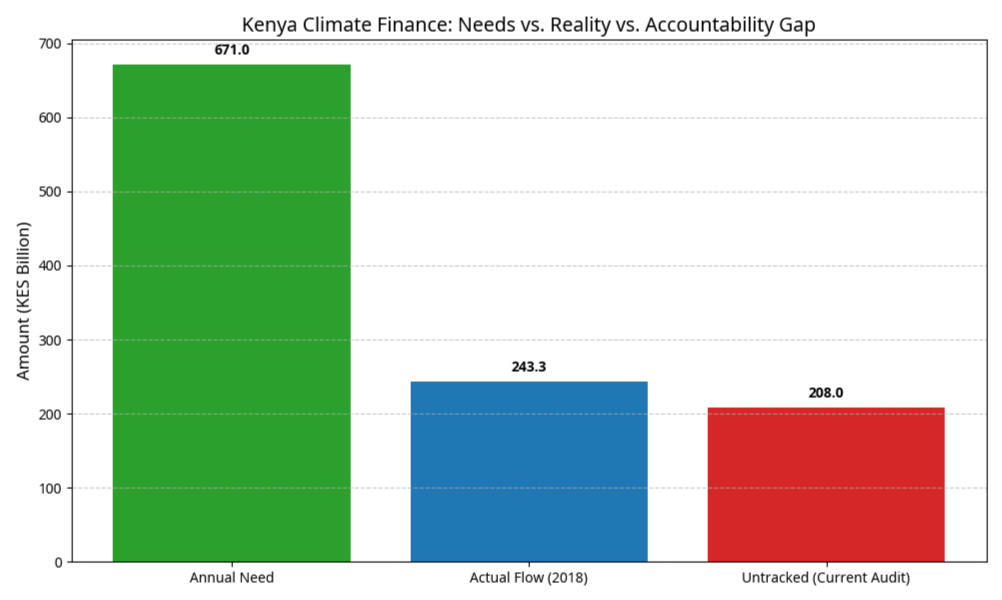
This lack of tracking severely undermines Kenya’s efforts to combat climate change. It raises serious questions about accountability and the effective use of crucial international aid designed to protect vulnerable communities. The untracked sum, estimated at Sh208 billion, represents a massive financial black hole.
The audit highlights that key climate institutions remain dormant. The National Climate Change Council, a body statutorily mandated to coordinate and oversee all climate action within the country, has never been operationalized since its establishment. This institutional paralysis cripples national coordination.
Similarly, the Climate Change Fund, designed to mobilize and manage billions for climate-related programs, remains inactive. These dormant funds mean that vital resources intended for climate adaptation and mitigation are not reaching those who need them most.
Furthermore, most government ministries have failed to establish legally required Climate Change Units. The audit found that only eight out of 23 national entities reviewed had complied. This leaves the majority without the institutional capacity to implement vital mitigation and adaptation strategies effectively.
This institutional failure contrasts sharply with President William Ruto’s prominent global advocacy for climate justice. While he champions climate action internationally, domestic systems are failing to translate these ambitions into tangible results on the ground. This creates a significant disconnect between rhetoric and reality.
The Auditor General has given the Treasury a six-month deadline to digitize its climate finance reporting. Failure to comply could lead to sanctions, further jeopardizing Kenya’s access to crucial climate funding and undermining its international standing. This ultimatum underscores the urgency of the situation.
Climate finance is crucial for building resilience against the escalating impacts of climate change. It funds essential projects like drought-resistant agriculture, sustainable water management, and early warning systems. These investments are vital for protecting livelihoods and infrastructure.
The untracked Sh208 billion creates a massive accountability gap. This lack of transparency could deter future international investments, as donors lose confidence in Kenya’s ability to manage funds responsibly. It also obscures progress towards Kenya’s Nationally Determined Contributions (NDCs).
Without transparency, funds may be misallocated or duplicated. Critical projects for vulnerable communities, such as those in arid and semi-arid lands, might not receive the necessary funding, leaving them exposed to severe climate shocks, such as prolonged droughts and floods. This directly impacts human lives and economic stability.
Kenya’s ability to manage its national debt and transition to a green economy also depends on transparent climate finance. The IMF’s Resilience and Sustainability Facility (RSF), for instance, is tied to policy reforms aimed at building climate resilience. Untracked funds could negatively impact Kenya’s investment rating and access to future concessional financing.
The implications extend beyond financial mismanagement. The absence of a robust tracking system means Kenya cannot accurately measure the impact of its climate investments. This hinders evidence-based policy-making and the ability to adapt strategies for greater effectiveness.
This audit underscores the urgent need for internal reforms. Establishing robust, transparent tracking systems and operationalizing key institutions are vital steps. This will ensure that climate funds genuinely build resilience, protect vulnerable populations, and secure a sustainable future for Kenya. The nation’s climate future depends on decisive action now.