
The mid-morning sun over Mumonyot Location in Doldol, Laikipia County burns fiercely, casting heat across a fragile landscape where cracked earth stretches beneath scattered acacia trees. Dry riverbeds snake through the dusty plains, silent reminders of seasons that no longer arrive as they once did.
For generations, the pastoralist communities here relied on predictable rains, healthy grazing fields, and livestock to sustain their lives. But climate change has altered that rhythm as prolonged droughts, erratic rainfall, shrinking pasturelands, and rising temperatures steadily threaten livelihoods across semi-arid regions.
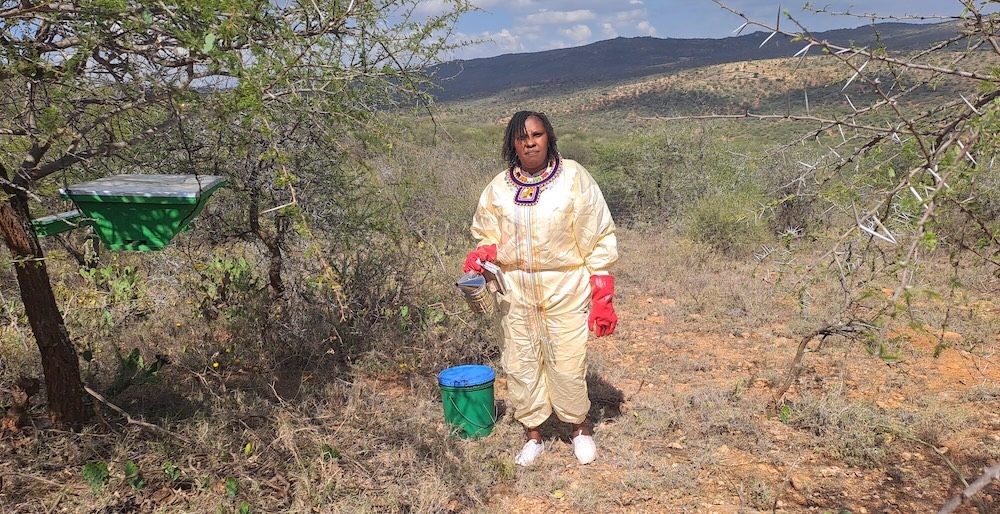
Yet amid this climate uncertainty, a quiet transformation is unfolding. Suspended beneath acacia branches are rows of wooden beehives, carefully managed by the Namilok Women’s Group, a collective of 200 Maasai women and seven men who are using beekeeping not only to earn a living, but also to restore ecosystems, reduce environmental degradation, and adapt to a changing climate.
On a five-acre piece of land, the group now manages 54 beehives, harvesting between seven and ten kilograms of honey per hive each season. The women harvest three times a year, producing approximately 370 kilograms annually depending on flowering cycles increasingly influenced by changing weather patterns.
Through this initiative, what was once viewed as barren land has become a climate resilience hub.
“Before this project, many families depended heavily on livestock alone, but droughts became too frequent and severe,” explains Everline Naleku, chairlady of the group. “Beekeeping has given us another source of survival that does not destroy the environment.”
The women say the effects of climate change became impossible to ignore in recent years. Rivers dried earlier, pasture disappeared faster, and families were often forced to migrate long distances in search of water and grazing land.
As livelihoods became more fragile, some households turned to charcoal burning to survive, accelerating deforestation in an already vulnerable ecosystem.
But in March 2023, the Food and Agriculture Organization (FAO), through its Forest and Farm Facility programme, partnered with the women’s group to support climate-smart livelihoods through sustainable beekeeping.
The intervention included grants and extensive training in hive management, honey processing, environmental conservation, pollination systems, flowering seasons, branding, and value addition through products such as beeswax, propolis, and royal jelly.
The women also participated in exchange visits to other counties where they observed communities restoring degraded land while building profitable honey enterprises.
“We realised beekeeping is deeply connected to conservation,” says Rosemary Mosian, the group’s secretary. “Without trees, there are no flowers. Without flowers, there are no bees and no honey.”
That understanding has transformed how the community relates to the environment. Today, members of the group actively plant trees and protect indigenous vegetation around their apiaries. Charcoal burning, once common among some households, is steadily declining as honey production proves more profitable and sustainable.
“Charcoal burning no longer attracts us,” Mosian explains. “Now we know trees are more valuable standing alive because they support bees, rainfall, shade, and even our livestock.”
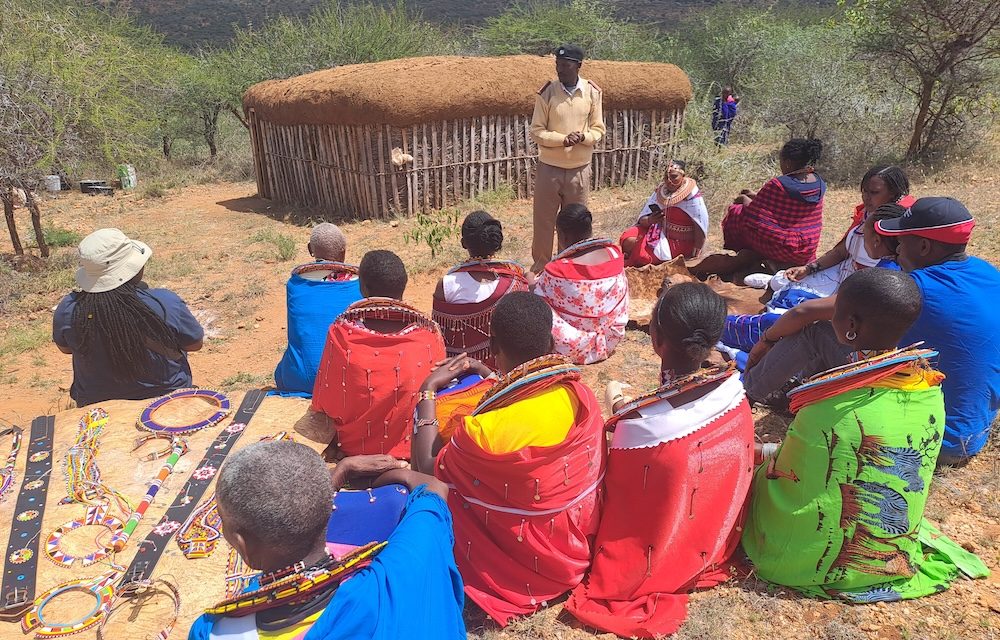
According to Philip Kisoyan, a landscape ecology specialist and Project Lead in Natural Resource Management at FAO, bees play a critical role in ecosystem restoration and climate adaptation.
“Beekeeping protects entire ecosystems because bees are essential pollinators,” he says. “They support biodiversity, forest regeneration, and food production. In dryland areas facing climate stress, beekeeping offers communities income while encouraging conservation instead of environmental destruction.”
Climate experts increasingly identify sustainable apiculture as an important adaptation strategy for arid and semi-arid regions because it requires relatively little water compared to livestock or crop farming while still generating reliable income.
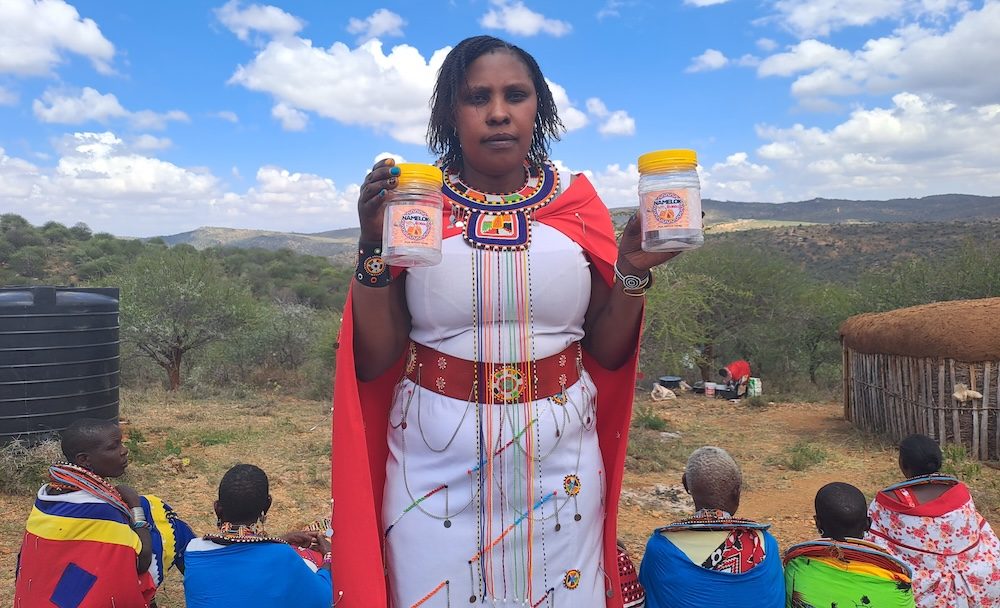
The economic impact on the women has been significant. Initially, the group sold raw honey at Sh300 per kilogram. Today, after improving hygiene, packaging, and branding, their processed honey sells for up to Sh1,000 per kilogram.
Some of their products are marketed online through the Kenya National Farmers Federation platform, while wholesale buyers purchase bulk honey at approximately Sh800 per kilogram.
The income has allowed the women to diversify into goat farming, manage table banking schemes, and invest in water tanks to cope with worsening water scarcity caused by prolonged droughts.
Their savings now total more than Sh600,000. “Climate change made life harder, but this project helped us become stronger,” says Naleku. “Now women can pay school fees, buy food, and even save money during drought periods.”
The project is also changing diets and improving nutrition in a region where climate shocks have historically limited access to fruits and vegetables. Traditionally, many Maasai households depended heavily on milk, meat, and ugali. But with drought affecting livestock productivity, food insecurity became more severe.
Using income from honey sales, the women have established kitchen gardens and a shared community garden where families grow vegetables and fruits. “Now our children can eat vegetables regularly,” says Elizabeth Milau, a member of the group. “We learned that climate change also affects nutrition, so we started growing food ourselves.”
Beyond economics and nutrition, local leaders say the project is strengthening community stability in an era of climate displacement because with improved livelihoods, fewer families are migrating constantly in search of pasture. This means that children remain in school longer, and households experience greater stability despite recurring droughts.
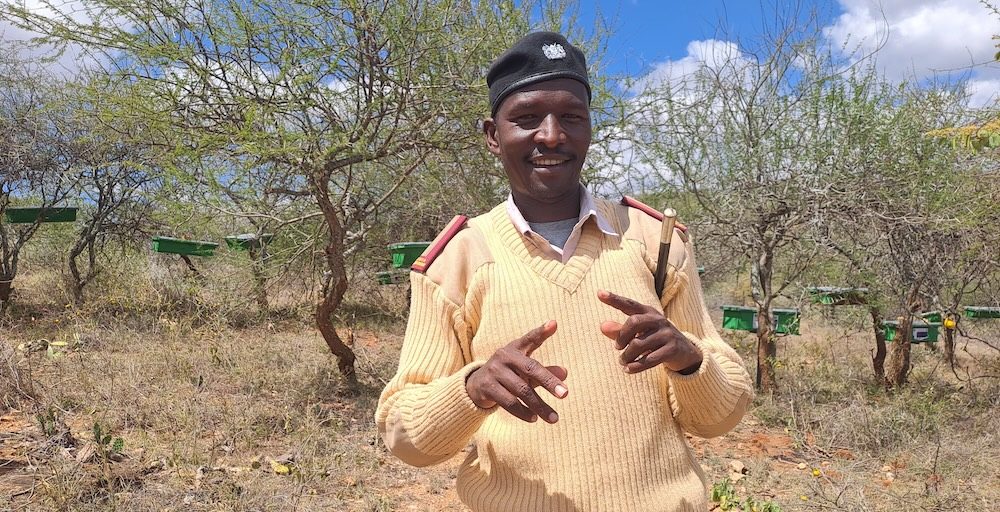
“This project has reduced movement caused by climate stress,” says John Saikong, the senior chief of Mumonyot Location. “Families are becoming more settled because women now have reliable incomes that support the household even during dry seasons.”
But perhaps the most remarkable transformation is social. In a community where land ownership and economic decision-making traditionally belonged to men, the women’s success in environmental conservation and climate resilience is slowly reshaping gender norms.
When the Namilok Women’s Group first requested land in 2023 to establish their beekeeping project, the decision to allocate it shocked many residents. In Maasai culture, women rarely receive communal land rights. Yet today, the same women are being celebrated as environmental stewards and economic leaders.
“These women have shown that protecting the environment can also strengthen families and communities,” says Peter Moiyare, chairman of the Morupusi Community Land Group. “People now respect them because they have brought development through conservation.”
Now, the group dreams of expanding even further. Within the next two years, the women hope to secure Kenya Bureau of Standards (KEBS) certification to access international markets with their branded honey, beeswax candles, lip balm, propolis, and royal jelly products.
For the women of Mumonyot, the future of climate adaptation is about restoring ecosystems, protecting forests, empowering women, and building livelihoods rooted not in environmental destruction, but in coexistence with nature.