
Kenya has released the Draft Circular Economy Strategy focused on cutting reliance on virgin materials, reducing pollution and keeping products in use longer.
The proposal would move the country away from a “take-make-dispose” model, reducing dependence on extraction and imports. It prioritises preventing waste and redesigning products, followed by reuse, repair, refurbishment and re-manufacturing, with recycling and recovery coming later in that hierarchy.
The strategy’s four objectives are to bring fragmented policies into one national framework with clear targets and accountability; drive change in five priority sectors; build the institutions, data systems and skills needed to deliver the plan; and establish shared ownership among national and county governments, businesses, informal workers and civil society.
The five sectors are agriculture and food systems, plastics and packaging, electrical and electronic equipment, textiles and fashion, and mining, quarrying and construction. The draft treats waste as a resource across those sectors, including food and crop residues, used electronics, textiles and construction materials.
The plan aims to increase plastics recycling from about 9% to 30% and formal collection and recycling of e-waste from below 5% to 25%. It also seeks to reduce food loss and waste from about 40% of production to 30%, recover 20% of construction and demolition waste, and have 20% of public procurement meet circular criteria.
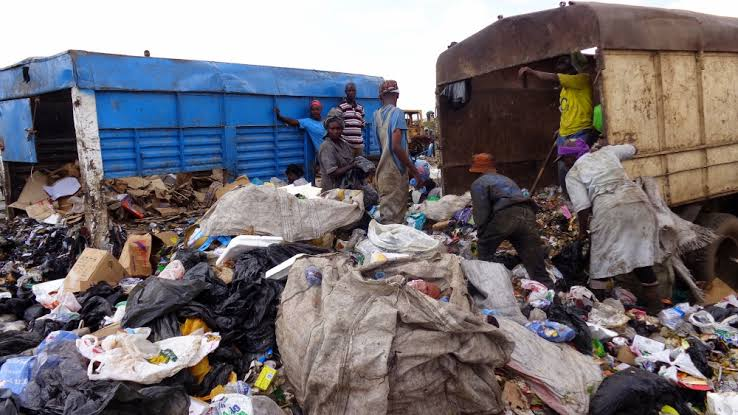
The wider targets include separating waste at source among 30% of generators and reducing the share of waste dumped or openly burned from more than 75% to below 55%. The strategy also aims for 30,000 additional circular-economy jobs above a baseline to be confirmed in 2028.
The plan’s approach puts implementation conditions ahead of large-scale investment. It proposes eight foundations for the first two years, including standards for recovered materials, a national material-flow baseline, circular procurement rules, access to finance and a functioning governance structure.
The draft says the Waste Management Council, established under the Sustainable Waste Management Act of 2022, was not yet operational when the plan was prepared. It proposes using the Council as the strategy’s anchor, supported by a secretariat and five sector working groups, rather than creating parallel bodies. County governments would play a central role because waste management is devolved.
The vision also depends on workers already active in collection, repair and recovery. The draft says waste pickers, informal recyclers, repairers and traders should be integrated through associations, cooperatives and contracts, with protective equipment and health screening. It sets a target to certify 15,000 workers by 2032 and says formalisation should protect livelihoods rather than exclude workers from existing value chains.
The plan estimates implementation will cost KES35.5 billion from 2028 to 2032. It identifies KES25.4 billion in potential funding, leaving an estimated KES10.1 billion gap. The draft projects that 86% of the spending would fall in 2030–2032, when recovery and processing infrastructure is expected to be built.
It also cites modelling that suggests circular approaches could unlock more than KES 90 billion across the five sectors and add about 0.5 percentage points to GDP by 2030.