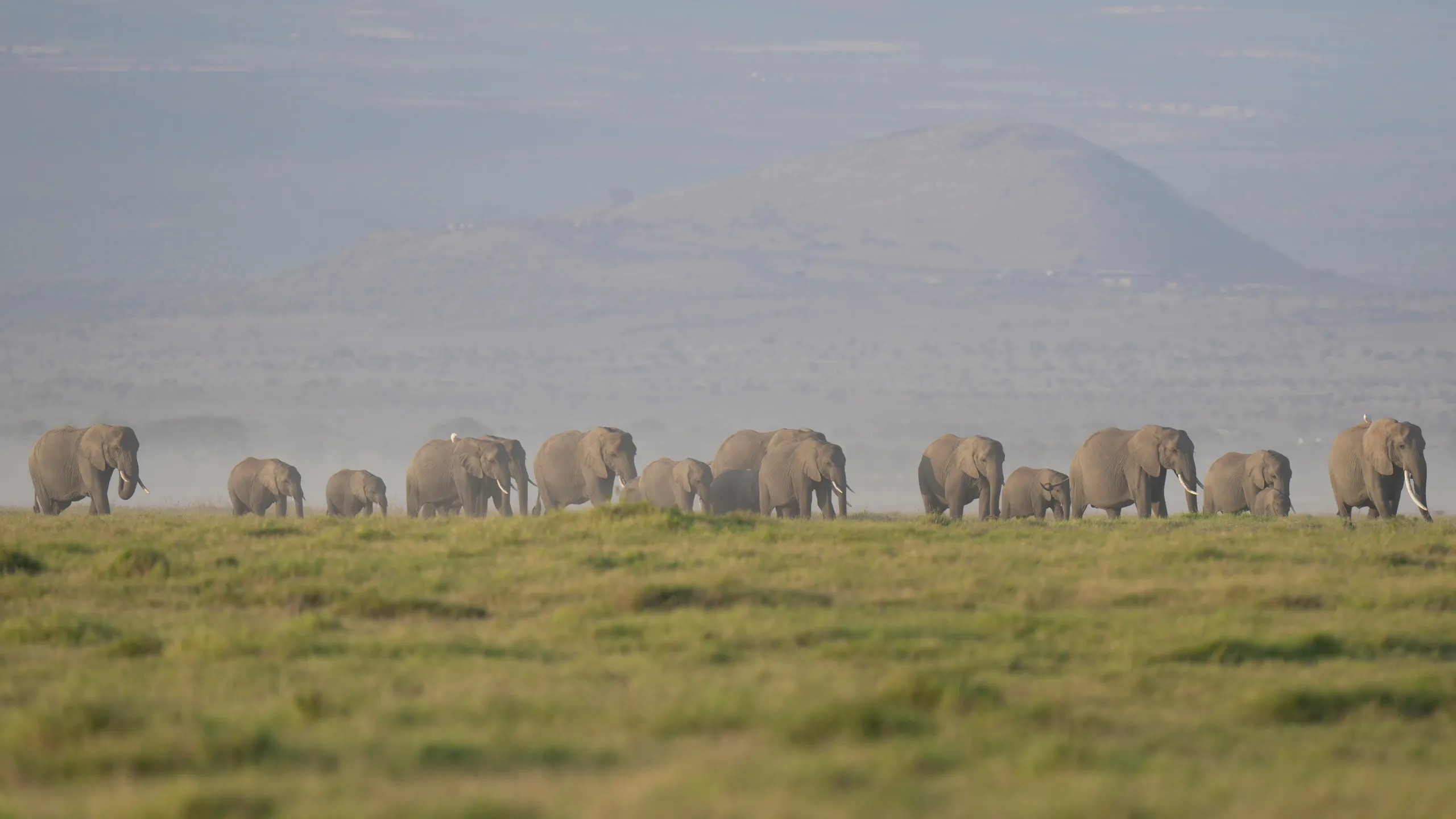

By the time rangers and community scouts in the Amboseli ecosystem began finding carcasses of elephants scattered across one of Africa’s most celebrated wildlife landscapes, some had already been torn apart by scavengers. Others offered disturbing clues of healthy elephants suddenly becoming weak, losing control of their hind limbs, becoming partially paralysed and dying within one or two days. By the end of July, fifteen elephants had died.
Kenya Wildlife Service (KWS) announced that the animals had succumbed to cyanide poisoning, with officials suggesting the elephants had consumed tomatoes contaminated with agricultural chemicals, but the explanation generated questions that remain largely unanswered.
KWS had announced that cyanide killed the elephants but never showed precisely how investigators reached that conclusion, what form of cyanide was detected, where it originated or how it entered the elephants’ bodies. Until those questions are answered through published scientific evidence, the Amboseli deaths remain an investigation still in progress rather than a mystery fully solved.
The chronology of events itself illustrates why caution is necessary. On 28 July, KWS announced that preliminary examinations conducted by the University of Nairobi had identified what it described only as “a potential toxic substance” in tissue samples collected from several elephants.
At the same time, the agency disclosed that the Government Chemist had tested the samples for a range of toxins and returned negative results for those examined. Additional laboratory work, environmental sampling and toxicological investigations, KWS said, were continuing.
Only days later, the official narrative became far more definitive. KWS Director-General Erustus Kanga announced that cyanide had been identified and linked the poisoning to tomatoes believed to have been sprayed with agricultural chemicals before being consumed by elephants.
What has not entered the public domain is the evidence supporting that conclusion. Neither the toxicology report nor the laboratory methodology has been released. The public has also not been told which laboratory conclusively identified cyanide, whether independent confirmation was obtained, how many elephants tested positive or what concentrations were detected.
Those omissions are significant because the KWS claim does not identify a single compound, concentration or source. According to the US Agency for Toxic Substances and Disease Registry, free cyanide, cyanide salts and metal-cyanide complexes differ substantially in their stability, toxicity and environmental behaviour.
“A finding described only as “traces of cyanide” cannot establish whether the Amboseli elephants received a lethal dose or whether the substance originated from agricultural chemicals, mineral processing or deliberate poisoning,” said a toxicologist who requested anonymity.
“Investigators would need to disclose the precise compound detected, its concentration, the samples tested and the analytical method used, and then compare the results with samples from tomatoes, pesticide formulations, soil and water in the affected area before attributing the deaths to a particular source,” the toxicologist said.
“Cyanide is not, in itself, a complete scientific explanation. Different cyanide compounds behave differently in the environment. Some are associated with industrial processes such as mineral extraction. Others are chemically distinct compounds used in agriculture. Establishing the precise compound is essential if investigators hope to trace its source,” he added.

It is at this point that the official account begins to collide with observations from people who live and work in the Amboseli ecosystem every day.
Community conservation workers interviewed for this article do not dismiss the possibility that poison killed the elephants. What they question is whether the explanation currently offered adequately fits the evidence they have observed on the ground.
One experienced conservation worker described the deaths as concentrated largely within the southern dispersal areas of the Amboseli ecosystem, stretching from Kitirua through Eselengei Wildlife Management Area, Enkongu Narok, Kitenden and Ildepen to Kimana Sanctuary. According to him, most of the affected elephant families regularly use community land that contains relatively little intensive crop farming.
His account raises an obvious question. If the elephants acquired lethal doses of cyanide by consuming contaminated tomatoes from farms, why were so many of the deaths reported among elephant families that spend much of their time away from the principal farming zones?
That observation alone does not invalidate the tomato hypothesis because elephants travel long distances and routinely raid farms. Nevertheless, it points to the need for detailed spatial analysis showing precisely where each elephant became ill, where every carcass was recovered, the location of nearby farms, water sources and known elephant movement corridors. No such map has yet been released by KWS.
Residents also question why no similar mortality event has been documented among livestock, companion animals or other wildlife sharing the same landscape.
“Cattle, goats, sheep, dogs, monkeys, baboons, birds and numerous smaller mammals forage in and around the same agricultural areas, while local people harvest, transport and consume tomatoes and other vegetables grown in the region. Yet there have been no publicly reported clusters of illness comparable to the elephant deaths,” said the conservationist.
“If contaminated crops introduced a lethal toxicant into the environment, investigators should demonstrate whether other species were exposed and, if not, why elephants alone appear to have been affected,” the toxicologist said.
Community members are also asking investigators to explain another aspect of the timeline. According to local conservation workers, elephant deaths were observed from May and June before declining sharply in July.
The official KWS chronology refers to deaths recorded between 24 June and 24 July. Reconciling those timelines is important because they may indicate earlier unrecorded cases or differing definitions of when the mortality event began.
As uncertainty has persisted, alternative explanations have inevitably emerged. Some residents have speculated that cyanide may point not to agriculture but to mineral extraction, noting that cyanide compounds are widely used in gold processing. From that observation has grown a broader allegation that illegal mining may be occurring somewhere within the Amboseli landscape.
At present, there is no publicly available evidence supporting the mining claim, and no investigation has linked the elephant deaths to mining activity, or any environmental data released so far identify mining waste or processing chemicals within the affected ecosystem.
The mining hypothesis therefore remains speculation, yet speculation flourishes where evidence is withheld. If authorities wish to dispel such claims, the most effective response is transparency rather than dismissal.
According to an official of a local environmental organization, a credible investigation demands publication of toxicology reports, laboratory methodologies, chain-of-custody documentation, environmental sampling results, necropsy findings and spatial analysis linking carcasses with potential exposure sites.