


Safaricom is expanding solar power and improving energy efficiency to cut emissions from its growing digital network, but rising electricity consumption and emissions highlight the challenge of reducing its carbon footprint as its operations expand.
The company has responded by developing a 2035 Decarbonisation Strategy and Climate Transition Plan aimed at reducing emissions, strengthening network resilience and controlling energy costs. The plan sits within the company’s wider sustainability strategy tied to its Vision 2030 shift from a telecommunications operator to a technology company.
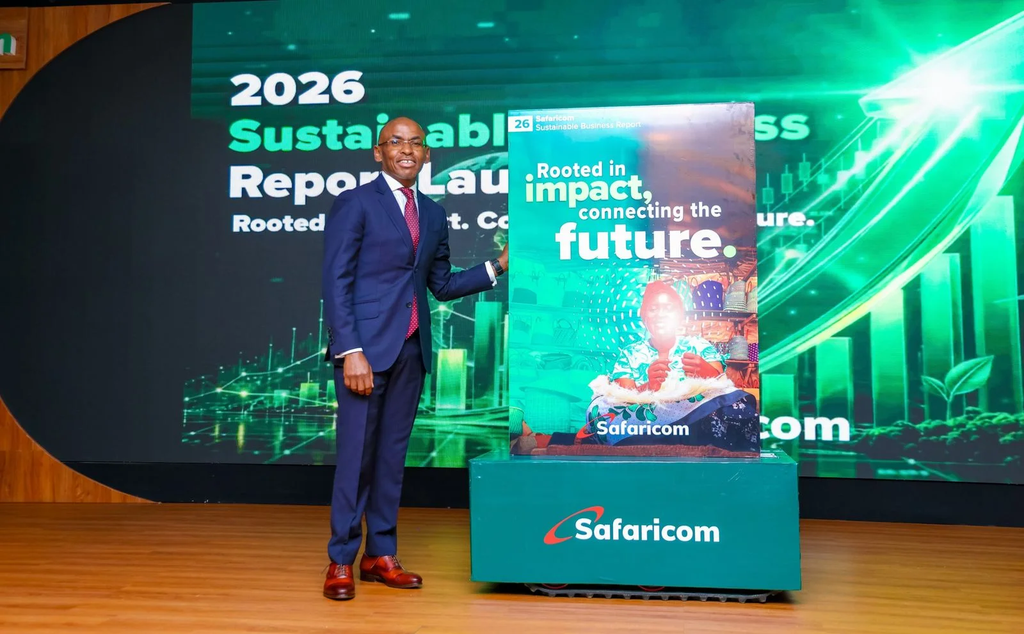
The company’s sustainability report released on October 27 shows that group emissions from direct operations and purchased electricity rose by 1 per cent in 2026, highlighting the gap between its ongoing investments in cleaner energy and the overall emissions performance.
The plan identifies six areas of action: expanding solar and other renewable energy, improving the efficiency of network equipment and data centres, reducing reliance on diesel generators, cutting emissions from vehicles and refrigerants, working with suppliers to reduce value-chain emissions, and restoring nature to address residual emissions after direct reductions.
The strategy reflects the growing connection between environmental performance and business resilience with rising energy demand exposing the company to electricity costs, fuel-price fluctuations and disruptions caused by extreme weather.
In its climate risk assessment, the company identified potential exposure to changing rainfall patterns and flash flooding at more than 80 per cent of the locations assessed, highlighting the risks climate change poses to its network infrastructure.
To reduce its reliance on diesel and improve energy efficiency, Safaricom expanded solar installations to 2,028 network sites in 2026, up from 1,432 the previous year. It also upgraded batteries and rectifiers at about 800 sites and added 32 grid connections, contributing to a 3.7 per cent reduction in fuel consumption.
The investments also helped strengthen network resilience during a nationwide blackout on December 5, 2025. According to the company, solar installations, battery storage and additional grid connections helped keep network sites operational while reducing reliance on generators.
However, growing network demand continues to put pressure on overall energy consumption with electricity use increasing to 274,531 megawatt-hours in 2026, from 259,715 megawatt-hours a year earlier.
It reported that its solar installations generated estimated monthly energy-cost savings of KSh16.42 million. It is also deploying artificial intelligence-enabled systems that switch off idle radio-network carriers, which could deliver additional energy savings of up to 8 per cent.
Despite these gains, the company remains heavily dependent on grid electricity and diesel as solar accounted for just 5 per cent of network energy in 2026, compared with 78 per cent from grid electricity and 17 per cent from diesel. The figures highlight the challenge of expanding renewable energy and improving efficiency while meeting the rising power demands of its growing digital infrastructure.
Emissions performance also differed across markets. Scope 1 and 2 emissions rose by 9.1 per cent in Kenya but fell by 31 per cent in Ethiopia. Scope 1 emissions cover direct sources such as fuel burned in generators and vehicles, while Scope 2 emissions arise from purchased electricity.
Safaricom’s 2030 targets include installing solar power at 5,000 sites, sourcing 95 per cent of network energy from green energy and reducing absolute Scope 1 and 2 emissions by 43 per cent from a 2017 baseline. It also aims to reduce Scope 3 emissions, which arise across its value chain, by 41 per cent against the same baseline. The company has set a net-zero ambition for 2050.
The company’s decarbonisation plan also connects climate action with nature restoration, although the latest results show that some environmental targets remain unmet as it planted 681,284 trees during the year, below its annual target of one million. The company attributed the shortfall mainly to poor rainfall.
Cumulative tree planting exceeded three million trees across more than 3,000 hectares, which is on track to the company’s aims to plant five million indigenous trees and restore 5,000 hectares by 2030.
Waste management results were mixed. It reported recycling all network waste and 97 per cent of solid waste, down from 99 per cent in 2025. The company also introduced a retail take-back programme for second-generation (2G) devices, providing another route for collecting older electronic equipment.
Water withdrawal increased by 29 per cent, which the company attributed to improved monitoring across its operations.
Safaricom’s latest disclosures build on a reporting history that predates Kenya’s current move towards standardised sustainability reporting as Kenya prepares to make sustainability disclosures more consistent and comparable through the adoption of the International Financial Reporting Standards (IFRS) Sustainability Disclosure Standards.
The Institute of Certified Public Accountants of Kenya’s (ICPAK) roadmap provides for voluntary adoption from 2024, followed by mandatory application for public interest entities for financial reporting periods beginning on or after January 1, 2027. Large non-public-interest entities are scheduled to follow from 2028, and small and medium-sized enterprises from 2029.
The framework includes IFRS S1, which sets general requirements for disclosing sustainability-related financial information, and IFRS S2, which addresses climate-related disclosures. The standards require companies to explain how sustainability-related risks and opportunities affect their prospects, supported by information on governance, strategy, risk management, metrics and targets.
This marks an important shift in the purpose of corporate sustainability reporting. Environmental information is increasingly expected to show not only what a company is doing to reduce its impact, but also how climate change and other sustainability issues could affect its assets, operating costs and long-term financial performance.