
By Leah Ngungu
Kilifi’s dry conditions and unreliable rainfall make farming a challenge for many households. But for 12-year-old Hillary, the harsh conditions have not dampened his enthusiasm for agriculture. Instead, they have given him a reason to find ways of growing food with whatever resources he has.
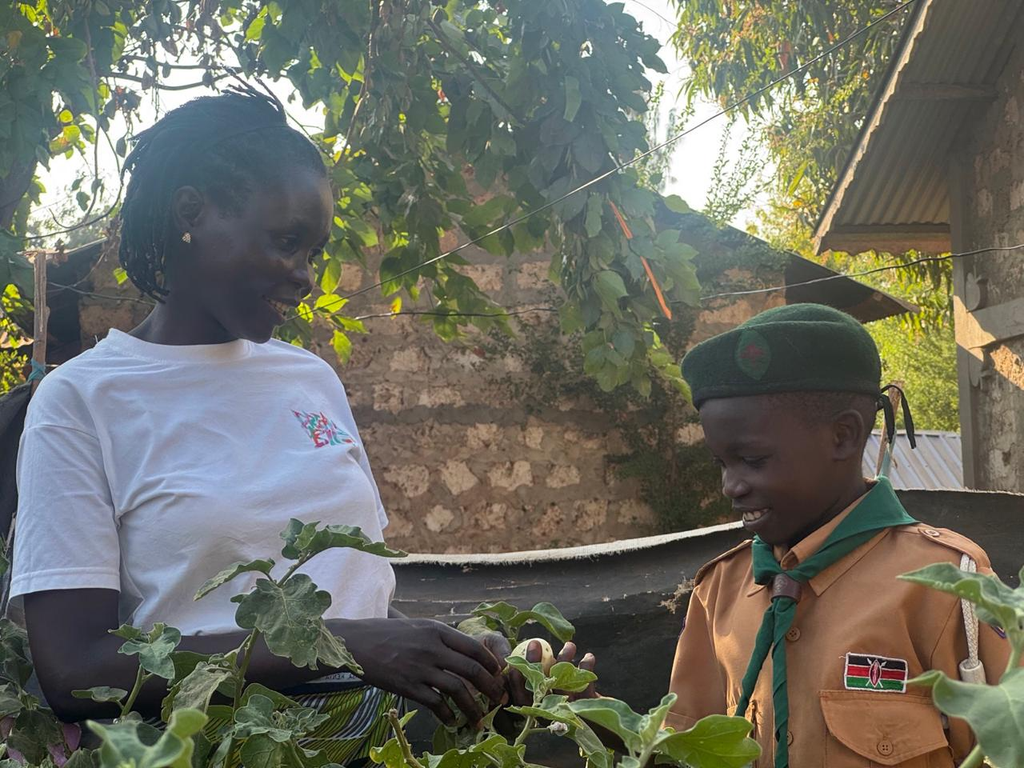
On a small patch of land in his family’s compound, Hillary tends rows of amaranth, eggplant, spinach and kales, and what started as a school gardening lesson has grown into a productive kitchen garden that now supplies his family with vegetables, earns him extra income and attracts the attention of neighbours.
His journey into farming began through a school-based initiative run by the Kenya Scouts Association, with support from Vi Agroforestry Kenya. The programme introduces children in several counties to climate-smart agriculture, equipping them with practical gardening skills, seedlings and mentorship to promote household food security and environmental conservation.
Through hands-on lessons, Hillary and fellow scouts learnt how to establish kitchen gardens and use organic farming methods. But while the lessons introduced many children to agriculture, Hillary was determined to put his new knowledge into practice.
He approached his mother and asked for a small piece of land where he could start his own garden. Impressed by his enthusiasm, she allocated him a section of their compound. That small piece of land has since become much more than a place to grow vegetables.
Today, Hillary’s garden provides fresh produce for his family, with surplus vegetables sold to neighbours, providing an additional source of income that can help meet household needs, including buying food and school supplies.
For Hillary, however, the greatest satisfaction comes from eating what he has grown. “My favourite part is harvesting and eating the kales I have grown myself,” he says.
His garden has also become a point of interest in the area with neighbours regularly visiting to buy vegetables, while others are curious about how he manages to produce healthy crops using organic farming methods without relying on synthetic chemicals. Some have started seeking his advice, turning the 12-year-old into an unlikely source of agricultural knowledge.
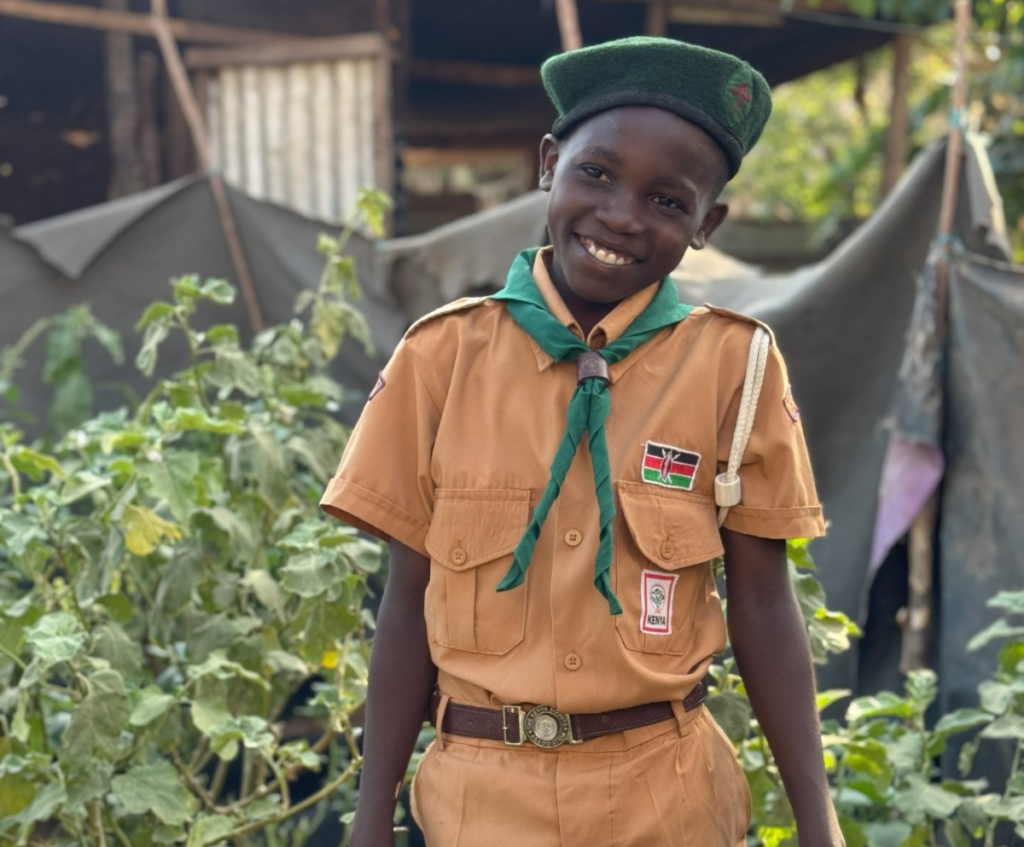
His mother, Sylvia Pendo Karabu, says the initiative and responsibility have come largely from Hillary himself. From preparing the soil to managing the nursery and tending the crops, he takes charge of the daily work. “After school, before he even removes his uniform, he goes straight to the garden,” she says.
Watching her son turn a small piece of land into a productive enterprise has changed her appreciation of what children can contribute to household food security. She now encourages other parents to support their children’s interest in agriculture.
“If your child shows interest, support them. Look what Hillary has done. Imagine what more children could do if given the chance,” she says.
But growing vegetables in Kilifi is not without its difficulties. Water scarcity remains Hillary’s biggest challenge, particularly during prolonged dry spells when maintaining the garden becomes difficult.
With unreliable rainfall and limited access to irrigation, he has learnt to make the most of the little water available. He sometimes reuses water left over from cooking and washing to irrigate his crops, ensuring that as little as possible goes to waste.
It is a practical response to a problem that confronts many smallholder farmers in the region. Yet Hillary knows that making the garden more productive will require better access to water.
He hopes to acquire a water storage tank and a drip irrigation system, which would help him maintain the garden during dry periods and expand production.
His ambitions extend beyond the vegetables he currently grows. He wants to introduce celery, carrots and strawberries, as well as fruit trees, as he explores ways of diversifying his garden.
For a boy who is still in primary school, his understanding of agriculture goes beyond planting and harvesting. “Agriculture gives us vegetables, fruits, money, and even medicine,” he says.
Hillary’s experience illustrates how practical agricultural education can influence children’s attitudes towards food production while giving them skills they can apply at home. It also shows how a relatively small intervention, when supported by parents and backed by access to seedlings and practical training, can generate benefits beyond the classroom.
The partnership between Vi Agroforestry Kenya and the Kenya Scouts Association is using school-based learning to introduce children to climate-smart agriculture and encourage them to become agents of change in their households and communities.
Hillary’s garden offers a glimpse of what such initiatives can achieve. It is helping feed a family, generating modest but meaningful income and passing agricultural knowledge from one household to another.
However, his experience also highlights a gap that agricultural education alone cannot address: children and households need reliable access to water and appropriate technologies if they are to sustain food production in increasingly challenging climatic conditions.
A water tank and drip irrigation system could help Hillary take his garden to the next level. But the bigger opportunity lies in giving more children the knowledge, resources and encouragement to turn similar lessons into productive household gardens.
At 12, Hillary is already demonstrating that age and limited space need not be barriers to agricultural enterprise. His garden may be small, but the benefits are reaching well beyond his family’s compound.
The writer is the Resource Mobilization and Communication Officer at Vi Agroforestry Kenya, Leah.Ngungu@viagroforestry.org