
By Leopord Obi
Lake Baringo, a freshwater lake teeming with fish and wildlife, and its alkaline neighbour, Lake Bogoria, were once worlds apart, separated by 22 kilometers of bush-land and rugged terrain. Few would have ever imagined the two opposite water bodies coming close to meeting, least of all at a time when the climate crisis is drying up water sources.
But in recent years, Lake Baringo’s surface area, which once fluctuated between 108 and 130 square kilometers between the dry and wet seasons, has expanded significantly, putting growing pressure on the surrounding communities and ecosystems. The distance between the two lakes has since narrowed from about 22 kilometers in 2010 to just seven kilometers, raising fears that the freshwater and alkaline lakes could eventually connect.
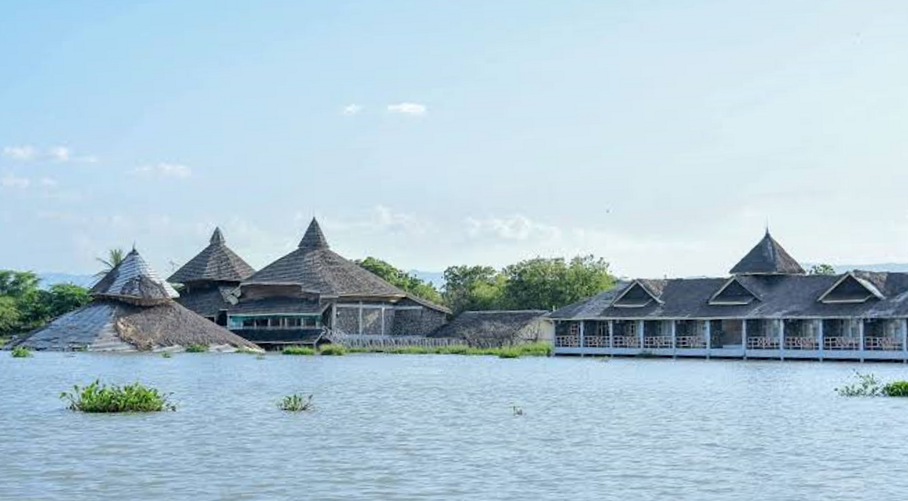
It is estimated Lake Baringo’s water volume has increased by an estimated 1.4 to 1.9 billion cubic meters since 2010, while its water level has risen by about 12 to 14 meters, submerging farmland and homes while displacing hundreds of families and destroying critical infrastructure.
And with El Niño rains forecast, concerns of the two lakes merging remain real and rife, if urgent interventions are not put in place.
Lake Bogoria, a Ramsar wetland of international importance and a UNESCO World Heritage Site is famous for its vast flocks of lesser flamingos and geothermal hot springs and geysers that has made it a major tourism destination.
Lake Baringo on the other hand is one of only two freshwater lakes in the Kenyan Rift Valley and an important source of fresh water in a drought-prone Baringo, thus making a merger of the two a likely ecological catastrophe. The other freshwater lake in the Kenyan Rift Valley is Lake Naivasha, which is also experiencing rising water levels.
Prof Japheth Onyando, a water engineering expert at Egerton University, says the merger of the two lakes could lead to massive displacement of communities and loss of livelihoods.
Prof Onyando warns that connecting the two different aquatic ecosystems could also lead to biodiversity loss as freshwater species such as fish struggle to survive in a new aquatic environment, potentially resulting in the extinction of some species and the emergence of others.
“The flooding will rise if the two lakes merge, given that all four major rivers in the area, namely Ol Arabel, Wasesges, Molo and Perkerrra will be emptying their waters in the same lake, which has no outlet,” observed Prof Onyando.
While the efforts to keep the freshwater and alkaline lake apart come at a considerable environmental and financial cost, it still remains a big win for residents of Baringo, a largely arid and semi-arid county where fewer than four in every 10 people have access to safe drinking water.
The government has now turned to civil engineering in a last-ditch effort to avert what could become one of nature’s most consequential hydro-logical crises. The interventions center on restoring natural drainage systems around the lakes to control the flow of water and prevent further encroachment.
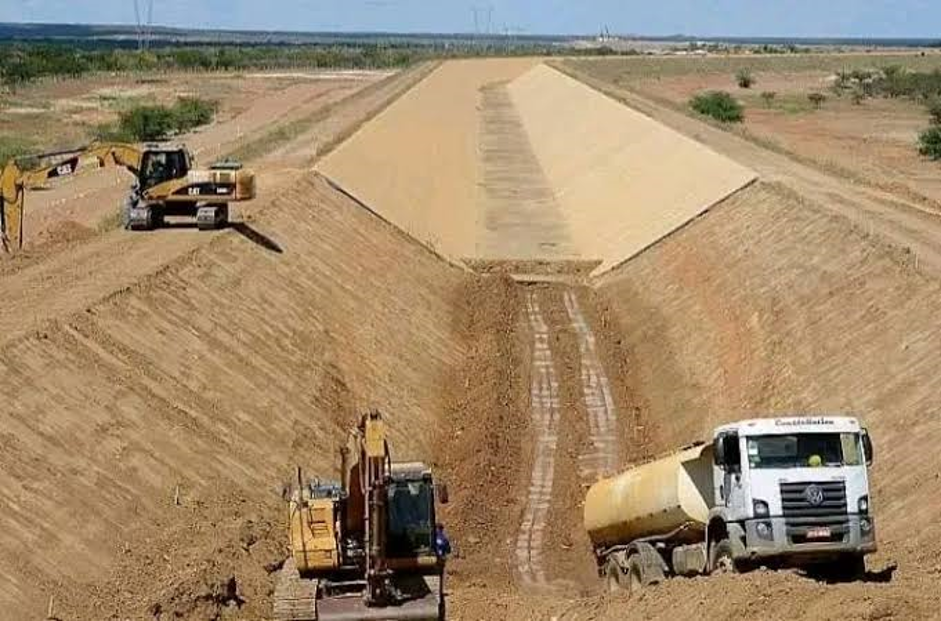
The Ministry of Water, Sanitation and Irrigation has deployed more than 100 heavy excavators to support the construction of 25-metre-wide channels to divert Rivers Waseges and Loboi, which feed into Lake Bogoria. The intervention seeks to redirect excess water towards a nearby wetland, thereby controlling the lakes’ expansion.
The works also include the construction of a five-kilometre-long dyke at Sandai to act as a physical barrier against the advancing waters.
Irrigation Principal Secretary Ephantus Kimotho said the two rivers originally drained into Lake Baringo but, over time, siltation altered their courses, causing them to discharge their waters into Lake Bogoria instead.
“In fact, 60 per cent of the water in Lake Bogoria comes from the two rivers. The ongoing works will be to divert the rivers back to their original course to drain into Lake Baringo,” he said.
The work is being undertaken by the Ministry of Water, Sanitation and Irrigation, alongside the Ministry of Defence at the cost of Ksh40 Billion.
Prof Onyando reckons that dredging, a structural intervention that involves deepening a river channel to improve its water-carrying capacity and prevent it from bursting its banks, is appropriate, particularly because the blockage is largely caused by siltation resulting from upstream soil erosion.
Beyond the emergency response, the government is considering long-term investments in water storage facilities, irrigation infrastructure, canals and check dams to turn the region’s water challenges into an economic opportunity.
The rising waters are part of a wider phenomenon affecting Kenya’s Rift Valley, where several lakes have expanded significantly since 2010. The expansion, linked to changes in rainfall patterns, increased catchment inflows and other hydro-logical factors, has submerged homes, farmland, roads and public infrastructure, displacing communities and disrupting livelihoods.
An estimated 80,000 households, representing about 400,000 people, have been affected, turning the rising lake levels into a major environmental, social and economic challenge for the region.
The affected lakes include Baringo, Bogoria, Naivasha, Nakuru, Elementaita, Solai and Logipi. Their expanding shorelines have inundated settlements, farms, roads and grazing land, forcing families to relocate and putting pressure on livelihoods, public services and fragile ecosystems.
Mathew Herrnegger, a senior scientist at Austria’s BOKU University, attributes the rise primarily to changes in rainfall patterns in the area.
Herrnegger, in a study published in 2024, reported that even though the number of rainy days declined around Kenya’s Rift Valley area, annual rainfall had doubled since 2010, with the number of days with intense rainfall increasing by 318 per cent. The study recommended constructing a dam to artificially raise Lake Bogoria’s spill point.