
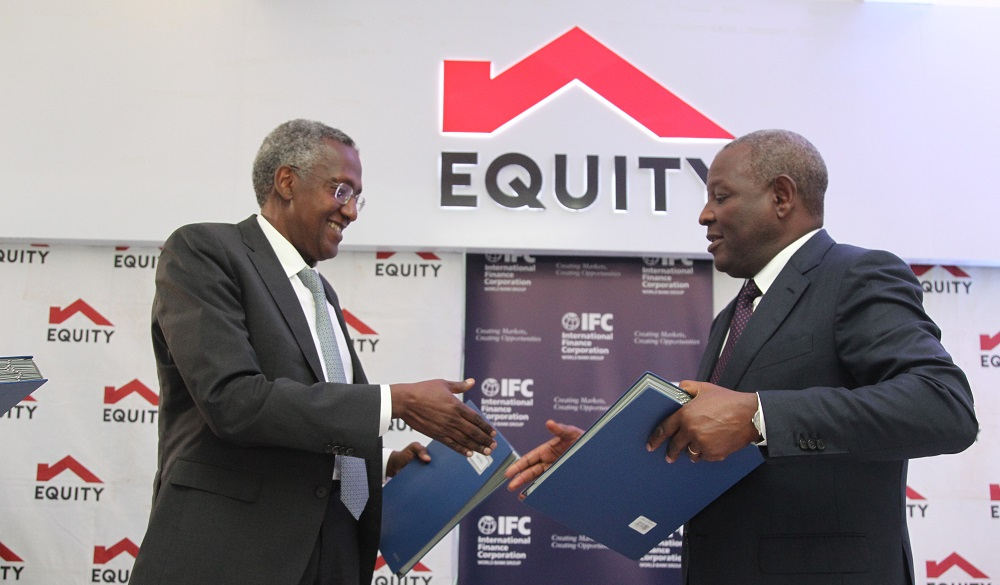

Equity Group Holdings increased its climate-related financing to more than KSh26 billion in 2025, but its own greenhouse gas emissions rose by 19 per cent, exposing the challenge facing the financial services group as it expands its sustainability commitments.
The Group’s greenhouse gas emissions increased from 33,200 tonnes of carbon dioxide equivalent (CO₂e) in 2024 to 39,605 tonnes in 2025, even as it expanded investments in clean energy, tree planting and climate adaptation programmes.
The increase was recorded across all three emissions categories, with indirect emissions associated with the Group’s value chain registering the sharpest growth. An analysis of the figures in Equity Group’s 2025 Sustainability Report shows that Scope 1 emissions, arising mainly from fuel used in generators and company vehicles, increased by 15.7 per cent to 20,213 tonnes.
Scope 2 emissions, associated with purchased electricity, rose by 11.7 per cent to 14,572 tonnes, while Scope 3 emissions increased by 80 per cent to 4,820 tonnes.
The combined increase of 6,405 tonnes of CO₂e outpaced the Group’s 2.2 per cent workforce growth, raising questions about the pace at which its operational footprint is being reduced alongside its climate investments.
The increase comes against the backdrop of an expanded climate action programme, with the Group reporting more than KSh26 billion in sustainable and climate-aligned financing during the year.
The financing supported climate-related interventions across its markets, while more than 47,000 climate-related transactions were recorded under the International Finance Corporation’s Climate Adaptation Finance Initiative.
The Group also distributed 75,855 clean-energy products during the year, targeting households, institutions and businesses seeking alternatives to conventional energy sources.
These interventions form part of Equity’s wider strategy to use financial services to support climate change mitigation and adaptation, particularly among communities and enterprises exposed to climate risks.
Agriculture remains a major focus of the Group’s climate interventions, reflecting the sector’s exposure to increasingly unpredictable rainfall, droughts and other weather-related shocks. Through climate-smart agricultural financing, farmer training and value-chain support, Equity reached 622,525 small and medium-sized farmers during 2025.
Its programmes promote climate-resilient crops, agroforestry, soil restoration, efficient irrigation and improved water management, alongside access to climate-smart financing.
The Group also planted 9.1 million trees during the year, bringing its cumulative tree-planting figure to 44.6 million against a target of 35 million.
Other interventions include renewable energy adoption, solar mini-grids, clean cooking technologies, water storage, waste management, recycling and the promotion of electric mobility.
The Group says these initiatives are intended to reduce environmental degradation while strengthening the capacity of households and businesses to withstand climate-related shocks.
Beyond financing environmental projects, Equity is seeking to incorporate climate and nature-related risks into its banking operations. The report identifies environmental and social risk screening, enhanced due diligence for high-risk sectors, climate scenario analysis and stress testing among the measures used to assess potential risks associated with its lending and investments.
The Group said it is also preparing to strengthen its sustainability disclosures in line with the International Reporting Standards’ IFRS S1 and IFRS S2 requirements, which provide frameworks for reporting sustainability-related and climate-related financial information.
Equity Bank Kenya has also published its inaugural Sustainable Development Impact Disclosure, setting out seven impact intentions linked to the United Nations Sustainable Development Goals (SDGs). Among its 2030 targets is increasing the share of its loan book allocated to agriculture to 30 per cent, small and medium-sized enterprises to 65 per cent and manufacturing to 15 per cent.
The 2025 report, themed A Sustainable World is a Transformed Africa, records KSh99.5 billion invested in social impact and sustainability initiatives across the Group’s regional operations.
Despite the expansion of its climate financing and environmental programmes, the Group’s reported emissions growth suggests that increased activity and energy requirements are continuing to place pressure on its carbon footprint.
Equity Group Managing Director and Chief Executive Officer James Mwangi said the institution’s responsibility included directing finance towards resilience while protecting the natural systems that underpin economic prosperity.
The Group operates across Kenya, Uganda, Tanzania, Rwanda, South Sudan and the Democratic Republic of Congo, with a representative office in Ethiopia.