
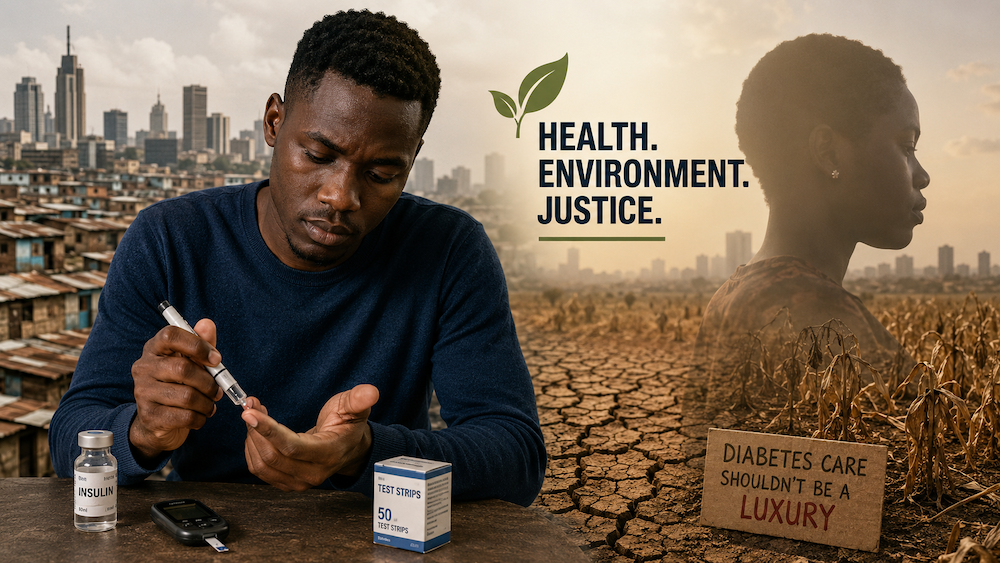

At 27, Josephat Kamusa thought securing a job as a high school teacher in Nairobi would finally bring stability to his life.
Instead, a significant portion of his income now goes toward managing diabetes after he lost support at age 25 from the Diabetes Management and Information Centre (DMI), the implementing partner of Kenya’s Changing Diabetes in Children (CDiC) programme funded by the World Diabetes Foundation.
For four years, DMI helped him access insulin and diabetes care, shielding him from the heavy financial burden that often comes with living with the condition. But aging out of the programme marked a difficult transition.
“I used to get insulin, but now I have to buy it for myself, and you know how expensive it is,” he says.
Today, Josephat spends roughly Sh2,500 every month on insulin alone, depending on his dosage and changing pharmacy prices. Though employed, balancing the cost of treatment with rent, transport, and other daily expenses in Nairobi is a constant struggle.
For many young adults living with diabetes, turning 25 does not only mark adulthood, it also means losing critical support and facing the harsh realities of paying for lifelong care on their own.
Kamusa’s story reflects a wider struggle faced by young people with chronic illnesses in low-income urban communities, where access to care is fragile and often tied to temporary support systems.
The DMI Kenya is one of the organisations working in this space, supporting children and adolescents with diabetes through structured care programmes. But officials acknowledge that continuity into adulthood remains a major challenge.
“The age limit is by programme design. It falls under the Global Health Equity Programme, which promotes access to care among children and youth living with Type 1 diabetes across low- and middle-income countries,” says Erick Omondi, Project Coordinator, CDiC-Kenya.
Omondi explains that the programme has always operated on the assumption that beneficiaries will have attained some level of independence by age 25. However, he says the transition is often difficult because both public and private hospitals are not yet prepared to match the level of support offered under the programme.
“Another setback includes the out-of-pocket costs for insulin, needles, and self-monitoring of blood glucose,” he says. “Social Health Authority (SHA) coverage is still limited in terms of what it caters for, including the availability of most services, especially at primary health facilities.”
He adds that continuity of care after patients leave the programme remains “a thorny issue.”
“Most of the beneficiaries are still dependent after this age, at least in one way or another,” says Omondi. “The best bet would be a Universal Health Coverage model with strengthened public health services and financing. We are also encouraging SHA enrolment, especially to cover admission bills.”
According to Omondi, tracking long-term outcomes for beneficiaries after they exit the programme is still difficult due to the lack of a national diabetes registry.
“This is still a challenge,” he says. “We do not have a national registry to comprehensively monitor outcomes such as glycaemic control, complications, or adherence to treatment after transition.”
He says the biggest challenge for young adults transitioning out of support programmes is the high out-of-pocket cost of treatment and dependence on private pharmacies for essential diabetes commodities.
Kenya is facing a growing burden of diabetes among children and young people, yet access to treatment remains limited for many. A 2024 presentation at the European Society for Pediatric Endocrinology (ESPE) estimated that about 127,000 children in Kenya are living with Type 1 diabetes, but only around 5,000 are currently receiving treatment, meaning the vast majority struggle to access consistent care.
To help bridge this gap, the CDiC programme, launched in Kenya in 2009, had supported about 6,100 children and adolescents by 2025 and helped refurbish 41 diabetes clinics across the country, according to the Access to Medicine Foundation.
But despite these efforts, many young people continue to face major barriers in managing the condition. A 2015 Kenyan study found that 72 per cent of children and adolescents with Type 1 diabetes had poor blood sugar control, largely linked to interrupted treatment, limited follow-up care, and the high cost of insulin. Research published in 2021 also highlighted the daily struggles families face, including transport costs, stigma, and difficulty affording medication.
These challenges, according to Omondi, often intensify as young people transition into adulthood and lose access to donor-supported programmes that subsidise diabetes care for children and adolescents.
For those who age out of structured support, the transition can be disruptive.
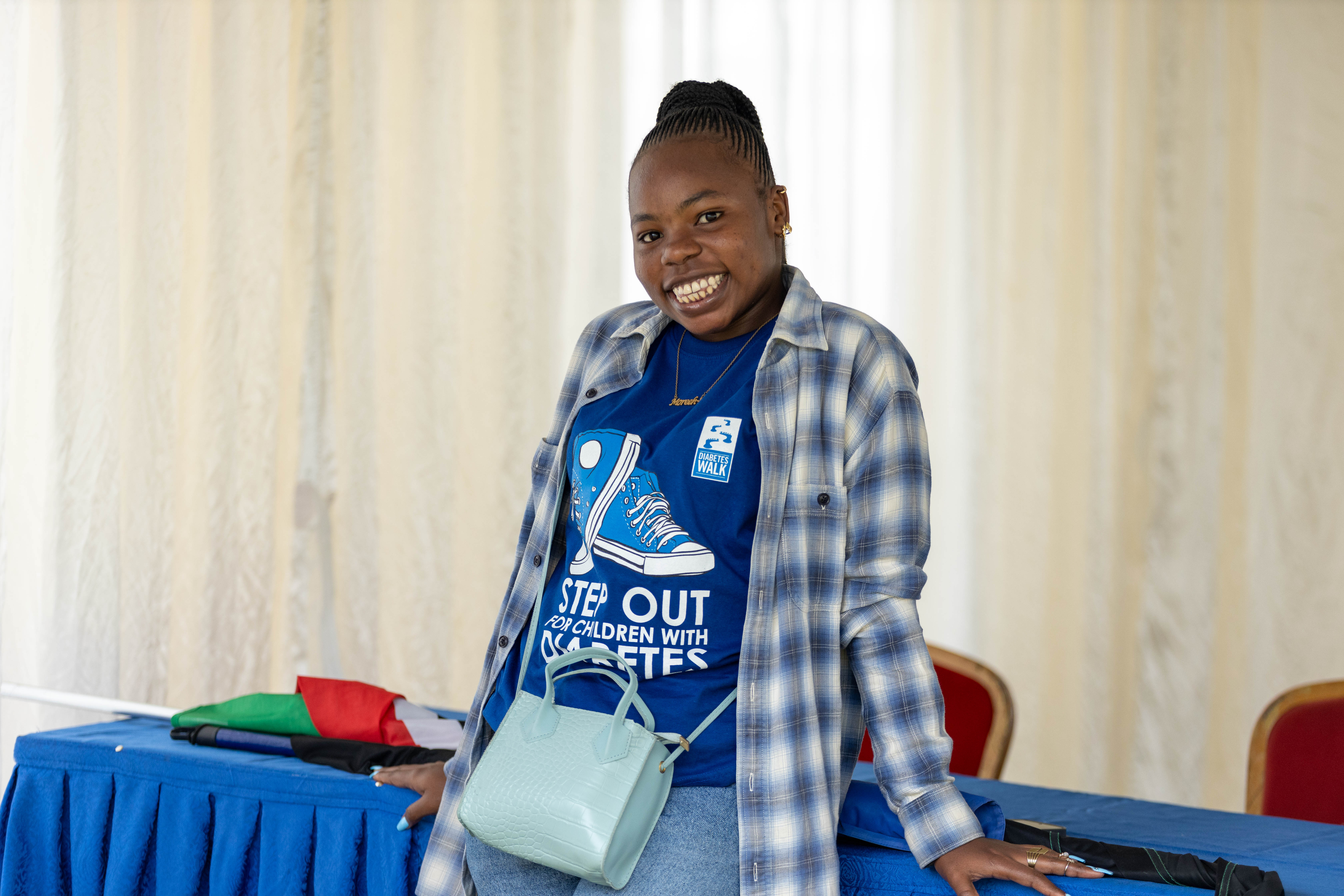
For Elizabeth Nyawira Muriithi, now 27, that shift meant absorbing the full cost of survival.
“A single vial of insulin costs more than Sh2,000, and I need several each month,” she says. “Test strips are about Sh1,200 for 50, and I test multiple times a day.”
She says that after getting married, she was able to access diabetes care through her husband’s insurance cover, a privilege she acknowledges many young Kenyans do not have.
Health experts say these experiences reflect a broader system gap.
“There is an alarming rise in non-communicable diseases among children and youth, yet our health systems are still largely designed for infectious diseases,” says Dr Catherine Karekezi, Executive Director of the Kenya NCD Alliance. “This leaves young people vulnerable during transition into adulthood.”
Health systems researcher Dr Jeremiah Nganda of Strathmore University adds that the problem is not only medical, but structural.
“What we are seeing is a break in continuity of care,” he says. “Young people are supported in childhood, but once they age out, they are expected to independently manage conditions that require lifelong, expensive care.”
Dr Nganda points out that this expectation often ignores lived realities in informal settlements.
“In contexts where income is unstable and access to food is uncertain, self-management becomes very difficult,” he says. “We are transferring responsibility without ensuring systems are in place to support that responsibility.”
He says Kenya still lacks a clear framework for managing chronic diseases in youth.
“There is no national policy that specifically addresses chronic diseases among youth,” he says. “Transition from paediatric to adult care is not well structured, and that creates gaps where patients are lost in the system.”
For young people like Kamusa, those gaps are lived daily in skipped doses, uncertain mornings, and the quiet fear that one bad day could become irreversible.

A beautifully written but sad story that brings to life the agony young people with diabetes are going through. It also reflects how our health system is flawed.