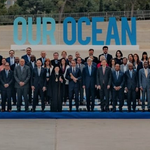


Kenya has signed a landmark international pledge to protect the world’s most climate-resilient coral reefs during the 11th Our Ocean Conference in Mombasa, joining a growing coalition of countries working to secure the future of threatened reef ecosystems.
Kenya, alongside Comoros, the Dominican Republic, Mexico and the United Kingdom, became the latest signatories to the High-Level Climate-Resilient Coral Reef Commitment, bringing the total number of participating governments to 20 and expanding a movement launched at the UN Ocean Conference in France last year.
The commitment seeks to protect reefs identified as having the greatest potential to survive climate change and support the recovery of coral ecosystems worldwide. Despite their ecological and economic importance, only 28 percent of identified climate-resilient reefs currently fall within protected or conserved areas.
Speaking at the conference, Kenya’s Principal Secretary for Environment and Climate Change, Dr. Eng. Festus Ng’eno, emphasised the importance of coral reefs to the country’s economy and coastal communities.
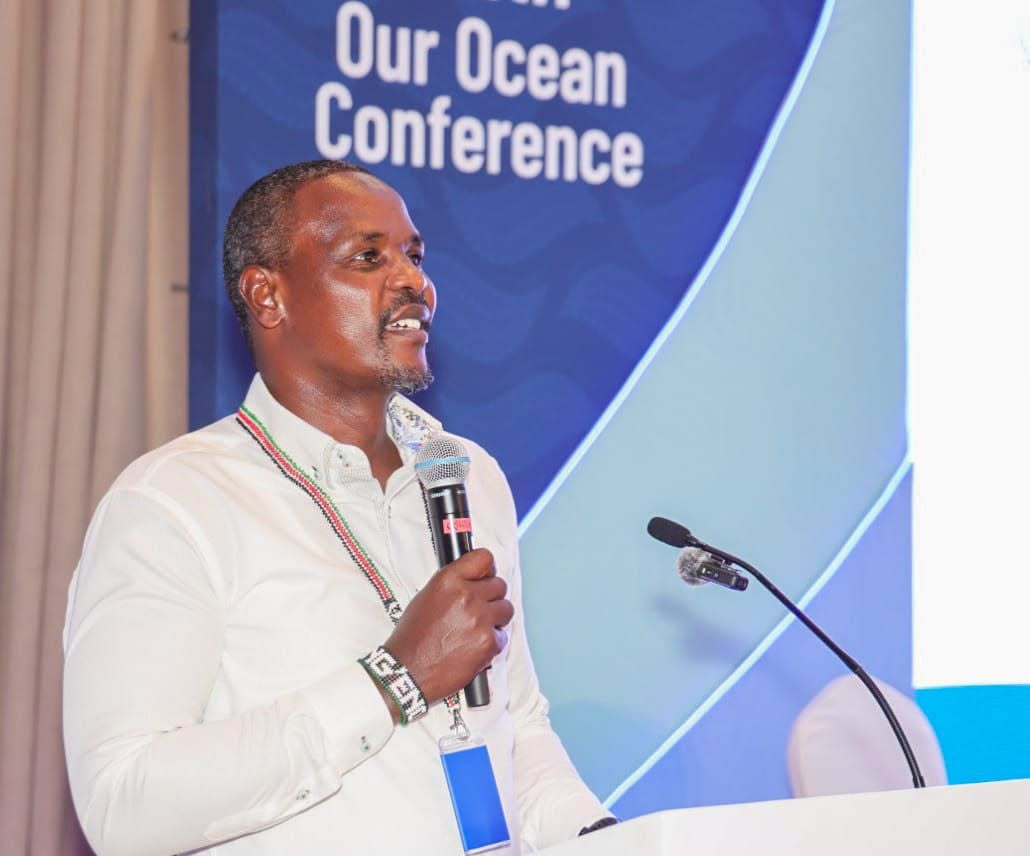
“Our reefs are not postcards. They are lifelines, sustaining over 500,000 livelihoods along Kenya’s coast alone,” Ng’eno said.
He called for greater financial commitment to reef conservation, adding: “This Commitment cannot be a signal of good intentions; it must be a binding signal of political will. We need a financing revolution: reef conservation funded by a budget line, not a brochure, and treated as climate investment, not charity.”
The expanded coalition now spans coral reef nations across all major reef regions and is backed by 35 partner organizations working to strengthen protection efforts.
Dr. Susan Lieberman, Vice President of International Policy at the Wildlife Conservation Society (WCS), said the growing support for the initiative reflects increasing recognition of the urgent need for science-based conservation action.
“With 20 coral reef countries now signing the high-level commitment, governments are embracing science-based action and making a statement that there is renewed hope for coral reefs,” she said.
Lieberman added that conservation partners would continue supporting governments in integrating reef protection into national biodiversity and climate strategies ahead of major international meetings, including the Convention on Biological Diversity COP17 and the UN Climate Change Conference COP31 later this year.

Under the commitment, signatory countries pledge to identify and prioritize climate-resilient reefs in national policies and 30×30 conservation plans, reduce local threats such as water pollution and destructive fishing, strengthen reef monitoring systems, and ensure local communities play a central role in conservation efforts.
Marie-Céline Piednoir, Global Coordinator for the High-Level Coral Commitment, said the agreement sends a strong signal of intent but stressed that implementation will be critical.
“When a government signs the Coral Commitment, it sends a clear signal to the global community, to policymakers and to funders that this country is ready and willing to act for its reefs,” she said. “But a signature is only the starting point. Global ambition must ripple into local action, with coastal communities leading the protection of the reefs they depend on.”
The new signatories were announced alongside the launch of Our Reefs, Our Future, a global campaign led by WCS, WWF and The Nature Conservancy to promote the protection of climate-resilient reefs as critical assets for biodiversity, food security and coastal resilience.