

As global coffee giant Nestlé celebrates what it describes as significant progress under its Nescafé Plan 2030 sustainability programme, Kenya is conspicuously missing from its latest progress report.
The Nescafé Plan 2030 Progress Report 2025 paints a picture of a company investing heavily in climate resilience, regenerative agriculture, human rights, child protection and farmer livelihoods across coffee-growing regions worldwide. Yet Kenya, one of Africa’s most renowned coffee producers and East Africa’s second-largest coffee exporter after Ethiopia, barely features in the 19-page report.
Instead, neighbouring Uganda emerges as one of the programme’s flagship African success stories.
Uganda is among nine countries benefiting from enhanced human rights initiatives implemented through partnerships with organizations such as the International Labour Organization (ILO), Terre des Hommes, and Save the Children.
The report highlights Uganda as a pioneer in child protection efforts, including the launch of the Coffee Coalition for Children’s Rights, a collaborative initiative bringing together governments, communities, civil society groups and coffee companies to address child welfare issues in coffee-growing regions.
For Kenya’s coffee sector, the omission raises important questions about participation, investment flows and the future of sustainability financing in African coffee production.

The absence is particularly striking at a time when climate change is increasingly threatening coffee production across East Africa.
Scientists warn that rising temperatures, erratic rainfall, prolonged droughts and emerging pests are shrinking suitable coffee-growing areas worldwide.
Arabica coffee, the premium variety for which Kenya is internationally celebrated, is especially vulnerable to temperature increases.
Nestlé’s report repeatedly emphasizes regenerative agriculture as the company’s primary strategy for building climate resilience.
By 2025, the company says 53 percent of its green coffee was sourced from farms adopting regenerative agricultural practices, surpassing its 2030 target ahead of schedule.
The programme, the company says, has distributed more than 20 million climate-resilient coffee seedlings in 2025 alone, trained over 100,000 farmers and supported more than 400,000 hectares of farmland through field programmes. Yet none of the highlighted examples come from Kenya.
Instead, Brazil is showcased for soil restoration techniques, Vietnam for large-scale seedling distribution, India for integrating beekeeping into coffee farming, while Uganda receives significant attention for social sustainability interventions.
Though Kenya’s omission may not necessarily mean the country is excluded from Nestlé’s sourcing network, sustainability reporting increasingly influences investment decisions, donor partnerships and access to climate finance.
Countries prominently featured in global sustainability programmes often attract technical assistance, pilot projects, training opportunities and funding for climate adaptation.
This raises concerns about whether Kenya is receiving a proportional share of sustainability investments relative to its importance in the global coffee trade.
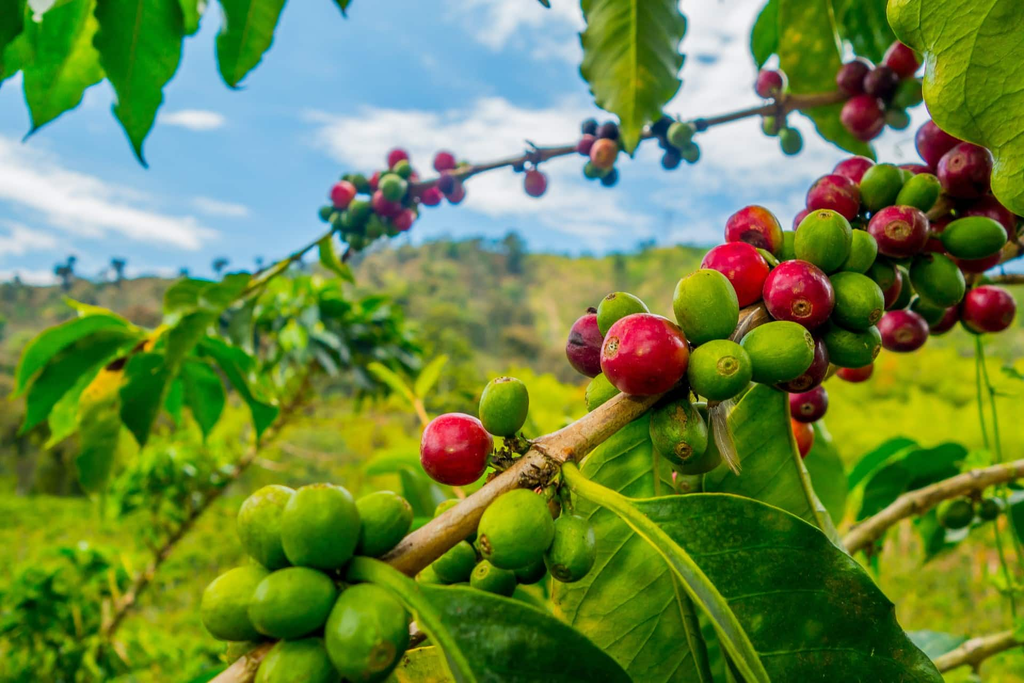
For decades, Kenyan coffee has enjoyed a premium reputation in international markets because of its quality, traceability and distinctive flavour profile. Yet the country’s coffee sector has faced declining production, ageing farmers, land fragmentation, rising production costs and increasing climate pressures.
According to sector experts, climate adaptation investments are becoming as important as market access in determining the future competitiveness of coffee-producing countries.
The report suggests that Uganda’s growing prominence may reflect broader shifts in global coffee supply chains.
Uganda has rapidly expanded coffee production in recent years through aggressive government support, farmer mobilisation and climate-resilient coffee expansion programmes.
The country has also become a strategic focus for international sustainability initiatives seeking to address social and environmental challenges within agricultural supply chains.
Nestlé’s report highlights Uganda as a testing ground for collaborative child protection systems that could potentially be replicated elsewhere in the coffee sector.
The Coffee Coalition for Children’s Rights, launched in Uganda, is described as a model bringing together public institutions, social workers and local communities to address child protection risks in coffee-growing areas.
As multinational companies increasingly position sustainability as central to their business models, visibility matters.
The question emerging from Nestlé’s latest report is whether Kenya is securing its place within the next generation of climate-smart coffee investments that will shape the future of global coffee production.
For a country whose coffee reputation has been built over generations, remaining competitive may increasingly depend not only on producing high-quality beans but also on attracting the climate adaptation resources, sustainability partnerships and regenerative agriculture investments that are rapidly transforming coffee landscapes elsewhere in Africa.
As global coffee companies race to climate-proof their supply chains, Kenya’s relative absence from one of the industry’s flagship sustainability reports may be less about what is missing from a document and more about what is at stake for the future of one of the country’s most iconic agricultural exports.