

By Muthoni Kariuki
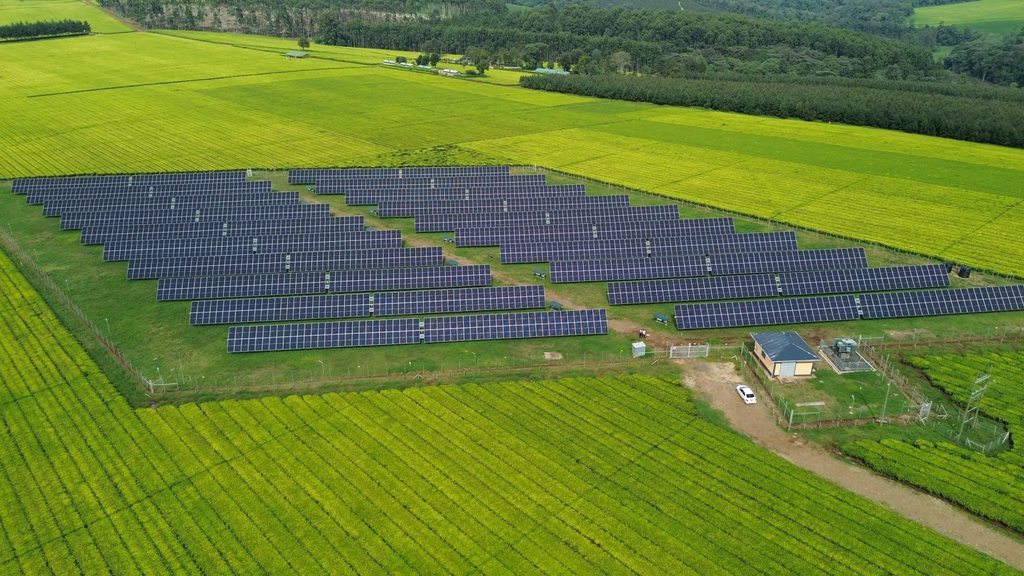
As Kenya grapples with climate change, recurring droughts, and rising food insecurity, solar energy has emerged as one of the most celebrated solutions for agricultural transformation. From government programmes to private-sector initiatives, solar-powered irrigation is increasingly being promoted as the key to unlocking higher farm productivity and improving livelihoods for millions of smallholder farmers.
The enthusiasm is understandable. Kenya enjoys abundant sunshine throughout the year, solar technology costs have fallen significantly, and many rural areas remain beyond the reach of reliable electricity infrastructure. Yet amid the excitement, an important question remains: can solar energy alone transform Kenyan agriculture? The answer is both yes and no.
Solar energy has the potential to address one of the most persistent challenges facing farmers: access to affordable and reliable power. However, the growing narrative around solar-powered agriculture often blurs the line between what technology can achieve and what it cannot. While solar energy can improve efficiency and resilience, it is not a substitute for the broader reforms needed to unlock the full potential of Kenya’s agricultural sector.
There is little doubt that solar energy is bringing tangible benefits to Kenyan farmers. One of its biggest advantages is the reduction in operating costs. Unlike diesel-powered pumps, solar irrigation systems require no fuel, protecting farmers from fluctuating fuel prices while lowering production expenses over the long term. For smallholder farmers operating on thin margins, these savings can make a meaningful difference.
Solar technology is also extending irrigation to off-grid areas where electricity infrastructure is unavailable or unreliable. This has proven particularly valuable in arid and semi-arid regions where farmers have traditionally relied on unpredictable rainfall. By providing a reliable source of power for water pumping, solar systems help farmers maintain production during dry spells and improve resilience to climate shocks.
The economic benefits can be substantial. Studies tracking solar irrigation projects in Kenya found significant increases in farm revenues and profits as farmers gained the ability to grow crops throughout the year, cultivate larger areas, and diversify into higher-value produce. Access to irrigation means farmers are no longer restricted to a single rainy season harvest and can produce crops when market prices are more favourable.
Beyond irrigation, solar energy is supporting agricultural value chains through cold storage facilities, milk cooling systems, grain drying equipment, and small-scale processing plants. These applications help reduce post-harvest losses, which continue to rob farmers of a significant share of their earnings. For farmers producing perishable commodities such as vegetables, fruits, and milk, access to solar-powered storage can translate directly into higher incomes.
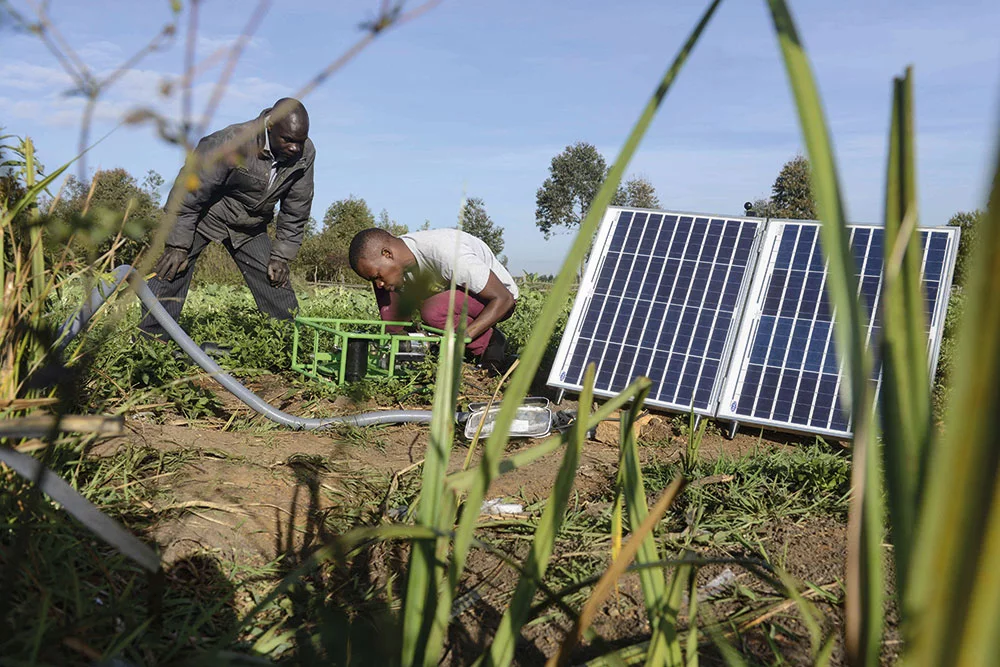
From an environmental perspective, solar energy offers a cleaner alternative to diesel-powered equipment, helping reduce greenhouse gas emissions while supporting Kenya’s transition to a greener economy. At a time when agriculture is increasingly vulnerable to climate change, renewable energy solutions can contribute to both mitigation and adaptation efforts.
Despite these benefits, the narrative surrounding solar energy often oversimplifies the realities facing Kenyan agriculture. The first misconception is that solar energy solves water shortages. It does not. Solar-powered pumps can only move water that already exists. In many parts of Kenya, farmers face declining groundwater levels, seasonal rivers, and increasing water stress linked to climate change. While solar systems make pumping cheaper, they cannot create new water sources.
This distinction matters because Kenya’s irrigation challenge is fundamentally a water challenge rather than an energy challenge. Expanding irrigation requires investment in dams, water harvesting systems, reservoirs, and sustainable groundwater management alongside energy solutions. Without adequate water solutions, even the most advanced solar-powered irrigation system will have little impact.
The impressive productivity gains often attributed to solar irrigation can also be misleading. In many cases, the gains result from access to irrigation itself rather than the source of energy powering the pump. A farmer moving from rain-fed agriculture to irrigated farming is likely to see higher yields regardless of whether the pump runs on diesel, electricity, or solar power. In other words, solar energy may be enabling the transformation, but it is not necessarily the sole driver of the productivity gains being reported.
Moreover, agricultural productivity depends on far more than access to energy. Many farmers continue to struggle with declining soil fertility, poor-quality seed, pests and diseases, inadequate extension services, limited access to credit, and volatile market prices. A solar-powered pump cannot fix depleted soils or guarantee profitable markets. There is also the issue of affordability. Although solar technology costs have fallen, the initial investment remains beyond the reach of many smallholder farmers.
Another concern rarely discussed is water sustainability. Because solar-powered systems have lower operating costs, farmers may be encouraged to pump more water than before. What begins as an efficiency gain can inadvertently create pressure on local water resources if extraction is not properly monitored. Without proper regulation and water management, this could accelerate groundwater depletion in already water-stressed regions.
The debate should therefore not be about whether solar energy is good or bad for agriculture. Solar energy is undoubtedly a valuable tool. It lowers energy costs, supports irrigation, improves resilience, and contributes to environmental sustainability. However, it is only one piece of a much larger puzzle. For Kenya to achieve meaningful and lasting improvements in agricultural productivity, solar investments must be accompanied by stronger water infrastructure, improved extension services, better access to quality inputs, and reliable markets.
Technology alone cannot solve structural problems. Solar energy deserves its place in Kenya’s agricultural future, but not on a pedestal. The danger lies not in embracing solar power but in expecting it to perform miracles. Sunlight can power pumps, cold rooms, and processing equipment, but it cannot replace sound agricultural policies, sustainable water management, or investments in rural development.
Kenya’s agricultural transformation will require more than solar panels. It will require a holistic approach that addresses the many interconnected challenges farmers face every day, from water scarcity and soil degradation to market access and financial inclusion. Solar energy can help drive that transformation, but it remains an enabler rather than a solution itself.
The writer is an independent editorial consultant