

Africa’s shift towards cleaner energy, transport and production could generate as many as 7.9 million jobs by 2030 and 84.5 million by 2050, a new study shows.
However, most of the opportunities could be informal and poorly protected unless governments and investors increase support for workers, according to a study by FSD Africa in partnership with Shell Foundation, Shortlist and Genesis Analytics.
It projects that Africa’s green economy could support between 3.8 million and 7.9 million jobs by 2030, with the wide difference reflecting how quickly governments, businesses and investors turn climate and energy plans into working industries.
By 2050, green employment could rise to between 65.9 million and 84.5 million jobs, with the report warning that slow investment, weak regulation and limited workforce preparation could leave the continent with 18.6 million fewer jobs than under its most successful scenario.
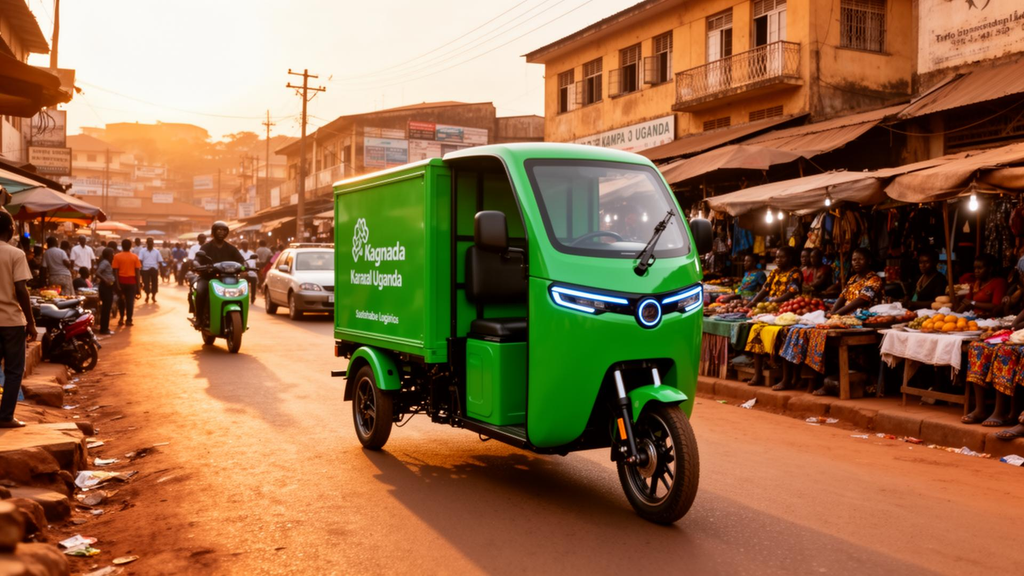
Under the report’s higher 2030 projection, cleaner cooking could support about 2.5 million jobs, waste recycling 1.1 million, small solar systems one million and electric motorcycles and three-wheelers approximately 600,000.
Together, energy and power activities are expected to account for 65% of Africa’s green employment in 2030, while waste recycling could account for 16%, agriculture and nature-related work 11%, and electric transport 8%.
Unlike the energy transitions taking place in wealthier regions, where employment is often associated with large power plants and factories, Africa’s green economy is expected to rely heavily on small businesses and local service networks.
More than half of the green jobs projected for 2030 are expected to be in distribution, installation, operation and maintenance, including work for solar sales agents, stove distributors, waste collectors, battery-charging attendants and repair technicians.
“The employment dividend of Africa’s green transition will be realised through service value chains, not construction sites,” said Kevin Munjal, FSD Africa’s Director of Development Impact.
Munjal said directing more finance towards cleaner cooking, small solar systems, recycling and electric transport would generate more employment than concentrating investment only in large infrastructure projects.
The service-based structure, the study shows, could make green work accessible to people who do not have university degrees or large amounts of money to start businesses, as many positions can be entered through short practical training or small-scale trading.
However, the same structure could also leave millions of workers without contracts, stable earnings, health insurance or other forms of social protection.
FSD Africa estimates that 86% of green jobs in 2030 could be informal, with the industries expected to create the most employment also having some of the lowest barriers to entry and the weakest worker protections.
The employment forecasts come as Africa’s rapidly growing youth population increases demand for work, particularly in the service industries that are also expected to deliver much of the green transition.
The Africa Youth Employment Outlook 2026 estimates that the continent has about 532 million people aged between 15 and 35, with the youth population expected to increase by 132 million between 2020 and 2030.
More than 10 million young people enter Africa’s labour market every year, while current economic growth creates only about three million formal jobs annually, according to the outlook, which was produced by World Data Lab in partnership with the Mastercard Foundation and the University of Cape Town’s Development Policy Research Unit.
The youth employment report projects that services will overtake agriculture as the largest employer of young Africans by 2033, when the sector is expected to employ 3.8 million more young people than agriculture.
That wider movement into retail, transport, logistics, tourism and other services could provide a workforce for green businesses, particularly because the jobs identified by FSD Africa will depend on people who can sell, distribute, install, operate and repair products.
However, the youth outlook also shows that 90% of employed young Africans currently work informally, suggesting that the green economy could expand employment without necessarily improving job security.
Training is another major obstacle, with the FSD Africa study reporting that fewer than 7% of African youth have completed formal technical or vocational training.
Africa currently accounts for only 2% of the global renewable-energy workforce despite possessing 60% of the world’s best solar resources, while less than 1% of climate finance reaching the continent is directed towards developing workforce skills, according to the study.
The shortage could force green businesses to import specialised workers or delay projects, reducing the share of employment and income retained in African economies.
Country findings show that the type and quality of green employment will differ widely across the continent, with approximately 87% of Nigeria’s projected green workforce expected to be informal, while about 70% of South Africa’s could be formal because its transition is more strongly shaped by regulated energy projects and government procurement.
Kenya falls between the two models, with its green economy supported by mobile money, small energy businesses and a growing electric-mobility industry that already employs more than 11,000 people, many of them young workers in informal maintenance and distribution.
FSD report concludes that the difference between creating 3.8 million and nearly eight million green jobs by 2030 will depend largely on decisions made by governments and investors, including whether they finance small service businesses, train workers and extend basic protection to people working outside formal employment.