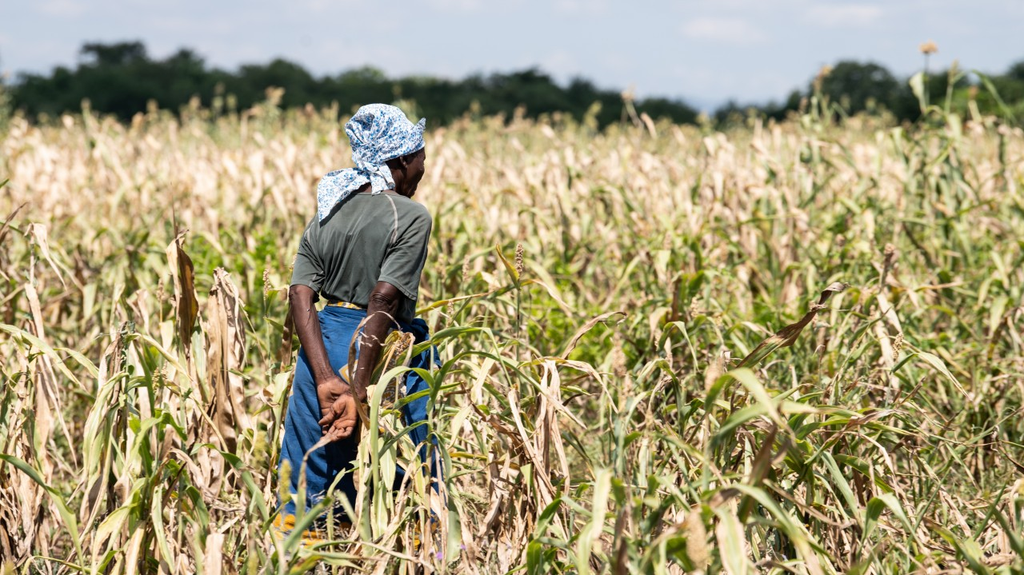

African governments and farmers are being urged to accelerate preparations for drought and flooding as a strengthening El Niño threatens agricultural production across several regions of the continent.
Southern Africa faces an increased risk of drought during its main growing season, while East Africa is preparing for heavier-than-normal rainfall during the October–December “short rains.” In the Sahel, the weather threat is expected to compound food insecurity already driven by conflict, displacement and high food prices.
The latest outlook from the United States National Oceanic and Atmospheric Administration gives El Niño a 97 percent chance of continuing into early 2027. NOAA said in July that there was an 81 percent chance the event would become very strong between October and December.
El Niño is a naturally occurring warming of the central and eastern equatorial Pacific Ocean. It changes atmospheric circulation and rainfall patterns around the world, but its effects vary significantly between regions.
Rein Paulsen, Director of Emergencies and Resilience at the Food and Agriculture Organization’s (FAO) says the forecast was arriving when many households in Africa have little capacity to withstand another failed or disrupted food growing season.
“What is particularly concerning is the already very high food insecurity,” Paulsen says, describing the situation as a “dangerous moment.”
More than 306 million people in Africa were undernourished in 2024, according to a regional food-security assessment released this year by FAO, the African Union Commission (AU), the World Food Programme (WFP) and the UN Economic Commission for Africa. Nearly 893 million people experienced moderate or severe food insecurity.
The IGAD Climate Prediction and Applications Centre has forecast significantly wetter-than-normal conditions across many equatorial and southern parts of the Greater Horn of Africa during the October–December season.
In Kenya, the forecast has increased attention on water harvesting, flood protection and soil management. Although heavy rainfall can replenish rivers, reservoirs and groundwater, it can also cause severe agricultural losses when it falls on exposed or degraded land.
Maria Mkenda, an investment officer with the Africa Fertilizer Financing Mechanism, says field visits in Kenya had revealed limited investment in even basic water-storage facilities. “We are not practicing enough water harvesting activities at all,” Mkenda says.
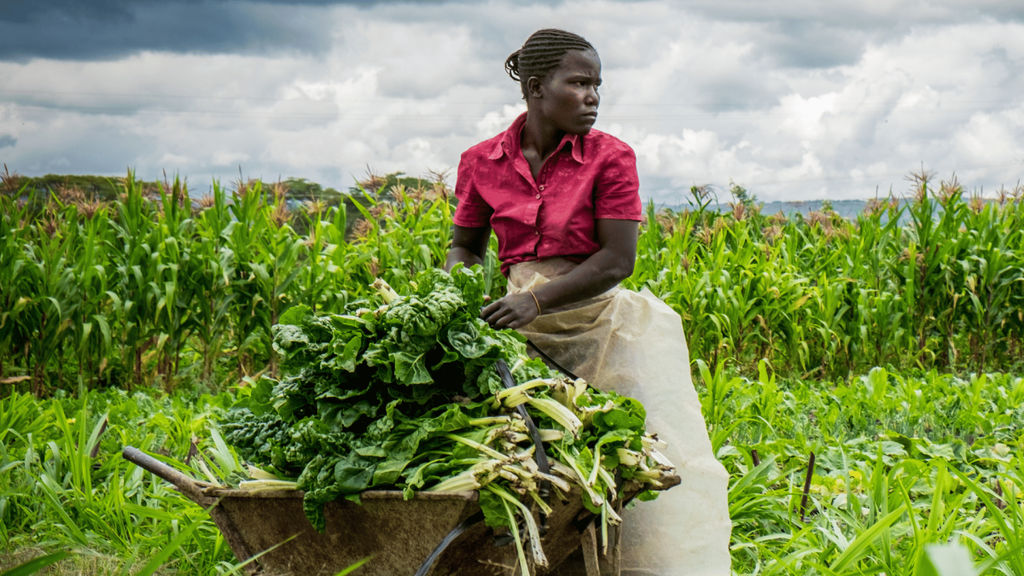
She says simple equipment such as 100-litre water tanks, which are relatively affordable, was frequently missing from farms. While small tanks cannot control major flooding, they can provide reserve water for seedlings, livestock and household gardens when the rains stop.
According to Mkenda, larger interventions, including roof-catchment systems, farm ponds, water pans, contour bunds, infiltration trenches and drainage channels, will be needed to manage heavier runoff and reduce flood damage.
“Without such infrastructure, large volumes of water can flow away from farms, carrying soil and nutrients with them. Farmers may then experience flooding during the rainy season and water shortages only weeks later,” she says.
Mkenda is also advocating reduced or no-till farming as a defence against erosion. “Under conventional tillage, repeated ploughing can leave the soil surface exposed to heavy rain. In minimum or no-till systems, farmers disturb the ground as little as possible and retain crop residues as surface cover.
“The residue absorbs the force of raindrops, slows runoff and reduces the amount of topsoil washed from the field. It can also limit evaporation, increase water infiltration and contribute organic matter as it decomposes,” says Mkenda.
The approach, she adds, forms part of conservation agriculture, which combines minimal soil disturbance with continued soil cover and crop rotation. FAO guidance says organic cover can improve infiltration and protect soil from rain, wind and direct sunlight.
The expected weather extremes are also placing greater scrutiny on fertilizer use. Organic and mineral fertilizers are sometimes presented as competing approaches, but researchers increasingly recommend combining them.
Bernard Vanlauwe, a soil scientist at the International Institute of Tropical Agriculture, has led research on Integrated Soil Fertility Management. According to him, the approach brings together mineral fertilizer, organic materials, improved crop varieties and farming practices adapted to specific local conditions.
Research led by Bernard Vanlauwe, a soil scientist at the International Institute of Tropical Agriculture, has found that organic inputs applied at levels available to most smallholders may not supply enough nutrients for optimum crop production.
“Organic fertilizer lacks the nutrient density of inorganic,” Mkenda said. But she cautioned that mineral fertilizer was not a complete solution, particularly during heavy rainfall as nitrogen and other nutrients may be lost through runoff or leaching before crops can absorb them. Experts recommend using soil tests, correct fertilizer placement and, where possible, split applications timed to crop demand and short-term weather forecasts.
Agricultural specialists are also calling for changes to government fertilizer subsidies. Agnes Kalibata, who served as AGRA president from 2014 to 2025, has argued that subsidies should not replace functional agricultural markets. “African agriculture won’t thrive on fertilizer subsidies, but on working markets,” Kalibata says.
During field visits in Kakamega County in western Kenya, Mkenda encountered farmers who had increased their use of a subsidized fertilizer without achieving a corresponding rise in production. The experience suggested that the product did not address all the constraints affecting the soil or crop.
Experts say the remaining months before the October–December rains provide a limited but important opportunity to protect water, soil and agricultural livelihoods.