
Kenya’s Parliament has approved the removal of nearly 15,000 acres from three public forests even as the government mobilises the country to plant 15 billion trees and increase national tree cover to 30 per cent by 2032.
The decision exposes a contradiction at the centre of Kenya’s environmental policy where the government is spending public resources and seeking international support to restore degraded landscapes while simultaneously reducing the amount of land legally protected as public forest.
The National Assembly approved the alteration of boundaries covering 14,874 acres in Mount Elgon, Turbo and Kakamega forests on June 24 following a petition submitted by Environment, Climate Change and Forestry Cabinet Secretary Deborah Barasa.
The largest portion is 11,483 acres in the Chepyuk area of Mount Elgon Forest. Parliament also approved the removal of 3069 ares from the Manzini block of Turbo Forest, 235 acres at Shiru and another 89 acres at Shaviringa in Kakamega Forest.
A further 2,444 acres of South Nandi Forest at Chepkumia was included in the Environment Cabinet Secretary’s original petition but was excluded from adoption because it was being considered separately by Parliament’s Public Petitions Committee.
According to the National Assembly committee report, the land will be used to regularise settlements established by previous governments between the 1970s and 1990s for residents who have lived on the land for decades but cannot obtain title deeds because the settlement areas remain legally classified as forests.
Parliament maintains that the decision does not involve opening intact forest for new settlements with environment committee saying the affected areas are already occupied, with little or no remaining forest cover.
The decision removes the land from the protected forest estate and raises questions about the consistency of the government’s broader restoration and climate policies.
President William Ruto launched the National Tree Growing and Restoration Campaign with a target of growing at least 15 billion trees by 2032. The programme, according to the government, is intended to restore degraded landscapes, increase tree cover to 30 per cent, protect water catchments and strengthen Kenya’s response to climate change
The Intergovernmental Panel on Climate Change (IPCC) identifies reducing deforestation and forest degradation as essential because it preserves carbon already stored in trees and soil.
In its formal submission to Parliament, the National Land Commission (NLC) opposed the degazettement, warning that public forests provide water-catchment services, regulate local climates, protect communities against floods and landslides and support agriculture, biodiversity and livelihoods.
The commission argued that removing land from protected forests would conflict with Kenya’s constitutional environmental obligations and could encourage similar claims over the Aberdares, Mount Kenya, Embobut, Ngong Hills and other public forests.
It described the proposal as a potential “Pandora’s box” for forest governance and recommended that legitimate settlement claims be resolved using alternative land outside protected ecosystems.
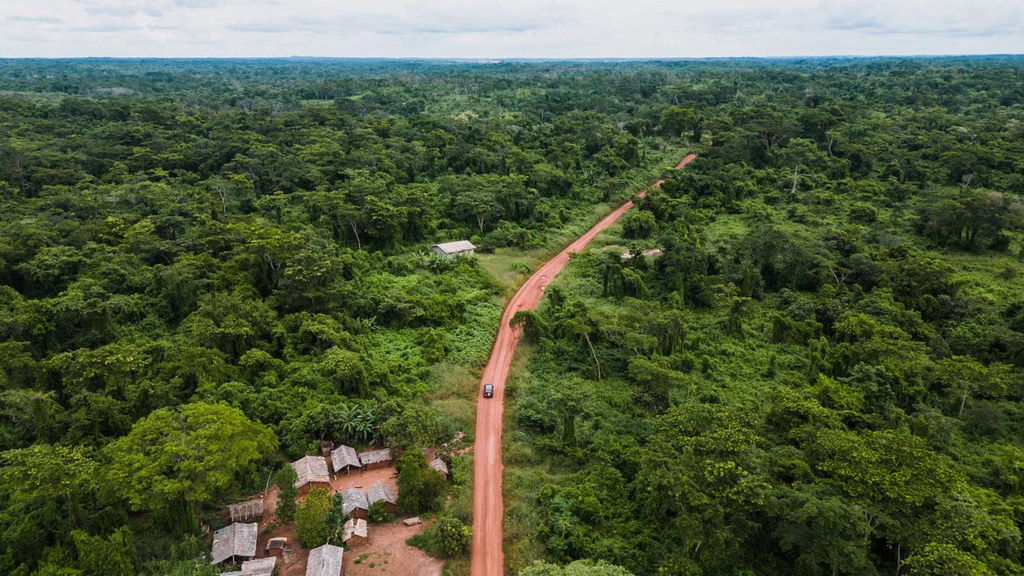
Mount Elgon presents particularly serious environmental considerations given that the mountain is one of Kenya’s major water towers and forms part of a transboundary ecosystem shared with Uganda. Its forests regulate water flows, protect soil, store carbon and support wildlife and communities on both sides of the border.
The Kenya Wildlife Service (KWS) identifies Mount Elgon as important for biodiversity conservation, water-catchment protection and climate regulation. Rivers originating from the mountain support households, farming, livestock and wildlife across western Kenya and eastern Uganda.
Kakamega Forest is also one of Kenya’s most important biodiversity areas and a remnant of the tropical rainforest ecosystem that once extended across equatorial Africa. Although the Shiru and Shaviringa settlement areas are already developed, further fragmentation and pressure around the forest boundary could affect the remaining ecosystem.
The parliamentary committee concluded that environmental impact assessments showed the excisions would not harm water catchments, biodiversity or threatened species. It also reported holding community consultations and inspection visits in the affected areas.
However, the publicly available 28-page report does not include the listed annexures containing the environmental assessments, detailed submissions and beneficiary documents. This makes it difficult to assess the geographical scope of the studies, the ecological indicators examined or the safeguards proposed for the remaining forests.
The decision also has implications for Kenya’s international climate commitments. Kenya’s second Nationally Determined Contribution (NDC) commits the country to reducing projected greenhouse-gas emissions by 35 per cent by 2035, and recognises deforestation and agricultural expansion as drivers of land-sector emissions and places forestry and ecosystem restoration within the national climate response.